

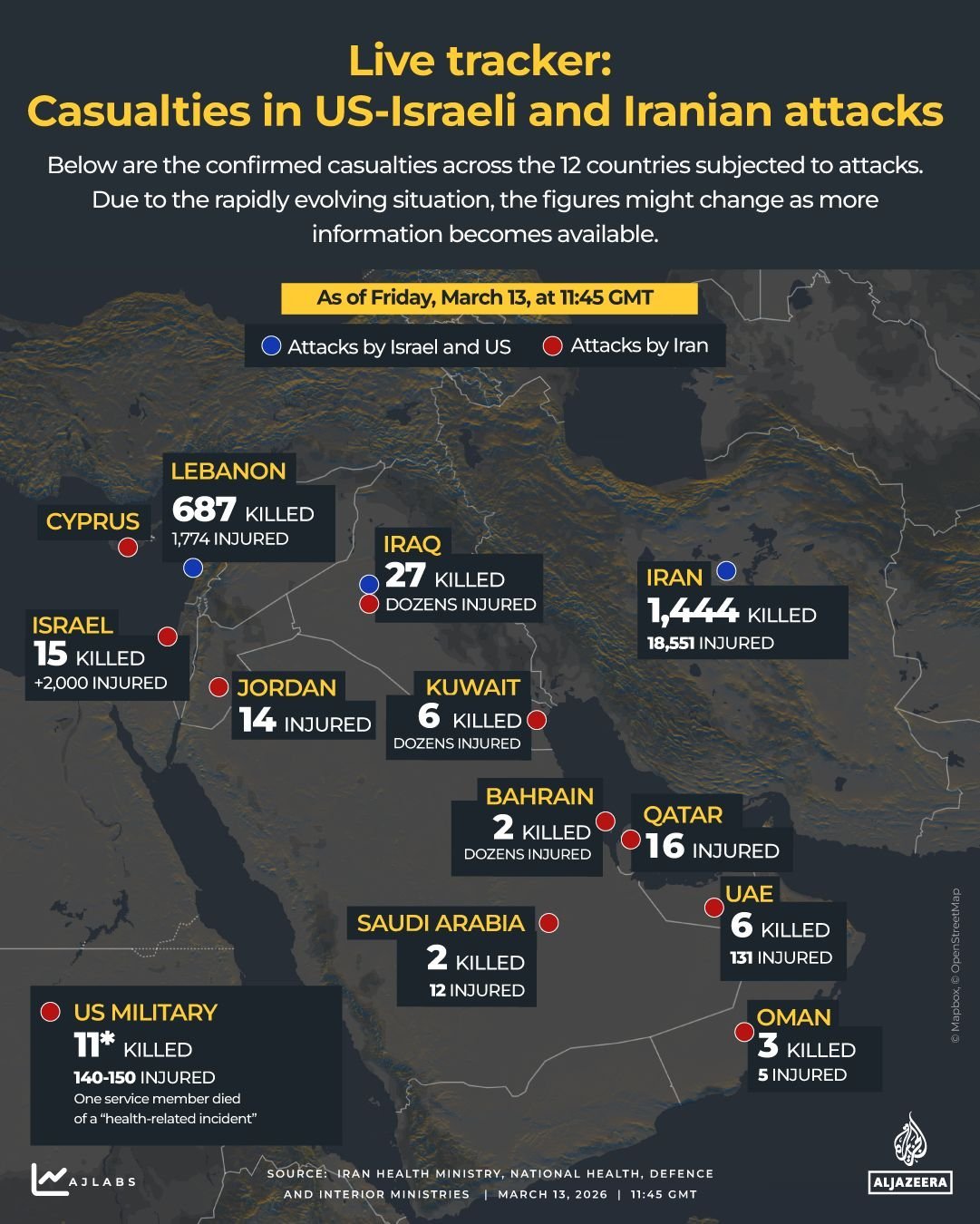
The conflict between the United States and Israel against Iran has intensified as the military operations enter their third week. Recent airstrikes by U.S. forces targeted military installations on Kharg Island, a crucial hub for Iran’s oil exports. U.S. President Donald Trump confirmed that while military targets were struck, the oil infrastructure was spared, although he warned that such facilities could be targeted if Iran disrupts shipping through the strategically important Strait of Hormuz.
In response to the ongoing attacks, Iran’s Islamic Revolutionary Guard Corps (IRGC) claimed to have launched missiles and drones at Israel, coordinating with Hezbollah, a Lebanese militant group. The IRGC’s actions were framed as part of an annual observance supporting the Palestinian cause. Additionally, U.S. Secretary of Defense Pete Hegseth indicated that Iran’s new supreme leader, Mojtaba Khamenei, may have been injured in the conflict, prompting the U.S. to offer a $10 million reward for information regarding him and other top Iranian officials.
The conflict has resulted in significant casualties, with reports indicating that at least 1,444 people have been killed and over 18,000 injured since the beginning of the attacks on February 28. Iran has threatened retaliation against regional oil infrastructure and U.S.-aligned assets if its energy facilities are targeted, raising concerns about a broader energy crisis in the Gulf region.
In the Gulf states, Iranian drone and missile attacks have prompted defensive measures. Saudi Arabia intercepted several drones, while Qatar successfully intercepted an incoming missile. The situation has led to heightened security alerts and evacuations in various areas. The ongoing conflict has also affected international events, with Formula One races in Bahrain and Saudi Arabia facing potential cancellations or rescheduling due to the escalating violence.
As the military operations continue, the economic ramifications are becoming evident, with a surge in global oil prices and rising aviation costs. The International Energy Agency has coordinated efforts to release emergency oil supplies to mitigate the crisis. Meanwhile, diplomatic dynamics are shifting, as countries like India, France, and Italy seek direct negotiations with Iran for safe passage through the Strait of Hormuz, indicating a potential decline in U.S. influence in the region.