Foreign Minister Afrah al-Zouba asks ICRC to prioritise visits to Houthi detainees
 Yemen Herald News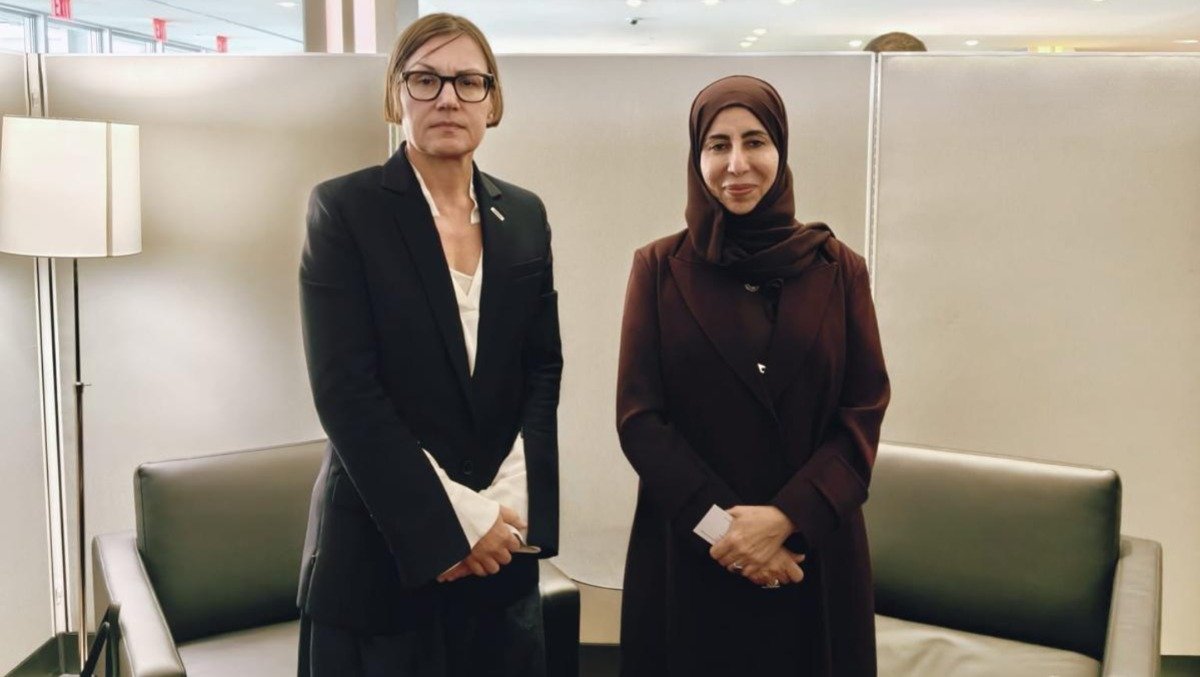
NEW YORK, United States — Yemen’s foreign minister asked the president of the International Committee of the Red Cross on Saturday to prioritise visits to people held by the Houthis.
Afrah al-Zouba met Mirjana Spoljaric Egger in New York, the state news agency Saba reported.
Saba is the news agency of Yemen’s internationally recognised government, and the account of the meeting rests on it. No independent confirmation has been published. Yemen Herald found no ICRC statement on the meeting.
Al-Zouba asked the organisation to give priority to advocating for people she said the Houthis had detained or abducted, according to the agency. She raised visiting rights and health checks for them in particular.
She told Spoljaric Egger that the recent escalation by the group in several governorates had consequences for health facilities, Saba said.
She also raised restrictions she said the group had imposed on international humanitarian organisations and their staff.
Spoljaric Egger acknowledged the government’s support for the organisation and restated its commitment to neutrality and to humanitarian principles, according to the agency.
Aid agencies have documented detentions of their own staff in areas the group controls.
Human Rights Watch said on 8 January that at least 69 UN staff, all Yemeni nationals, were being held as of 4 January. It said dozens of Yemeni staff of international and local non-governmental organisations were also detained.
The detentions began on 31 May 2024 and continued in waves through December 2025, the organisation said.
Fifteen UN and aid groups worked across 14 districts in July 2024, according to Human Rights Watch. By July 2025 two organisations worked in three districts.
The UN suspended activities in Saada governorate over risks to its staff, the organisation said. It said more than 100 districts faced a critical nutrition emergency.
Food insecurity in Saada worsened over the same period, Human Rights Watch said. A minority of the population there was in the emergency phase of the international hunger scale in 2022, and a majority by June 2025.
The Houthis have given their own account of the detentions. The group’s leader, Abdulmalik al-Houthi, accused UN staff of collaborating with Israel over airstrikes on Sanaa in August 2025 that killed senior figures in the group.
UN Secretary-General Antonio Guterres rejected the allegations on 19 October 2025 and called them dangerous and unacceptable. He said they put humanitarian workers and relief operations at risk.
The group released 20 UN employees on 21 October 2025, the UN special envoy for Yemen, Hans Grundberg, said at the time. Fifteen were international staff and five were Yemeni.
Fighting in the south-west has displaced tens of thousands of people this month. UNICEF said on 25 September that close to 130,000 people had been displaced over three weeks, 71,000 of them children.
Most of the displacement was in and from Taiz governorate, the agency said.
UNICEF said 243 schools had closed or suspended classes over the same period, affecting close to 140,000 students.
It reported 15 children killed and 14 injured since early September, with three others missing.
Mobile teams screened close to 2,900 children, UNICEF said. More than a quarter were acutely malnourished and 200 were severely so.
“Conflict drives hunger, and hunger makes children more vulnerable to conflict,” said Akhil Iyer, the agency’s representative in Yemen.
Yemen’s humanitarian response plan for 2026, published in March, records more than 22 million people in need of assistance. It puts 18.3 million people in acute food insecurity and 5.2 million people displaced before the current fighting.
More than 2.2 million children under five are acutely malnourished, 516,157 of them severely, the plan says. It seeks 2.16 billion dollars to reach 12 million people.
Spoljaric Egger has led the International Committee of the Red Cross since October 2022. She was a UN assistant secretary-general and an assistant administrator of the UN Development Programme between 2018 and 2022.
She is a Swiss diplomat and served as a senior adviser to the UN Relief and Works Agency for Palestine Refugees between 2010 and 2012. She holds a master’s degree in philosophy, economics and international law from the universities of Basel and Geneva.
The organisation has had a presence in Yemen since 1962 and has run permanent operations in several governorates since 2015, according to its own account. It conducted 51 detention visits to 19 places of detention in 2024.
It supported 42 health facilities that year, including primary health centres, hospitals and treatment centres for diarrhoeal disease. It recorded 1,136,185 health consultations across the facilities it supports.
Al-Zouba was appointed foreign minister on 23 July. She is the first woman to hold the post.
She was minister of planning and international cooperation from February until that appointment, according to Al Jazeera. She was first deputy secretary-general of the National Dialogue Conference between 2013 and 2015.
She worked as a programme officer for the United States Agency for International Development and advised Prime Minister Maeen Abdulmalik on humanitarian relief in 2019, the broadcaster reported.
Yemen’s war began in 2015, when the Houthis took the capital and a Saudi-led coalition intervened on the government’s side. The government has operated from Aden since.
Al-Zouba was in New York for the 81st session of the UN General Assembly.
About the Author