Al-Alimi Bawazir asks UN relief chief Tom Fletcher to widen Yemen operations from Aden
 Yemen Herald News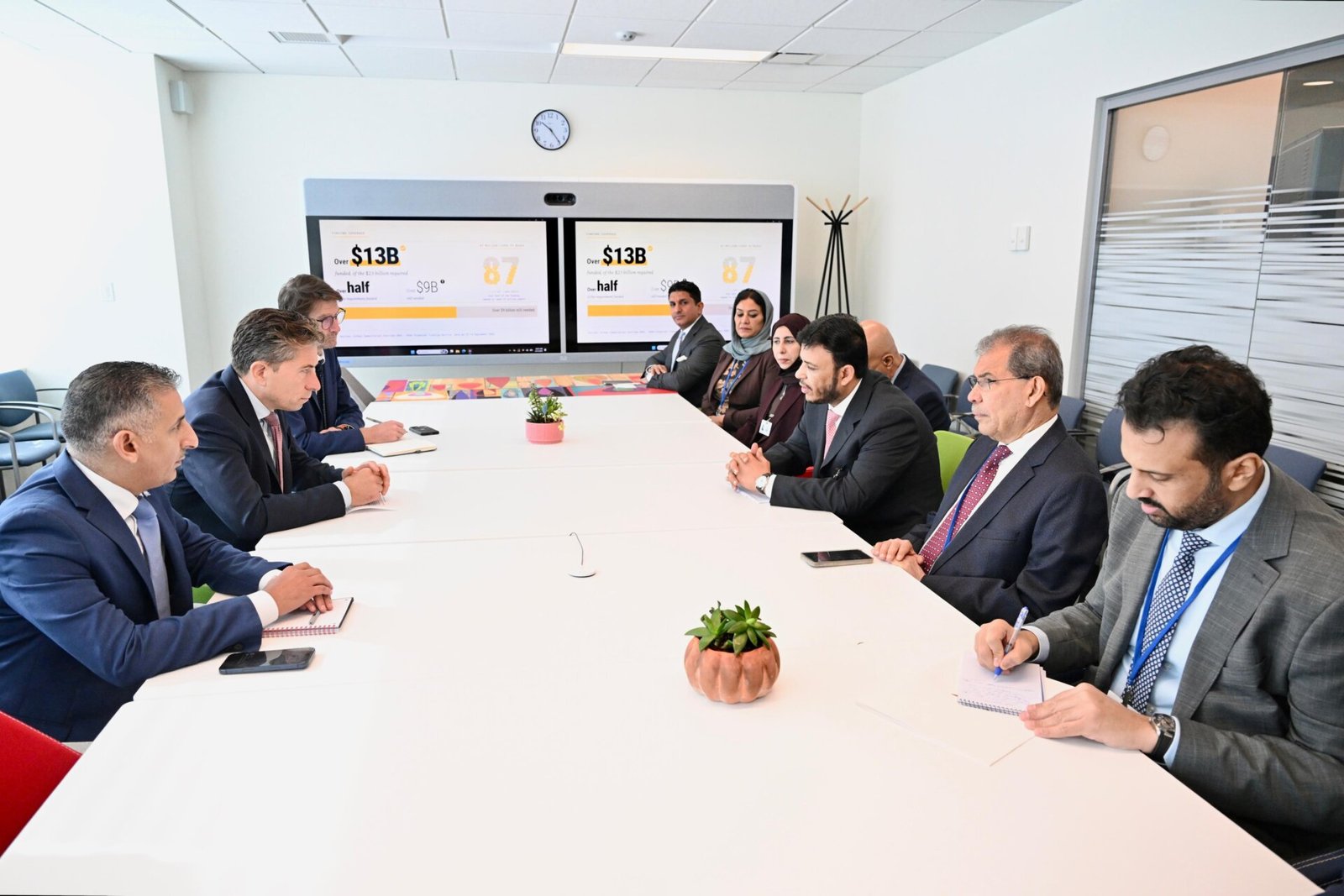
NEW YORK, United States — Yemeni Presidential Leadership Council member Abdullah al-Alimi Bawazir asked the UN humanitarian chief to widen relief operations from Aden and seek the release of detained aid staff.
Al-Alimi met Tom Fletcher, the UN under-secretary-general for humanitarian affairs and emergency relief coordinator, in New York on 26 September, according to Saba, Yemen’s state news agency.
The two met on the sidelines of the 81st session of the UN General Assembly.
Al-Alimi told Fletcher that the latest military escalation had produced new casualties and displacement, Saba reported.
He said pressure on host communities and basic services was growing and that food insecurity was worsening, according to the agency.
Yemen Herald could not independently verify the account of the meeting. Saba is the only source to have reported it, and no independent confirmation has been published.
Saba operates rival newsrooms. The Aden-based service reports for the internationally recognised government, while a separate operation in Sanaa serves the Houthi authorities.
Al-Alimi also raised the economic consequences of threats to ports, maritime routes and international shipping, Saba said. He warned that disruption there could raise transport costs and the price of essential goods and services.
Al-Alimi cited the continued detention of UN and humanitarian workers and the seizure of UN premises and property, and called for the immediate and unconditional release of all detained personnel, Saba reported.
Those detentions are documented. Human Rights Watch said on 8 January that at least 69 UN staff, all Yemeni nationals, were being arbitrarily held as of 4 January, along with dozens of Yemeni staff of international and local non-governmental organisations.
The group said Houthi forces had raided and occupied UN facilities, among them the UN Common Accommodation Facility in Sanaa, and confiscated laptops, routers and other equipment.
Human Rights Watch recorded waves of detentions in June 2024, in January 2025, and from the end of August 2025 into December of that year.
The first of those waves began on 6 June 2024. A second ran from 23 to 25 January 2025.
The Houthis detained 20 UN staff in a single raid in October 2025, Al Jazeera and UN News reported at the time.
The UN suspended its activities in Saada governorate in February 2025, Human Rights Watch said.
Fifteen UN agencies and aid groups worked across 14 districts there in July 2024, the group said. By July 2025 two organisations were working in three districts.
Al-Alimi asked for UN operations to be run more strongly from Aden and from other areas under government control, Saba reported.
He also asked for more international funding, and for a shift from emergency relief towards recovery and institution-building, the agency said.
Fletcher said the UN would keep working with Yemen’s government and with humanitarian organisations to meet rising needs and to protect relief operations, according to Saba.
The scale of those needs is set out in the UN humanitarian needs and response plan published in March.
It puts more than 22 million people in need of assistance, among them 10.95 million women and girls, and 18.3 million as acutely food insecure.
More than 2.2 million children under five are acutely malnourished, the plan says. It records 516,157 of them as severely malnourished, and expects 1.3 million pregnant and breastfeeding women to be malnourished.
The plan counts 5.2 million internally displaced people, as well as migrants, refugees and asylum seekers.
It says 14.4 million people need water, sanitation and hygiene assistance, and that 59.3 per cent of health facilities are fully functional.
The appeal seeks 2.16 billion dollars to reach 12 million people, of whom 9.4 million are prioritised by severity of need. Of that sum, 1.6 billion dollars is for life-saving work.
Fletcher briefed the Security Council on Yemen in June and again on 13 August.
On 21 September he spoke in New York on humanitarian diplomacy and the protection of international humanitarian law.
Fletcher, a former British ambassador to Lebanon, took up the UN humanitarian post in November 2024.
He took over the role from Martin Griffiths, a British diplomat who had earlier served as the UN special envoy for Yemen.
Al-Alimi has held a series of meetings in New York during the assembly.
He met Representative Gregory Meeks of the US House Foreign Affairs Committee on 21 September, the committee’s Democratic staff said in a readout. Yemen’s ambassador to the United States, Jamila Ali Raja, joined him.
The readout said they discussed Houthi attacks in Yemen and in the Bab al-Mandab Strait, possible congressional security and humanitarian assistance, and renewed diplomacy among Yemen, Saudi Arabia and the United States.
It said only a comprehensive political settlement could address the conflict in full.
Al-Alimi met UNICEF’s deputy executive director on 24 September to discuss child protection.
He is one of eight members of the Presidential Leadership Council, the body that has held executive authority in Yemen’s internationally recognised government since April 2022.
The council is recognised by the United Nations and by Yemen’s main international partners as the legitimate executive authority.
The Presidential Leadership Council was formed in April 2022, when President Abdrabbuh Mansur Hadi transferred his powers to it. Rashad al-Alimi chairs it.
Yemen’s government moved the central bank and much of its administration to Aden after the Houthis took Sanaa in September 2014. A Saudi-led coalition intervened the following March.
The council is based in Aden.
About the Author