France condemns Houthi escalation in Yemen and demands an end to Iranian arms transfers
 Yemen Herald News
France has condemned the Houthi movement’s escalating attacks on Yemeni cities, ports and shipping in the strongest terms, telling the United Nations Security Council that Yemen is enduring its most serious escalation since the 2022 truce and that Iran bears responsibility for sustaining it. The statement was delivered in New York on 13 August 2026 by Jay Dharmadhikari, France’s deputy permanent representative to the UN, after weeks of missile and drone strikes on Marib, Hadramout and the Red Sea port of Mokha.
France said the Houthis bear full responsibility for the escalation, having multiplied their attacks against the Yemeni government and against neighbouring Saudi Arabia, causing numerous casualties and destroying civilian infrastructure. Paris condemned the resumption of Houthi attacks in the Red Sea, which the UN Secretary-General documented in a letter to the Council on 10 August, along with further attacks since. Among them was a strike on the cargo vessel Tihamah on 11 August that killed several crew members, Pakistani and Indonesian nationals. France extended condolences to their families and to both governments.
The French statement tied the crisis to a specific starting point. Paris said the escalation began on 3 July, when an Iranian aircraft landed in Sanaa without authorisation from Yemen’s legitimate authorities, an act France described as undermining Yemeni sovereignty. By supporting the Houthis, France said, Tehran is fuelling the crisis and failing to comply with the arms embargo established under Security Council resolution 2216. France called on Iran to end all transfers of military equipment to the group, repeating a demand it made at an emergency Council session on 13 July.
On maritime security, France said the attacks seriously undermine regional stability along with freedom of navigation and maritime safety, which the Council required states to respect under resolution 2722. It said the Houthis must end the attacks immediately and unconditionally, and confirmed that France would continue contributing to the European naval operation EUNAVFOR ASPIDES in a strictly defensive posture.
The condemnation follows a sequence of attacks on government-held territory. Houthi forces struck military gatherings in the al-Ruwaik, al-Abr and al-Thaniyah areas of Marib and Hadramout governorates using ballistic missiles and drones. France 24 reported on 7 August that at least ten people were killed as the group targeted oil-rich Marib. The United States mission to Yemen and the European Union also condemned those strikes.
The heaviest civilian toll came at Mokha. A combined ballistic missile and drone attack on the Red Sea port killed seven people, according to reporting by Arab News, and damaged the port’s maritime pier, service facilities, cargo-handling cranes, stored food supplies and commercial vessels berthed there. Yemeni officials said the casualties included women and children, and that the target was civilian and service infrastructure rather than a military position.
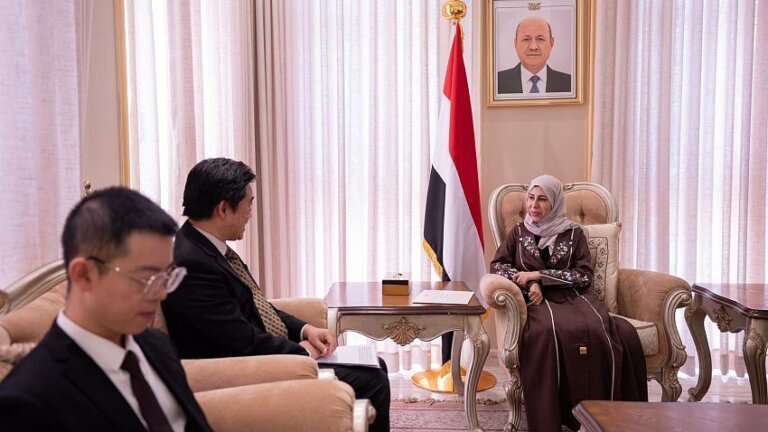
Rashad al-Alimi, chairman of Yemen’s Presidential Leadership Council, set out the government’s position at a meeting in Riyadh with the ambassadors of the countries sponsoring the political process in Yemen, a group that includes France. He said the escalation was a fresh test of the international community’s commitment to protecting peace, and stressed that the internationally recognised government did not start it and did not seek it.
Al-Alimi said the government would not allow its commitment to peace to be exploited by the Houthis to launch attacks and then be met with calls for restraint when it chooses to respond. He described the Mokha strike as the latest step in an escalation that began with the Houthis’ attempt to operate flights for Iran’s Revolutionary Guard Corps at Sanaa International Airport, followed by the targeting of commercial vessels and civilian sites in Saudi Arabia.
He argued that the government had long absorbed political and economic costs in the name of calm, keeping airports and seaports functioning and cooperating with United Nations peace efforts, because in his words Yemeni lives come above all else. He held what he called a lax international posture towards Yemen partly responsible for the present situation, and said the Houthis must now recognise that the phase of attacking without consequences is over.
Al-Alimi asked the international community to take on its responsibility for protecting civilians, civilian infrastructure and trade ports, and to reject the use of missiles and drones to force political or economic concessions. He warned that silence over the escalation would not restore calm and could instead be read by the Houthis as licence to continue.
France also raised the treatment of aid workers, saying the Houthis’ deliberate obstruction of humanitarian action compounds the crisis. It demanded the immediate release of all United Nations personnel, non-governmental organisation staff and diplomatic mission employees arbitrarily detained by the group. Paris described those detentions, and attacks on humanitarian personnel, as contrary to international humanitarian law and to Council resolution 2730, and as an obstruction of assistance civilians urgently need.
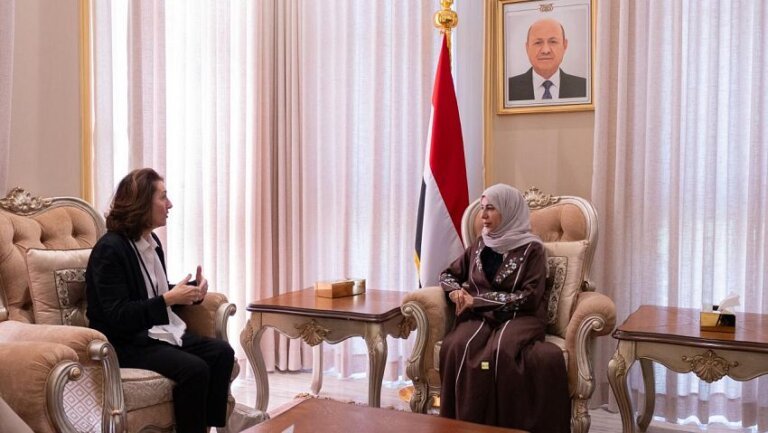
Despite the sharpness of its language, France restated that there is no military solution to the conflict in Yemen. It said it fully supports the legitimate government and backs the work of UN Special Envoy Hans Grundberg, who briefed the Council alongside Under-Secretary-General for Humanitarian Affairs Tom Fletcher. Only an inclusive political process under United Nations auspices, involving women and all segments of Yemeni society, can bring the crisis to an end, France said. France’s ambassador to Yemen, Catherine Corm-Kammoun, has maintained regular contacts with Yemeni ministers and the Presidential Leadership Council throughout the escalation.
About the Author