GCC Rejects Houthi Claims Against Saudi Arabia and Condemns Threats to Maritime Security
 Yemen Herald News
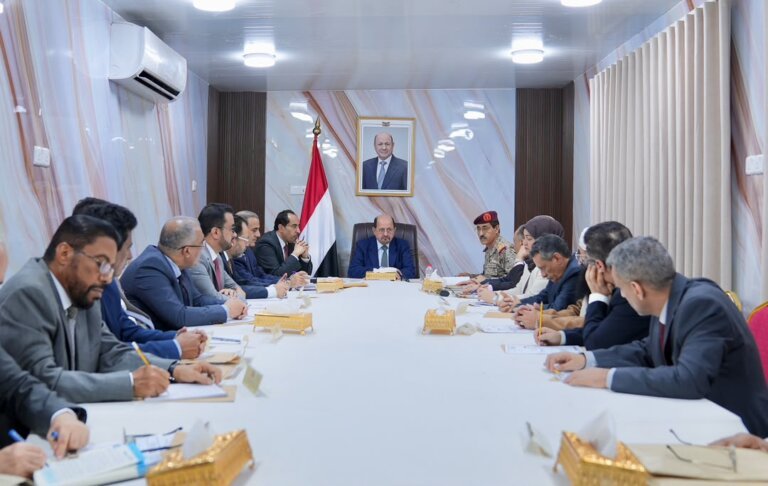
The Gulf Cooperation Council has firmly rejected a series of accusations levelled against Saudi Arabia by the Houthi militia’s military spokesman, dismissing the claims as baseless and condemning what it called escalating threats to maritime security in the Red Sea. Jassim Mohammed Al-Budaiwi, the bloc’s Secretary-General, said the allegations were an attempt to distort the facts and to evade responsibility for the militia’s own actions, which he argued have deepened the suffering of the Yemeni people and destabilised the wider region.
In a statement issued from the GCC’s headquarters in Riyadh, Al-Budaiwi said the Houthi rhetoric does nothing to change the reality of Saudi Arabia’s sustained support for Yemen. He pointed to the kingdom’s long-running efforts to advance a political settlement, promote peace and stability, and deliver humanitarian and relief assistance to a population exhausted by more than a decade of conflict.
The Secretary-General reserved his strongest language for the question of maritime security. Freedom of navigation and the safety of international shipping lanes, he stressed, are fundamental to regional and global stability, and any attack on or threat against commercial shipping constitutes a clear violation of international law, including the United Nations Convention on the Law of the Sea and the relevant resolutions of the UN Security Council. He urged the international community to adopt a firm, united stance against the false claims and the continued menacing of navigation.
The statement follows the Houthis’ declaration of what the group called a naval blockade on shipping linked to Saudi Arabia, a move Riyadh has rejected outright. Saudi officials say the kingdom will protect its vessels and maritime interests in accordance with international law, and have characterised the blockade announcement as an attempt at intimidation that will not alter their policy toward Yemen.
The stakes are considerable. The Bab al-Mandab Strait, the narrow chokepoint between Yemen and the Horn of Africa, connects the Red Sea to the Gulf of Aden and carries a significant share of the world’s seaborne trade on the route linking Asia to Europe through the Suez Canal. Houthi attacks on commercial vessels since late 2023 forced many of the world’s largest shipping lines to divert traffic around the Cape of Good Hope, adding weeks to voyages and heavy costs to global supply chains, and any renewed campaign against Saudi-linked shipping threatens a repeat of that disruption.
The GCC’s rebuttal is consistent with its recent positions. Earlier in July, Al-Budaiwi condemned Houthi targeting of Saudi Arabia’s southern region as a terrorist act, saying it underscored the group’s continued approach of destabilising regional security. The six-member bloc, which groups Saudi Arabia, the United Arab Emirates, Kuwait, Qatar, Bahrain and Oman, has repeatedly framed the Houthi threat as a matter of collective concern rather than a bilateral dispute between the militia and Riyadh.
Yemen’s war began when Houthi forces seized the capital, Sanaa, in late 2014, driving the internationally recognised government from power and prompting a Saudi-led military intervention the following spring. More than a decade later the country remains divided, with the Houthis controlling Sanaa and much of the populous north-west while the government, now led by the Presidential Leadership Council from the interim capital Aden, administers the south and east.
The human cost has been immense. United Nations agencies estimate that well over half of Yemen’s population requires some form of humanitarian assistance, with more than 18 million people facing acute food insecurity at points during the conflict and roughly 4.5 million displaced from their homes. Aid organisations warn that renewed escalation, whether on the battlefield or at sea, would further constrict the flow of food, fuel and medicine on which millions depend.
The confrontation also carries a regional dimension. The Yemeni government and its Gulf partners accuse Iran of arming, financing and directing the Houthis, a charge Tehran denies even as it publicly champions the group. Gulf officials argue that the militia’s maritime threats cannot be separated from a broader pattern of Iranian pressure on Arab states, and they have urged the UN Security Council to enforce the arms embargo on the group more rigorously.
For the GCC states, the immediate concern is economic as much as military. The bloc’s members depend on secure sea lanes to export oil, gas and petrochemicals and to import consumer goods, and ports on the Red Sea coast are central to Saudi Arabia’s long-term development plans. A sustained Houthi campaign against Saudi-linked shipping would raise insurance premiums, complicate port calls and unsettle investors at a moment when Gulf economies are pursuing ambitious diversification programmes.
Diplomatically, the episode complicates an already stalled peace process. UN-led efforts to convert the de facto truce of recent years into a durable political settlement have made little headway, and each new escalation narrows the space for compromise. Gulf officials insist the door to a negotiated solution remains open, but argue that talks can succeed only if the Houthis abandon threats against their neighbours and engage constructively with international mediation.
For now, the GCC appears intent on pairing condemnation with coordination, tightening consultation among member states on maritime security while pressing the wider international community to respond. Whether that pressure deters further Houthi action or precedes another cycle of escalation in the Red Sea, the bloc has made its position clear: accusations against Saudi Arabia will be rejected, and threats to navigation will be treated as a challenge to the region as a whole.
About the Author