Yemen Proposes International Conference to Rebuild Its War-Damaged Education Sector
 Yemen Herald News
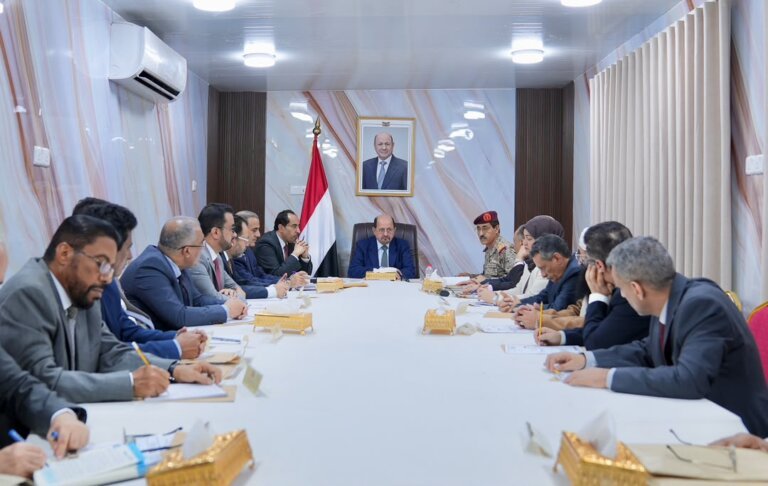
Yemen has called for an international conference to mobilize regional and global support for its battered education sector, using the 96th session of the Executive Council of the Arab Bureau of Education for the Gulf States to press its case. The session, held by video conference and attended by senior education officials from the bureau’s member states, reviewed the organization’s 2026-2030 strategic plan alongside discussions on digital transformation, artificial intelligence, and raising educational standards across the region. Representing Yemen, Deputy Minister of Education Dr. Ali Al-Abab argued that the scale of the challenges facing the country’s schools now demands coordinated international assistance rather than piecemeal support.
The Arab Bureau of Education for the Gulf States is an intergovernmental organization that brings together Saudi Arabia, the United Arab Emirates, Bahrain, Kuwait, Oman, Qatar, and Yemen to coordinate policy in education, culture, and science. For Yemen, membership offers one of the few standing regional platforms where its education officials can engage counterparts from far wealthier neighbors, and the council session provided an opportunity to place the country’s educational emergency on a shared Gulf agenda.
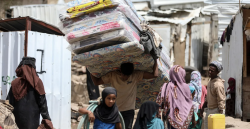
That emergency is severe by any measure. The civil war that erupted in 2015 has left Yemen’s educational institutions in disarray and compounded a humanitarian crisis in which, according to United Nations estimates, more than 18 million people need assistance and over 4.5 million have been displaced within the country. UNICEF estimates that around 3.2 million school-aged children are currently out of school, while some assessments put the figure as high as 3.7 million, and roughly 1.5 million displaced children are considered at risk of dropping out permanently. More than 2,400 schools have been destroyed, damaged, or diverted to other uses during the conflict, leaving the remaining facilities badly overcrowded. In areas of the north, teachers have gone unpaid for years, driving many experienced educators out of the profession altogether.
Against that backdrop, participants in the council session did not confine themselves to reviewing existing strategies. The meeting included workshops on issues reshaping education across the region. One examined the growing reliance on private tutoring and its consequences for educational equity, noting that when families must pay for supplementary lessons, children from poorer households fall further behind. A second workshop explored the integration of artificial intelligence into classrooms, weighing the opportunities it offers for personalized learning against the need for robust ethical and regulatory frameworks to govern its use in schools.
The discussions repeatedly returned to the value of collaboration among member states, with participants encouraging the sharing of knowledge and experience so that national education systems are better prepared for the challenges they face. There was broad recognition that improving education requires sustained communication and aligned strategies across borders, particularly in a region contending with complex political and social pressures.
The session also featured a presentation from Qatar’s Ministry of Education and Higher Education on its work to create inclusive learning environments for students with disabilities. By showcasing policies and classroom practices that have proven effective, the Qatari delegation sought to encourage other member states to adopt similar approaches, underlining the principle that equal access to education is essential for social progress.
Dr. Al-Abab’s proposal for a dedicated international conference on education in Yemen lands at a critical moment. With the conflict still disrupting schooling and standards continuing to deteriorate, Yemeni officials hope such a gathering would do more than raise money. The aim, as presented to the council, is to produce a coherent strategy for rehabilitating damaged schools, retraining and paying teachers, modernizing curricula, and introducing the digital tools that have become standard elsewhere in the region but remain out of reach for most Yemeni classrooms.
The stakes for Yemen’s children are difficult to overstate. Years of interrupted schooling have pushed many families to send children to work instead of class, and aid agencies warn that each additional year of disruption makes a permanent return to education less likely. Safeguarding the continuity of learning has therefore become a priority for both the government and international organizations working in the country, and Yemeni officials argue that rallying regional and global stakeholders behind a single initiative is the most realistic way to reverse the slide.
The case for investment extends beyond the immediate emergency. Yemen’s long-term reconstruction will depend heavily on a generation of educated young people able to rebuild institutions, staff hospitals and schools, and contribute to a functioning economy. Seen in that light, international involvement in Yemeni education is not only a humanitarian necessity but an investment in the country’s future stability, a point Yemeni representatives pressed throughout the session.
As the council concluded its work, members signaled a commitment to deeper cooperation on shared educational challenges, from teacher development to the responsible adoption of new technologies. Whether that commitment translates into concrete backing for Yemen’s proposed conference remains to be seen, but the initiative now sits formally before the region’s principal education body. If the conference goes ahead, it could become a turning point for a sector that has absorbed a decade of damage, opening the way for partnerships that improve what Yemeni children are taught, how their teachers are trained, and the conditions in which they learn.
About the Author