Houthi Abuses of Educators Documented Across Four Yemeni Provinces
 Yemen Herald News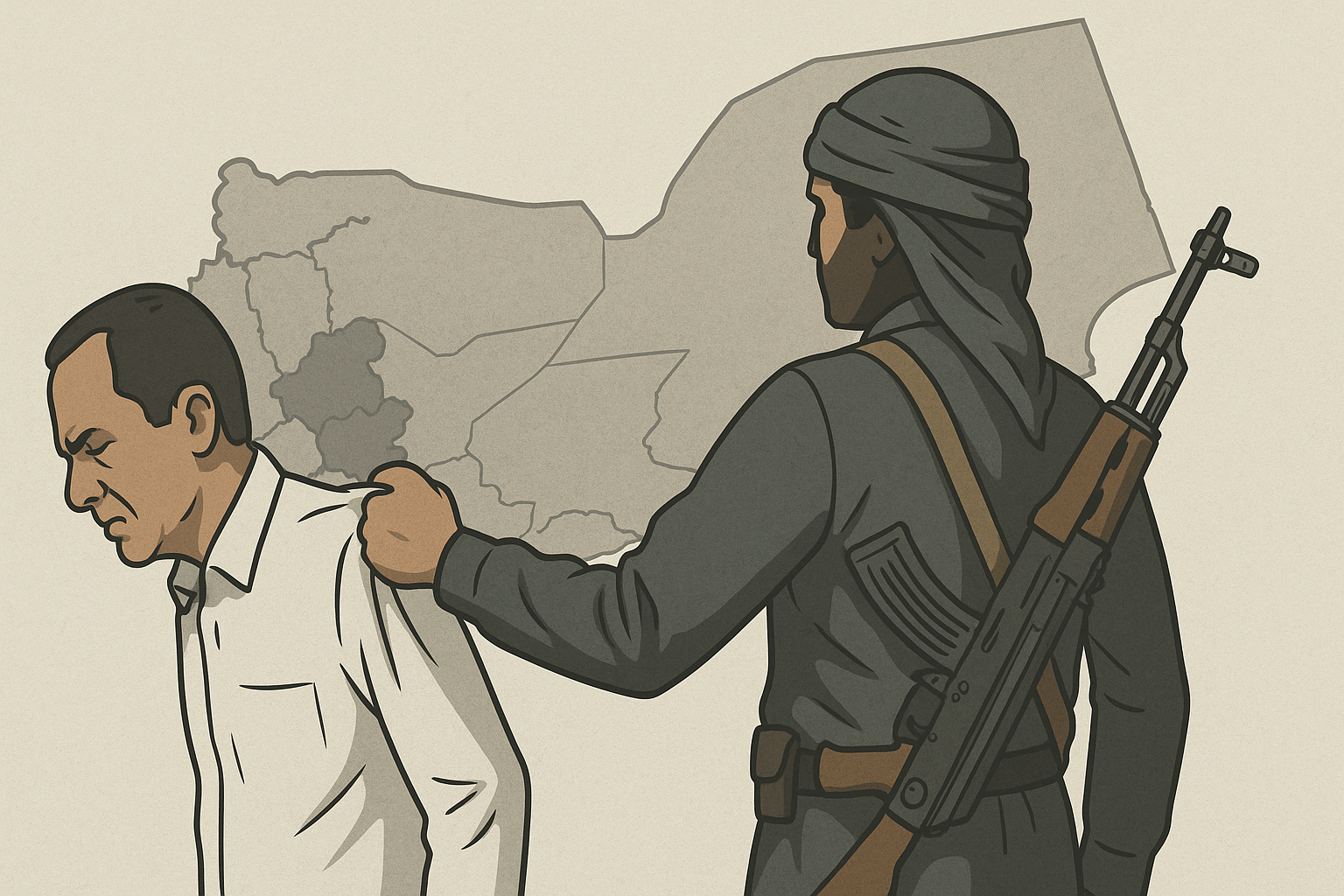
The ongoing conflict in Yemen, which erupted in 2015, has transformed the nation into a battleground marked by severe humanitarian crises and a catastrophic decline in public services. The Houthi movement, aligning itself with Iranian interests, has carved out significant control over northern regions, including the capital city of Sana’a. This faction has faced off against the Saudi-led coalition, which backs the internationally recognized government based in Aden. The prolonged war has exacerbated poverty and instability, leading to widespread displacement and a desperate need for international aid.
Within this tumultuous environment, the education sector has emerged as a focal point of conflict. Schools and educators find themselves caught in the crossfire, facing increasing pressure from Houthi authorities who aim to militarize educational institutions and enforce compliance with their ideologically driven policies. Educators who defy such demands, particularly regarding the recruitment of students for militia purposes and contesting unpaid salaries, have been subjected to intimidation tactics, illustrating a systematic campaign against dissent in the educational realm.
Impact on Education
As schools struggle to maintain a semblance of normalcy amid violence and economic hardship, many teachers are leaving the profession. Reports indicate a drastic decline in willing educators, compounding the already critical challenges faced by Yemeni youth who seek to access basic education. In this context, the targeting of educators becomes not just an alarming human rights violation but also a significant impediment to the future of Yemen’s young generations.
The situation for educators across four provinces under Houthi control has reached a distressing new height. Recent reports indicate that teachers and administrators in areas such as Amran, Hajjah, Sana’a, and Ibb are facing an alarming escalation of violations against their rights. These incidents include arbitrary detentions, physical assaults, and outright threats directed at those who resist or oppose the unlawful practices enforced by Houthi officials in schools.
Escalating Violations
In Amran, a notable incident involved the detention of a respected teacher, Ali Atif, who has been a prominent figure in the educational community for over two decades. His capture took place in the Khamer district, and he was subsequently transferred to a detention facility following directives from a local security authority. This was not an isolated event for Atif, as he had previously endured multiple unlawful detentions, underscoring the targeted nature of the Houthis’ actions against dissenting educators.
In Hajjah’s Kaidana district, the situation is equally alarming. An armed group broke into the home of teacher Hamoud Nour, who had recently voiced concerns about teacher salaries on social media, resulting in his abduction. Witnesses reported that he was physically assaulted before being forcibly taken to an unknown location. This marks yet another instance of abuse suffered by educators who dare to speak out against Houthi practices, reflecting a broader trend of silencing critics.
The capital city, Sana’a, has also witnessed significant violations within educational settings. During a critical examination period, a female school guard was attacked by armed men who attempted to smuggle in cheating materials for students. The assailants resorted to violence, injuring the guard with a weapon as she tried to uphold the integrity of the exam process. Such incidents highlight the growing risks faced by educational personnel and the increasing militarization of schools in Houthi-controlled areas.
Violence in Schools
At the heart of the educational crisis in Yemen are the teachers and school staff who continue to fulfill their responsibilities despite the overwhelming risks. Many educators work tirelessly to provide quality education under duress, often sacrificing their own safety and financial stability for their commitment to their students. However, the ongoing intimidation tactics implemented by Houthi officials threaten to completely dismantle the educational framework that remains in place. With teachers fleeing for their safety or abandoning their posts due to financial despair, the future of education in Yemen hangs in the balance.
On the opposing side, the Houthi movement represents a significant threat to educational stability. Their efforts to recruit students into military roles and their oppressive law enforcement tactics exemplify a clear intent to control the narrative and use education as a means of propagating their ideological agenda. By targeting educators who stand against these policies, the Houthis aim to instill a climate of fear, silencing dissenting voices and consolidating their authority in regions they govern.
The broader Yemeni population, particularly parents and students, remains deeply affected by this conflict over educational integrity. Children, who constitute the future of the nation, are bearing the brunt of this violence. With many unable to access education, the long-term implications for Yemen are dire. Families struggle with the reality of watching their children lose opportunities for learning and development, as the militarization of schools and the targeted assaults on educators paint a grim picture of an already weakened educational infrastructure.
International organizations and diplomatic entities also play a critical role as stakeholders in this situation. Numerous NGOs and humanitarian agencies have attempted to address the health and education crises unfolding across Yemen, persistently calling for increased support and intervention. Unfortunately, financial constraints and the chronic instability hinder such efforts. However, the advocacy for educators’ rights continues to rise in prominence, urging the international community to take notice of the dangers posed by armed groups and to champion the importance of preserving education in conflict zones.
The educational violations unfolding in Yemen have repercussions that stretch far beyond individual incidents. As the conflict continues to ravage the nation, the long-term implications for regional stability become increasingly profound. The Houthi movement’s efforts to militarize classrooms and silence dissent threaten to produce a generation of youth who are ill-prepared for the challenges of rebuilding their society post-war. The consequences will likely reverberate across the Gulf region, potentially destabilizing neighboring countries that are already grappling with their challenges.
Long-term Implications
Moreover, the conflict disrupts the balance of power not only within Yemen but also in the context of broader geopolitical dynamics involving Iran and Saudi Arabia. The Houthi movement, expressed as an Iranian proxy, might seek to extend influence over Yemen’s youth, shaping a radical ideological framework while fostering loyalty among young recruits. As Iran’s influence continues to grow, its relationship with groups like the Houthis may heighten sectarian tensions and exacerbate conflicts in the region, posing risks of further violence and instability.
This educational crisis also places additional strain on humanitarian efforts. With over 18 million people in need of assistance, as highlighted by the United Nations, the urgent need to restore education emerges as a core aspect of rebuilding social stability. The ongoing targeting of educators discourages international investment in Yemen’s educational infrastructure, creating a cycle of decline that is difficult to reverse. The success of reconstruction efforts in Yemen will hinge on the ability to protect educational systems from the political machinations of armed factions and to reinstate a sense of normalcy where teachers and students can safely pursue academic development.
Furthermore, the steady flow of educational violations can exacerbate the existing resource drain facing Yemen’s educational system. As teachers are forced to leave the profession or go into hiding, the loss of experience is significant. New educators may lack the necessary training or support to effectively teach in a war-torn environment, leading to a generational gap in education that will take years to fill. This ongoing educational deterioration threatens not only the current academic year but decades of development for Yemen’s youth, paving the way for a future that lacks the essential skills and knowledge needed for reconstruction.
The mounting violations against educators in Yemen highlight a troubling intersection of political control and the denial of basic human rights. Educational institutions, traditionally regarded as sanctuaries for learning and development, are being manipulated to serve the militaristic objectives of the Houthis. This calculated strategy seeks not only to eliminate opposition but also to ensure that future generations are indoctrinated into Houthi ideology, further entrenching their power in Yemen.
Political Control and Education
The situation encapsulates the broader chaos of the Yemeni civil war, where humanitarian considerations often take a backseat to political ambitions. The deprioritization of education in favor of military goals severely restricts the potential for social advancement and recovery post-conflict. Without immediate intervention, the trajectory for Yemen’s youth appears bleak, as the ongoing conflict robs them of educational opportunities, leaving them vulnerable to radicalization and exploitation.
In examining the broader implications, one must also consider how utilizing education as a battleground mirrors other global conflicts where militant groups attempt to seize control over social structures. The Houthi movement’s strategy reflects a disturbing trend that has implications for various regions confronting similar turmoil. Understanding these patterns may pave the way for international communities to devise more effective responses to combat such human rights abuses.
Finally, the response required to address these ongoing violations must be multifaceted, involving not only protections for current educators but also systematic reforms that prioritize education as a human right. Efforts must focus on safeguarding schools, ensuring fair compensation for teachers, and supporting the restoration of educational norms and standards after years of conflict-induced chaos. Without these vital measures, Yemen risks entering an era where education and intellectual growth become relics of a past society, irrevocably altered by the weight of war.
The immediate future for educators in Yemen appears fraught with uncertainty and danger. As long as the Houthis maintain their grip on power, individuals who oppose their practices will likely continue to face violent reprisals. The targeted violence against teachers sets a grim precedent that could deter many from pursuing careers in education, leading to a severe shortage of qualified personnel. Consequently, the ability to effectively educate the next generation hinges on a volatile political landscape that shows no signs of stabilizing in the near term.
In response to these rights violations, international advocacy efforts may intensify. Increased pressure from humanitarian organizations and foreign governments could lead to calls for the protection of educational professionals and the enforcement of international human rights laws in conflict zones. These external forces might catalyze a discourse that encourages the recognition of education not only as a fundamental right but as a crucial factor for social resilience and long-term peacebuilding in Yemen.
Despite the overshadowing presence of violence, local and international stakeholders must remain committed to creating safe environments for learning. Future discourse may center around establishing educational safe havens or support networks for educators who risk their lives to teach. Such initiatives could involve partnerships with NGOs dedicated to human rights and educational preservation, aiming to restore hope amid seemingly insurmountable odds.
Looking beyond the immediate challenges, the restoration of Yemen’s educational system will be a pivotal element for future reconciliation efforts once the conflict subsides. The importance of re-establishing educational frameworks cannot be overstated; these will serve as the foundation for rebuilding social structures and fostering a knowledgeable, skilled population capable of leading the country toward recovery. The journey towards educational revitalization might be long and arduous, but it ultimately represents a crucial avenue for healing and growth in a nation that has endured trauma for far too long.
About the Author