Houthi spokesman denies threat to Mecca as Saudi alert is lifted within minutes
 Adel Haddad

SANAA, Yemen — Houthi military spokesman Yahya Saree said on Saturday that his forces posed no threat to Mecca, hours after Saudi authorities issued and withdrew a danger alert for the province.
Saree made the statement on his Telegram channel late on 21 November, according to Middle East Eye and Press TV.
He said Houthi operations target Saudi oil facilities and military bases, and he described the claim of a threat to the city as a falsehood.
“The Yemeni people are ones who sanctify Mecca and all Islamic holy sites,” Saree said, in remarks carried by Middle East Eye.
Press TV, which identified him as Brigadier General Yahya Saree, spokesman for the Yemeni Armed Forces, reported him saying there was no threat to Mecca except from the Saudi government.
Saudi Arabia’s Civil Defense issued the alert for Mecca province on Saturday night and lifted it shortly afterwards, Press TV reported. Middle East Eye said the alert was withdrawn moments after it went out.
Neither outlet published the wording of the alert. Neither named a Saudi official who set out what had prompted it.
The Saudi-led coalition said in the early hours of Sunday that it had intercepted and destroyed a ballistic missile launched toward western Saudi Arabia, according to the Turkish news agency Anadolu.
That statement referred to western Saudi Arabia and did not name Mecca. Yemen Herald found no coalition statement identifying the city as the target.
No Houthi claim of responsibility for the missile had been published by Sunday morning.
A liveblog run by the broadcaster Iran International put the alert at about 11.43pm in Riyadh on Saturday, roughly two hours before the coalition announced the interception. Yemen Herald could not confirm those timings independently.
The coalition has not said publicly whether any projectile it reported intercepting this month was aimed at Mecca.
Mecca province lies in western Saudi Arabia. The wider region also contains Jeddah, Taif, Yanbu and Medina.
The sequence has repeated through November. On 11 November the coalition said it had intercepted three cruise missiles heading for the Riyadh region, two drones aimed at Mecca and southern areas, and two missiles pointed toward the west, Reuters reported.
Saudi civil defence issued alerts that day for Taif, Yanbu and Khamis Mushait before announcing that the danger had passed, Reuters said, citing state television. Mecca was not among the cities named.
Saree denied targeting Mecca with a drone on that occasion, saying Houthi operations were directed at oil facilities and military bases, according to Reuters.
On the same day Saree said Houthi forces had struck a pumping station at Yanbu. Reuters reported that Saudi Arabia did not confirm the claim.
He repeated the denial after a further interception on 15 November, Middle East Eye reported.
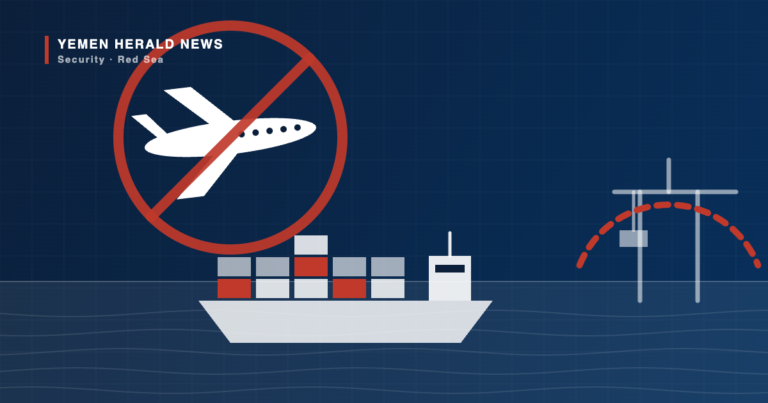
The Houthi position has also been stated where Mecca was not the subject. On 20 November Saree warned airlines to avoid Saudi airspace, saying it would be the scene of Houthi operations in the coming hours, Reuters reported.
That warning carried an exception for the airspace near Mecca and Medina.
In the same statement Saree told shipping companies to move their vessels out of Saudi Red Sea ports and urged port workers to leave, Reuters reported.
Arab News, a Saudi outlet, has carried coalition accounts of drones intercepted in the Makkah region and of debris falling over the province after missiles were destroyed.
The exchanges belong to an escalation that began on 3 September, when fighting intensified and ended a four-year truce brokered by the United Nations, UNICEF said in a statement on 18 November.
UNICEF said at least 64 children had been killed in Yemen since that date and the same number injured, and that it expected the figures to rise.
Reuters reported that a Houthi attack on Riyadh’s King Khalid International Airport last month killed 13 people and wounded more than 300. Reuters gave no source for those figures.
The attack led to the cancellation of most international flights at the airport, Reuters said.
The coalition said on 21 November that it had intercepted three ballistic missiles heading toward Riyadh, Arab News reported.
Agence France-Presse reported that the coalition also said two ballistic missiles were intercepted over Jizan on 20 November, with debris falling at Al-Shuqaiq.
Coalition spokesman Turki al-Maliki said on 20 November that coalition forces had struck Hodeidah port, targeting capabilities used in smuggling and in moving weapons and ballistic missiles, Agence France-Presse reported.
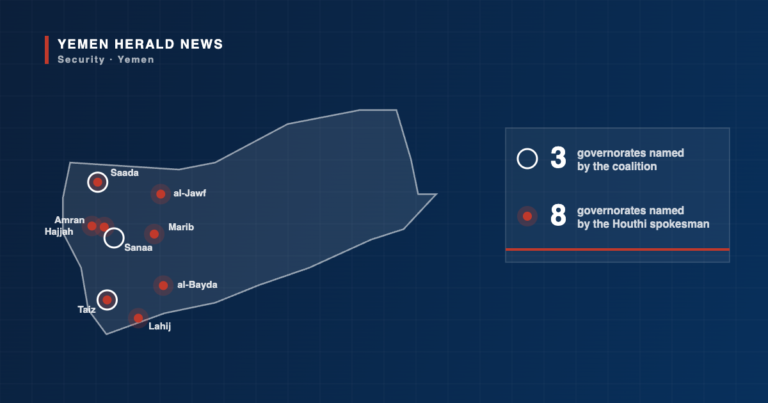
Saree said the next day that the coalition had carried out 71 strikes across eight Yemeni governorates in 24 hours. Yemen Herald found no coalition confirmation of that count.
Yemen’s information minister said Hodeidah port remained in operation and that goods would continue to move through it, Reuters reported.
Accounts of the human cost diverge. The Houthis said coalition strikes killed 41 people in the 24 hours to 20 November, while Yemen’s Saudi-backed armed forces said air strikes, drone attacks and artillery had killed or wounded 193 Houthi fighters, Agence France-Presse reported.
The agency said the figures could not be verified independently.
UNICEF said 28 health facilities had been damaged in the escalation and that more than 330,000 people had been displaced, among them about 174,000 children.
Press TV, which is funded by the Iranian state, said Saudi authorities had made earlier claims about Yemeni missiles or drones heading toward Mecca and Medina. It did not give the dates of those claims.
About the Author