Iran Says It Will Let Japanese Ships Transit the Strait of Hormuz
 Yemen Herald News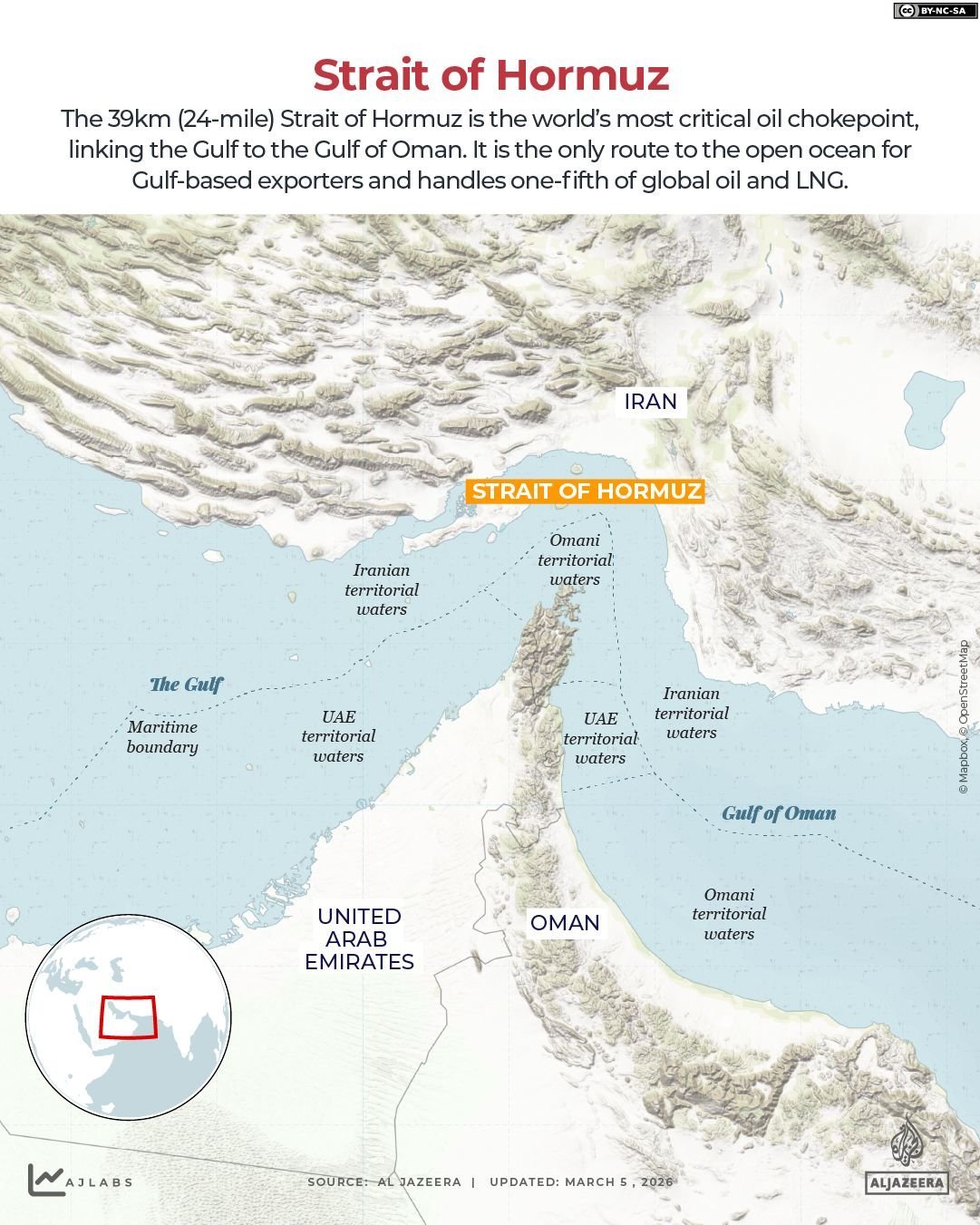
Iran said it was prepared to allow Japanese-linked vessels to transit the Strait of Hormuz, a significant signal for a country that draws the overwhelming majority of its crude oil from the Middle East. Iranian Foreign Minister Abbas Araghchi set out the position in an interview with Japan’s Kyodo News published on Friday 20 March 2026, and Iranian officials indicated that consultations with Tokyo on the practical arrangements had already begun.
Araghchi’s formulation was deliberate. Iran had not closed the strait, he said; in Tehran’s account the waterway remained open, and was shut only to vessels belonging to countries that had attacked Iran. Ships from other states, he indicated, could pass. He encouraged Japanese operators to approach the Iranian authorities to discuss the specifics of individual transits, and said the question had been raised during his telephone call with Japanese Foreign Minister Toshimitsu Motegi earlier that week, in which Motegi pressed the case of Japanese-linked ships held up in the Gulf.
The strait carries roughly a fifth of the world’s seaborne oil and a substantial share of its liquefied natural gas in normal conditions, and it has no practical alternative for most Gulf exporters. Traffic through it had been sharply reduced since early March 2026, shortly after the outbreak of hostilities between Iran and the United States and Israel. Insurers withdrew cover, charterers paused voyages, and a number of merchant vessels were struck by projectiles, leaving owners unwilling to commit tonnage to the run.
Japan’s exposure is unusually direct. The country imports well over ninety per cent of its crude from the Middle East and has no domestic production of consequence, so a prolonged closure translates quickly into refinery scheduling problems and higher landed costs. That dependence has long shaped Tokyo’s approach to Iran, which has historically maintained working diplomatic channels with Tehran even while remaining a close ally of Washington, and it explains why Japanese vessels featured early in Iran’s list of exceptions.
Tokyo’s public response was cooler than the offer might have suggested. Asked on 23 March whether Japan would seek Iranian assistance to move its ships through the strait, Motegi said that for the time being the government was not thinking about that. The reluctance reflects the position such a request would create: applying to Tehran for permission to use an international waterway would implicitly concede Iran’s authority to grant or withhold it, a concession Japan’s partners would be unlikely to welcome.
That is the central legal objection to the arrangement. The Strait of Hormuz is subject to the regime of transit passage, under which ships and aircraft of all states enjoy passage that coastal states may not impede. A vetting system in which vessels register with Iranian authorities and receive clearance converts a right into a permission. Reports at the time described the Islamic Revolutionary Guard Corps developing a more structured registration and screening process for ships seeking to pass, and a de facto safe corridor emerging close to the Iranian coastline, where transiting vessels were less exposed.
In practice, a limited number of ships were reported to be moving. Vessels connected to China, India and Pakistan were said to be transiting with Iranian approval, hugging the northern side of the channel. The pattern suggested a system of selective clearance rather than a general reopening, with access functioning as a diplomatic instrument: extended to states Tehran regarded as neutral or friendly, withheld from those aligned with the military campaign against it.
For shipowners, the difficulty was that clearance from one party does not confer safety. A vessel approved by Tehran still had to satisfy insurers, crews and flag states that the voyage was defensible, and in a theatre where naval forces on both sides were operating, an Iranian assurance covered only one source of risk. Several operators concluded that the commercial case for waiting outstripped the case for sailing, which is why transit volumes stayed far below normal even as exceptions were announced.
Several governments beyond the region signalled a readiness to help restore normal navigation. Japan, France, Germany and the United Kingdom each indicated willingness to contribute to efforts aimed at securing safe passage, though the form such contributions might take, whether naval escort, insurance backstops or diplomatic mediation, was not settled. Escort operations carry their own escalation risks in a waterway barely thirty kilometres wide at its narrowest point, with Iranian territory on one shore.
The commercial consequences extended well past the Gulf. Freight and war-risk premiums rose steeply, tanker owners demanded higher rates for any voyage into the region, and buyers in Asia and Europe turned to alternative grades and strategic stocks.
Iran’s willingness to make exceptions also carried a message for Washington. By singling out Japan, a treaty ally of the United States that has kept its own channels to Tehran, Iranian officials drew a line between countries taking part in the campaign against it and those merely allied to them.
Araghchi’s remarks were read in Tokyo and elsewhere as a calibrated softening rather than a resolution. Iran retained the ability to restrict traffic, kept the decision on individual transits with its military, and demonstrated that it could ease pressure on selected partners. Whether that translated into a durable reopening depended on the wider conflict, which showed no sign of settling in the days that followed.
About the Author