Iranian Opposition Says It Has Formed a National Liberation Army Inside Iran
 Yemen Herald News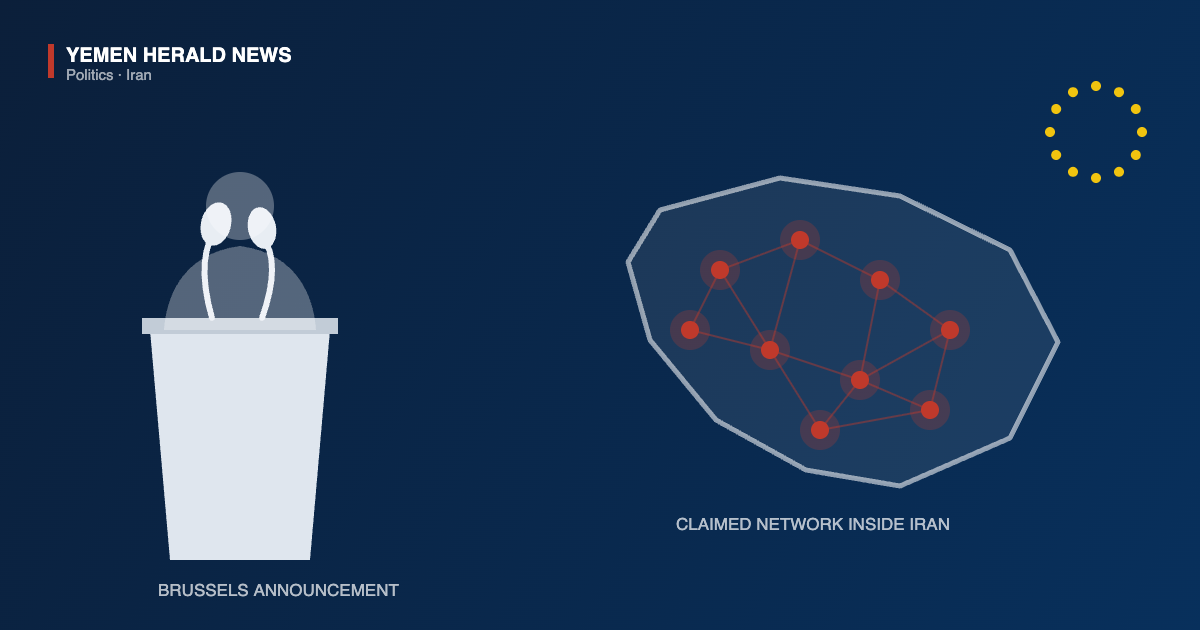
The Iranian opposition group the National Council of Resistance of Iran announced in March 2026 that it had formed what it called a National Liberation Army inside Iran. The announcement was made by Mohammad Mohaddessin, chair of the council’s foreign affairs committee, at a conference in Brussels.
Mohaddessin described the step as a qualitative shift in the opposition’s activity inside the country. He said the force was made up of members affiliated with the People’s Mojahedin Organization of Iran, the armed opposition group that forms the largest component of the council.
According to his account, 250 members of the new force took part in an operation against the compound of Iran’s supreme leader, Ali Khamenei, and other heavily secured sites in Tehran on 23 February 2026. He said 100 of those involved were killed or arrested and 150 returned to their bases.
That date placed the operation five days before the United States and Israel struck Iran on 28 February, the event that opened the wider regional conflict. Mohaddessin characterised the operation as a major turning point in the opposition’s campaign against the Iranian government.
These are claims made by the organisation about its own activities. Iranian authorities did not confirm the account, and no independent verification of the operation, the casualty figures or the existence of the force in the form described has been published.
The National Council of Resistance of Iran presents itself as a coalition of opposition organisations and a government-in-exile. It has been based in France for decades and holds regular conferences in European capitals, at which it publicises its positions and its claims about conditions inside Iran.
The People’s Mojahedin Organization of Iran, commonly known as the MEK or PMOI, has a long and contested history. Founded in the 1960s, it opposed the monarchy, then broke with the authorities after the 1979 revolution and conducted an armed campaign against the new government.
During the Iran-Iraq war the group relocated to Iraq and operated from bases there with the support of Saddam Hussein’s government, a decision that damaged its standing among many Iranians and continues to be cited by its critics. Its members were later relocated to Albania.
The group was designated as a terrorist organisation by the United States and the European Union for a period, and those designations were subsequently lifted, by the EU in 2009 and by the United States in 2012. The reversals followed extended legal and political campaigns.
Assessments of the organisation’s support inside Iran vary widely and are difficult to establish. The group asserts an extensive clandestine network, while independent analysts have generally judged its domestic base to be considerably smaller than it claims. Neither position can be readily tested.
The concept of resistance units, referred to by Mohaddessin, has featured in the council’s public material for several years. These are described as small clandestine cells operating inside Iranian cities, credited in the group’s statements with protest activity and acts of sabotage.
The announcement came at a moment of severe pressure on the Iranian state. The conflict that began at the end of February 2026 involved strikes on Iranian territory and, subsequently, Iranian attacks on Gulf states, placing the government under simultaneous external and internal strain.
Opposition movements have historically become more visible during such periods, and rival Iranian opposition currents, including monarchist and republican groupings, have also sought to position themselves. The Iranian opposition abroad remains fragmented, with no single body commanding broad recognition.
For European governments, announcements of this kind create difficulty. Hosting opposition conferences is consistent with freedom of assembly, but a declaration of an armed force operating inside another state raises questions that member states have generally preferred to avoid addressing directly.
The Iranian government has consistently described the organisation as a terrorist group and has prosecuted those it accuses of membership. Human rights organisations have documented executions of people convicted of affiliation, and have raised concerns about the fairness of those proceedings.
What can be established from the March 2026 conference is the content of the announcement rather than the facts it asserted. Mohaddessin stated that the force exists, gave figures for the February operation and described its significance, and those statements were reported at the time.
Verification of any claim about events inside Iran has become harder over the past decade. Foreign correspondents operate under tight restrictions, internet access has been repeatedly curtailed during periods of unrest, and independent monitoring groups work largely from outside the country using material that is difficult to authenticate.
That environment shapes how announcements of this kind circulate. A claim that cannot be checked is also difficult to refute, and both the organisation making it and the government denying it have an interest in the version of events that reaches an international audience.
The council’s conferences typically draw serving and former European and American politicians as speakers, a practice that has attracted criticism from analysts who argue it lends the organisation a standing its domestic support does not justify. Supporters counter that engagement is a legitimate form of political advocacy.
Whether the National Liberation Army functions as described, and what capability it possesses, remained unverified. Readers should treat the operational details above as the organisation’s own account of events inside a country where independent reporting is severely restricted.
About the Author