Al-Subaihi and US Ambassador Discuss Security and Yemen-US Relations
 Yemen Herald News
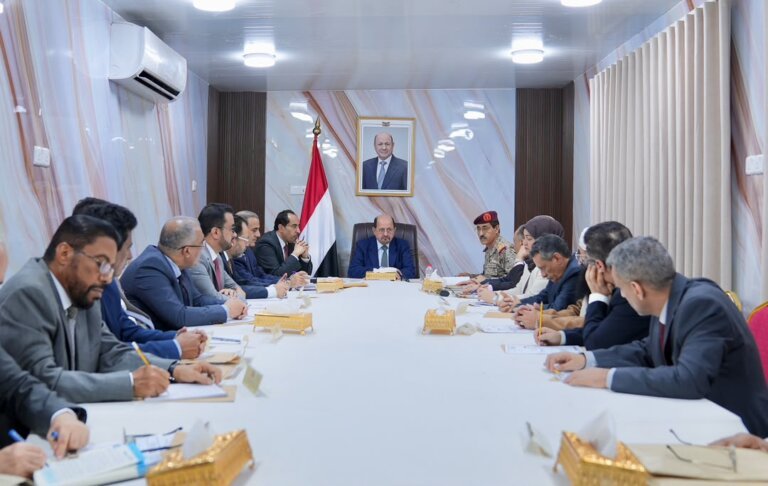
Lieutenant General Mahmoud al-Subaihi, a member of Yemen’s Presidential Leadership Council, has held a meeting with the United States Ambassador to Yemen, Steven Fagin, in Riyadh. The discussion centred on bilateral relations between Yemen and the United States and on the latest developments affecting both the country and the wider region.
During the meeting, al-Subaihi and Fagin explored various aspects of joint cooperation aimed at advancing mutual interests. A significant focus was placed on efforts to bolster security and stability in Yemen, a country that has been beset by years of conflict and instability, and where the strengthening of security remains a central concern.
Al-Subaihi expressed gratitude for the supportive stance of the United States toward Yemen’s government and its political leadership, particularly in the context of countering what he described as terrorist threats posed by the Houthi movement, which the Yemeni government and its allies say is backed by Iran. Iran has consistently denied such accusations regarding its role.
The lieutenant general also highlighted the Yemeni government’s initiatives to implement economic, administrative and financial reforms, situating the security discussion within the broader agenda of strengthening the state. Reform in these areas is regarded as essential to the government’s efforts to rebuild institutions and to advance recovery.
The United States has been among the more significant international partners engaged with Yemen’s internationally recognised government, providing support across security, humanitarian and economic domains. Its engagement reflects a shared interest in stabilising the country and in countering threats to security, and the relationship has been an important element of the government’s external partnerships.
The focus on security and stability reflects the persistent challenges facing Yemen. The conflict has produced widespread insecurity, and strengthening the capacity of the government to maintain order and counter threats is central to its objectives and to the prospects for recovery, making security cooperation a recurring theme in its engagement with partners.
The framing of the Houthi movement as a source of terrorist threats reflects the Yemeni government’s characterisation of its adversary. The government and its allies have consistently portrayed the movement as a threat to security, situating it within a broader narrative regarding regional dynamics and the role of Iran, a framing that others contest.
The reference to Iran’s alleged backing of the Houthi movement reflects a longstanding element of the government’s position. Yemen’s recognised authorities, along with their regional and international partners, have accused Iran of supporting the movement, while Tehran has denied arming it, a dispute that remains a feature of the debate over the conflict.
The emphasis on the government’s reform initiatives reflects the importance attached to strengthening institutions and governance. Economic, administrative and financial reforms are central to the government’s agenda, and highlighting them in discussions with partners underscores the government’s commitment to rebuilding the state and to the objectives that international support is intended to advance.
The choice of Riyadh as the venue for the meeting reflects the regional dimension of Yemen’s diplomacy and the role of Saudi Arabia as a base for engagement on Yemeni affairs. Much activity related to the government takes place in coordination with or on the territory of neighbouring states, a consequence of the circumstances created by the conflict.
The involvement of a Presidential Leadership Council member in the meeting underscores the significance the government attaches to its relationship with the United States. Engagement at senior levels reflects the importance of the partnership and the priority placed on maintaining and strengthening ties with a key international partner.
Joint cooperation aimed at advancing mutual interests encompasses a range of potential areas, from security and counterterrorism to economic and institutional matters. Identifying and pursuing areas of common interest is central to sustaining an effective partnership, and the exploration of such cooperation reflects the ongoing engagement between the two sides.
The latest developments in Yemen and the region, discussed in the meeting, form an important part of the context for the partnership. Keeping partners informed of developments and coordinating on the evolving situation is essential to effective cooperation, particularly in an environment shaped by both the internal conflict and wider regional dynamics.
Sustaining and building on the cooperation discussed will depend on continued engagement and on the evolution of the situation. Security and political cooperation are ongoing endeavours, and their effectiveness depends on sustained commitment and coordination between the partners as they respond to a shifting landscape of challenges and opportunities.
The meeting also reflected the layered nature of Yemen’s engagement with Washington, which extends across a range of officials and institutions. In recent periods, American diplomats have held talks with the interior, finance and other ministries, as well as with members of the Presidential Leadership Council, on matters spanning border security, customs, economic reform and counterterrorism. This breadth of contact underscores the extent to which the government relies on its relationship with the United States, and the effort it devotes to sustaining engagement across the many strands of a partnership it regards as central to its stability and to its longer-term prospects for recovery.
For now, the meeting between al-Subaihi and Fagin reaffirmed the relationship between Yemen and the United States and the shared interest in strengthening security and stability. As Yemen works to address its security challenges and advance its reform agenda, engagement of this kind with the United States remains an important element of its efforts.
About the Author