
Yemen’s Water Minister and Dutch Firm MetaMeta Deepen Cooperation on Water Data
 Yemen Herald News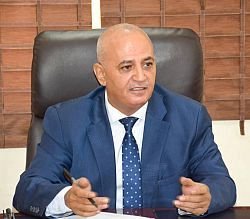
Yemen’s Minister of Water and Environment, Engineer Tawfiq al-Sharjabi, has held a video conference with the executive management of the Dutch company MetaMeta to discuss deepening cooperation in water resource management and the environment. The talks explored collaboration in integrated water resources management, the development of information systems and institutional capacity building, areas central to addressing the country’s acute water challenges.
During the discussions, the two sides reviewed ongoing projects, including technical rehabilitation programmes and hydrological studies in the Tuban Delta and Wadi Mawza. Al-Sharjabi highlighted the importance of these initiatives in tackling the pressing water problems that confront Yemen, and he pointed to the value of the long-standing partnership with the Dutch organisation.
The minister commended MetaMeta for its contributions to Yemen since 2004, emphasising that improving the reliability of water data is crucial for informed decision-making and for enhancing the effectiveness of development interventions. He underscored the necessity of completing infrastructure work and of strengthening the systems that underpin sound water management.
Water lies at the heart of Yemen’s environmental and humanitarian challenges. The country ranks among the most water-scarce in the world, with per-capita availability far below regional and global averages, and decades of over-extraction have drawn down the aquifers on which many communities depend. Managing this scarce resource wisely is essential to the wellbeing and survival of the population.
Integrated water resources management, a focus of the talks, represents an approach that seeks to coordinate the development and management of water, land and related resources. Rather than addressing water issues in isolation, this approach considers the many competing demands on water and aims to balance them in ways that are equitable and sustainable, a particularly valuable framework in a water-stressed country.
The emphasis on information systems and water data reflects a recognition that effective management depends on reliable information. Accurate data on water resources, their availability and their use are essential to making sound decisions, planning interventions and monitoring outcomes. Strengthening the systems that generate and manage such data is thus foundational to improving water management.
Institutional capacity building, another theme of the discussions, addresses the need to strengthen the bodies responsible for managing water. Years of conflict have strained Yemen’s institutions, and enhancing their capabilities is essential to enabling them to fulfil their mandates. Building capacity in this area supports the longer-term goal of sustainable and effective water governance.
The hydrological studies in the Tuban Delta and Wadi Mawza point to the practical dimension of the cooperation. The Tuban Delta, in the south, has long been an important agricultural area dependent on the management of seasonal water flows, while such studies help build the understanding of water systems needed to manage them effectively and to plan interventions grounded in evidence.
Technical rehabilitation programmes, also reviewed in the meeting, address the need to restore and improve the infrastructure on which water management depends. Years of conflict and neglect have taken a toll on water systems, and rehabilitating them is essential to ensuring the reliable supply and effective management of a resource on which so much depends.
MetaMeta’s long engagement with Yemen, dating back to 2004, reflects a sustained commitment that predates the current conflict. Such continuity is valuable, providing accumulated knowledge and established relationships that can support effective cooperation. The organisation’s experience in water management offers expertise that can help Yemen address its challenges.
The reliability of water data, singled out by the minister, has implications that extend across the water sector. Sound data underpin not only day-to-day management but also longer-term planning and the design of development projects. Where data are unreliable or incomplete, decisions may be poorly informed and interventions less effective, underscoring the importance of investment in this area.
Climate change adds urgency to these efforts. Rising temperatures and increasingly erratic rainfall threaten to intensify Yemen’s water scarcity, with consequences for agriculture, health and livelihoods. Building the capacity to understand and respond to these changes is essential to managing water sustainably in a shifting and increasingly challenging environment.
The agricultural dimension of water management is particularly significant in areas such as the Tuban Delta. Agriculture is by far the largest consumer of water in Yemen, and improving the efficiency and sustainability of water use in farming is central to conserving scarce resources while supporting the livelihoods and food security that depend on it.
Cooperation with international partners such as MetaMeta offers Yemen access to expertise, technology and support that can enhance its capacity to manage water. In a context of limited domestic resources, such partnerships are valuable in advancing the sophisticated and sustained efforts required to address the country’s water challenges effectively.
The exchange also reflected a broader recognition that Yemen’s water crisis cannot be solved by infrastructure alone. Pipes, wells and treatment plants matter, but so too do the less visible foundations of good management: accurate data, trained institutions and coordinated planning that weighs the competing needs of households, farms and the environment. By pairing physical rehabilitation with investment in data systems and institutional capacity, the cooperation with MetaMeta reflects an approach that treats knowledge and governance as being every bit as vital to water security as the hardware of supply, an emphasis that officials say is essential if Yemen is to make the most of its dwindling resources.
For now, the meeting between al-Sharjabi and MetaMeta reaffirmed a shared commitment to strengthening water resource management in Yemen through cooperation, data and capacity building. As the country grapples with severe water scarcity compounded by conflict and climate change, partnerships of this kind remain an important element of the effort to manage a resource vital to its future.
About the Author




