Planning Minister Mohammed al-Faqmi chairs first meeting on 2027-2029 development plan
 Yemen Herald News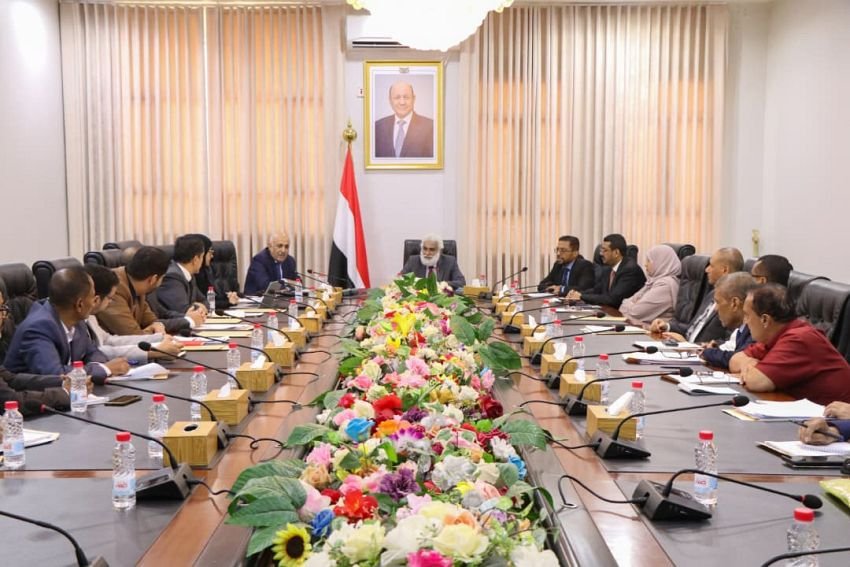
ADEN, Yemen — Yemen’s planning minister chaired the first meeting of a committee drafting the government’s 2027-2029 development and reconstruction plan, the state news agency Saba said.
Mohammed al-Faqmi, minister of planning and international cooperation, led the session in Aden on Wednesday, according to Saba.
The agency said the committee is a technical body tasked with preparing an economic, social and reconstruction plan for the three-year period.
The meeting covered the plan’s general framework, the mechanisms for drawing it up and its development priorities, Saba reported.
Al-Faqmi said the plan falls within a longer development vision running to 2040, the agency said.
He said it aims to build a diversified and resilient economy and to develop what he called promising sectors.
Other stated aims are to use available resources, create jobs, raise living standards and incomes, and achieve economic growth, according to Saba.
The minister listed rebuilding institutions and strengthening governance among the priorities, the agency said. He also named macroeconomic stability and economic recovery.
Al-Faqmi said the plan envisages a gradual shift from humanitarian relief toward sustainable development, Saba reported.
It also covers rehabilitating and expanding basic services in health, education, water and electricity, according to the agency.
This account of the meeting rests on Saba, which is controlled by the internationally recognised government. No independent confirmation of the session or its content has been published.
Aden serves as the temporary capital of that government. The Houthis hold Sanaa and much of the north.
A plan drawn up in Aden would apply, in practice, to the territory the government administers.
Saba did not identify the 2040 vision it referred to. No document under that name has been published by the ministry.
Yemen’s existing long-range framework is the National Vision for the Modern Yemeni State, which sets goals for governance, the economy, education and health.
That document divides its implementation into three phases running from 2019 to 2030, according to the Arab National Development Planning Portal.
The UN Economic and Social Commission for Western Asia runs a separate initiative, the Yemen Vision for Recovery and Development.
ESCWA describes it as a nationally owned vision built through technical dialogue among Yemeni experts and representatives of different parts of society.
The commission says sustainable recovery will require stronger public institutions as well as an agreed vision.
The economic backdrop is documented. The World Bank said Yemen’s real gross domestic product contracted by 1.5 percent in 2025.
It projected a further contraction of 0.5 percent in 2026, in its Yemen Economic Monitor published in the spring.
Government revenues fell to 5.6 percent of gross domestic product, the bank said, which it attributed to reduced external grants.
The bank said activity across sectors was held back by a difficult business environment, limited access to finance and weak domestic demand.
It said the rial in Aden appreciated sharply in August 2025 and has since stabilised, crediting central bank measures and external inflows, including Saudi financial support.
The bank warned that a sharp depreciation of the rial could push the economy into a far more severe contraction than it projects.
Oil is the variable the plan period turns on. Crude accounts for about 90 percent of Yemen’s merchandise exports and 80 percent of state budget revenue.
Exports were suspended for nearly four years from 2022. The World Bank recorded them as still blocked when it published its spring assessment.
The Presidential Leadership Council announced their resumption in July, Al Jazeera reported.
Saudi Arabia announced a 90 million dollar package in January to cover delayed public sector salaries, including military and security pay.
The government approved a 20 percent salary increase for civilian public sector employees in June, according to Yemen Monitor.
It has also pledged what it called strategic solutions to the electricity crisis.
Humanitarian figures are on the record. The UN Office for the Coordination of Humanitarian Affairs said more than 22 million people in Yemen need humanitarian assistance and protection in 2026.
That figure appears in the Humanitarian Needs and Response Plan published in March.
OCHA said 18.3 million people are acutely food insecure.
It said more than 2.2 million children under five are acutely malnourished, including 516,157 with severe acute malnutrition.
The plan counts 5.2 million people displaced inside the country.
Aid agencies appealed for 2.16 billion dollars for 2026 and set a target of reaching 12 million people, OCHA said. Of that sum, 1.6 billion dollars was sought for prioritised life-saving work.
The security position has shifted since the plan period was set. Houthi forces seized the port city of Mokha in the second week of September, Al Jazeera reported.
The group took the Red Sea coastline and a position astride the Bab al-Mandab strait during the same push, according to that reporting. The government disputes the permanence of those gains.
Reconstruction planning in Yemen has repeatedly been overtaken by fighting since 2015. Earlier recovery frameworks were drawn up during quieter periods and were not carried through.
Saba did not address the fighting in its account of the meeting.
The agency did not say when the committee would deliver a draft. It did not name the committee’s other members, and did not say whether donors had been consulted.
Al-Faqmi met World Food Programme and other UN officials on camp funding earlier this week, Saba reported at the time.
About the Author