Yemen’s PM Urges Universities to Align Programmes With Development Needs
 Yemen Herald News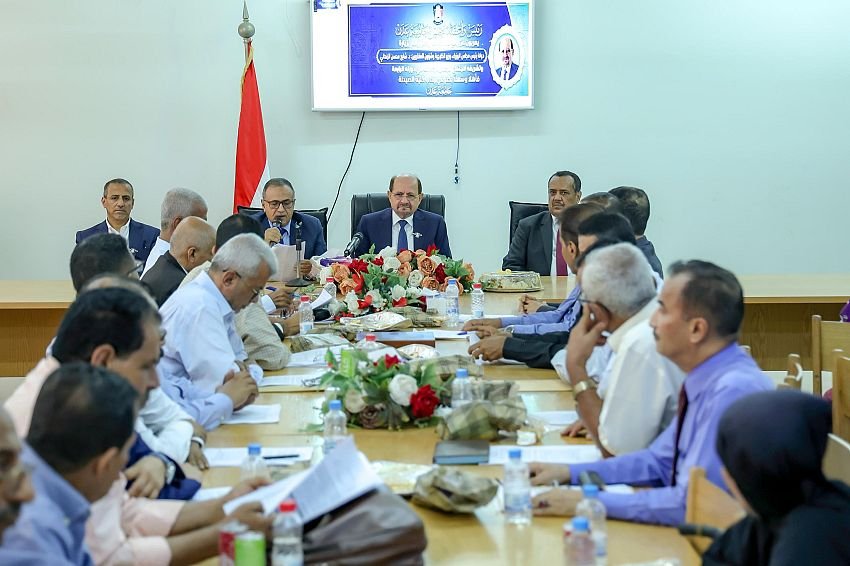
Yemen’s Prime Minister and Foreign Minister, Shaya al-Zindani, has called on the country’s universities to bind their academic programmes more tightly to national development priorities and the needs of the labour market, arguing that higher education must become an engine of economic recovery rather than simply a provider of degrees. He made the remarks while chairing a meeting of the University of Aden Council, held at the Faculty of Pharmacy, where discussion centred on the academic and administrative challenges facing one of Yemen’s most established institutions.
Al-Zindani stressed that universities have a decisive part to play in driving economic advancement, encouraging innovation, supporting entrepreneurship and strengthening institutional capacity, particularly at a moment when digital transformation is reshaping teaching and research worldwide. He urged the country’s higher education institutions to look beyond their traditional function of instruction and certification and to position themselves as strategic partners in policymaking, supplying the government with research, analysis and practical solutions to the development and economic problems that confront the nation.
The prime minister expressed appreciation for the University of Aden’s long record of service to Yemeni higher education, describing it as a pillar of learning that has helped cultivate generations of skilled professionals essential to the country’s growth. His emphasis on the institution carried a personal dimension as well, since al-Zindani is himself a graduate of the University of Aden, where he studied law before entering public life. He has served as Yemen’s foreign minister since 2024 and was named prime minister in early 2026, when a new government was formed under his leadership.
The appeal for closer alignment between academia and the labour market reflects the acute pressures bearing down on Yemen after more than a decade of conflict. The war that escalated in 2015 has hollowed out public institutions, disrupted the economy and left the state struggling to provide basic services. In that setting, the question of whether graduates emerge with skills that employers actually need is not an abstract policy concern but a matter of national resilience, as the country will depend on a capable workforce to rebuild infrastructure, restore services and manage any eventual recovery.
The humanitarian backdrop underscores the stakes. United Nations estimates put the number of Yemenis needing humanitarian assistance at around 19.5 million in 2025, with roughly 4.8 million people displaced by the protracted crisis. An education system that can equip young people with practical, employable skills offers one of the few routes out of long-term dependence on aid, while also helping to retain talented graduates who might otherwise seek opportunities abroad. The prime minister’s framing of universities as contributors to development speaks directly to that challenge.
Al-Zindani’s vision casts higher education institutions as active participants in governance rather than passive recipients of policy. By calling on universities to feed research and ideas into decision-making, he is advocating a model in which academic expertise informs the work of ministries and shapes responses to economic and social problems. Such an arrangement, where scholarship and policy reinforce one another, is common in more stable states but has been difficult to sustain in Yemen, where funding shortages, fragmented institutions and the demands of the conflict have repeatedly diverted attention and resources away from long-term planning.
The University of Aden Council meeting also took up the institution’s internal challenges, reviewing measures intended to improve administrative and academic performance. The prime minister noted that raising the quality of educational outputs must go hand in hand with addressing the structural and operational difficulties that universities face, signalling that reform is expected to be practical and continuous rather than purely rhetorical. Improving governance, modernising curricula and strengthening management were presented as complementary elements of the same effort to make the university more effective.
Aden’s prominence in these discussions is itself significant. As the seat of much of the internationally recognised government’s activity, the city has become a focal point for efforts to stabilise and modernise public institutions, and its university occupies a central place in that project. Strengthening the institution is therefore tied to broader ambitions for governance and reconstruction, with a well-functioning university seen as both a source of skilled professionals and a potential hub for the research and dialogue that recovery will require.
The wider regional environment lends added weight to the prime minister’s emphasis on relevant, forward-looking education. Yemen’s strategic position and the involvement of various external actors in its affairs mean that the country needs graduates prepared for roles in diplomacy, trade, administration and development, alongside the technical and professional skills demanded by reconstruction. Cultivating a sense of national responsibility among young people, al-Zindani suggested, is part of what universities should aim to achieve.
Whether these aspirations translate into lasting change will depend on resources, stability and sustained political commitment, all of which have been in short supply throughout the conflict. For now, the meeting in Aden offered a clear statement of intent from the head of government that higher education should be treated as a strategic asset. The task ahead is to turn that recognition into reforms capable of equipping Yemen’s young people for the demands of a difficult present and the uncertain work of rebuilding that lies ahead.
About the Author