Yemen’s Prime Minister Zindani Pledges Stronger Human Rights Protections in Talks With UN Rights Office
 Yemen Herald News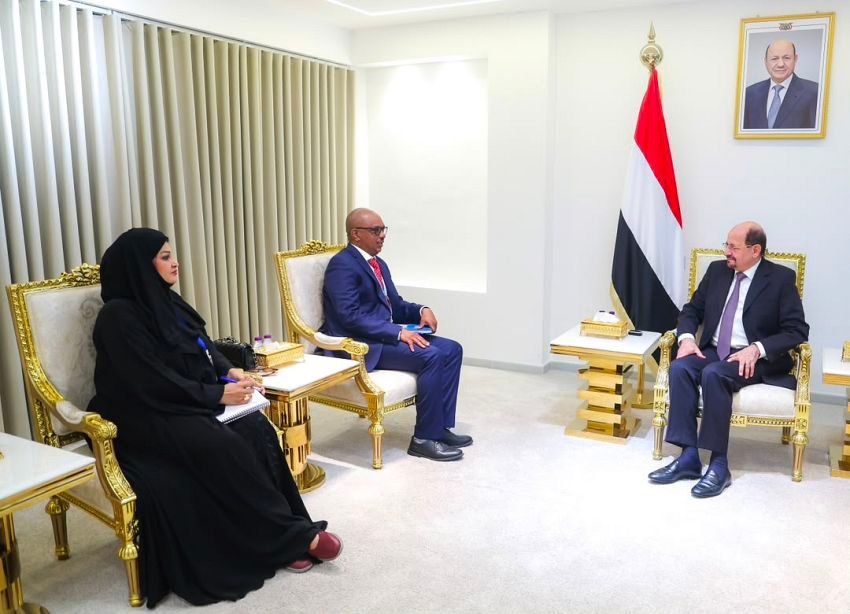
Yemen’s Prime Minister and Foreign Minister, Shaya Mohsen al-Zindani, has reaffirmed his government’s commitment to strengthening the protection of human rights, using talks in the interim capital of Aden to argue that safeguarding fundamental freedoms must remain a national priority despite more than a decade of war. Al-Zindani met Ahmed Suleiman, head of the Yemen office of the United Nations High Commissioner for Human Rights, in a discussion both sides described as an effort to deepen cooperation between the internationally recognised government and the UN’s human rights bodies. The meeting reflected an attempt to translate broad commitments into concrete coordination on the ground.
The prime minister emphasised the government’s continuing efforts to reinforce the legal and institutional framework that underpins human rights in Yemen. He stressed the importance of building capable national institutions able to protect those rights as the country navigates the overlapping pressures of armed conflict, economic collapse and a prolonged humanitarian emergency. Al-Zindani’s remarks echoed the wider difficulties facing the Yemeni state, where effective governance and rights protection have repeatedly been undermined by years of instability and the fragmentation of authority across rival centres of power.
Al-Zindani was appointed prime minister in February 2026 while keeping the foreign affairs portfolio he has held since 2024. He leads a cabinet installed by the Saudi-backed Presidential Leadership Council after the resignation of his predecessor, Salem bin Breik. That government operates from Aden while the Houthi movement controls the capital, Sanaa, and much of the north, leaving the country with competing administrations and no unified system for monitoring or enforcing rights protections. The political division has complicated efforts to hold any single authority accountable for the abuses documented throughout the war.
The talks focused on improving cooperation between Yemeni authorities and the UN human rights office, with both sides seeking to set operational priorities for the period ahead. They acknowledged the need for closer coordination in carrying out initiatives designed to strengthen protections across the territory the government controls. Officials framed sustained international support as essential to addressing rights concerns that have been sharpened by the conflict, from arbitrary detention and restrictions on civil society to the collapse of services that ordinary Yemenis depend on for survival.
Much of the discussion centred on Yemen’s difficult human rights landscape, which has been marked by widespread violations attributed to multiple parties in the conflict. Those abuses underline the need for national and international mechanisms capable of responding effectively, and the government’s own institutional and legislative efforts came under scrutiny during the meeting. The exchange suggested that more comprehensive strategies may be required to address systemic problems, rather than relying on incremental measures that struggle to keep pace with the scale of need.
The two sides also examined how to strengthen the national bodies responsible for upholding human rights, ensuring they function in line with Yemen’s international obligations. Integrating those bodies into a coherent framework remains difficult within a transitional system stretched across contested territory, and the capacity of local organisations to deliver protections in practice is still limited. Rebuilding that capacity, officials suggested, will require both technical assistance and a longer-term commitment to institutional reform that can survive changes in government.
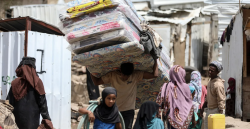
The backdrop to the meeting is a humanitarian crisis that ranks among the world’s most severe. The United Nations estimates that around 19.5 million people in Yemen, more than half the population, need some form of humanitarian assistance in 2025, including roughly 4.8 million who have been driven from their homes, making it one of the largest internal displacement crises anywhere. Aid agencies have warned that the 2025 response plan remains badly underfunded, forcing cuts to services at a time when needs are rising rather than easing.
Those pressures are compounded by recurring outbreaks of preventable disease, including cholera and measles, spread by a weakened health system, damaged water infrastructure and deep poverty. Humanitarian workers reported children dying of malnutrition in displacement camps during 2025, a stark measure of how far conditions have deteriorated. Such realities place additional strain on a government trying to demonstrate that it can maintain basic order and services while also meeting the higher standards of accountability that its international partners expect.
Yemen’s location adds a further layer of complexity. Its coastline runs along the Bab al-Mandab Strait, one of the world’s most important shipping lanes, and the wider conflict has drawn in regional powers with competing interests. That strategic dimension has at times overshadowed the plight of civilians, turning the country into an arena for broader rivalries. For al-Zindani’s government, the challenge is to advance human rights commitments while managing those external pressures, a balance officials cast as central to restoring stability and sovereignty.
Looking ahead, the government said it intends to continue working with the United Nations, describing sustained technical support and cooperation as vital to building the country’s capacity to protect rights. Whether that translates into measurable improvement will depend on continued commitment from both Yemeni leaders and international partners, as well as progress toward a durable political settlement. For now, officials presented the Aden meeting as a modest but meaningful step in keeping human rights on the national agenda amid competing crises.
About the Author