Vinicius Junior’s Second-Half Brace Wins the Madrid Derby 3-2 at the Bernabeu
 Yemen Herald News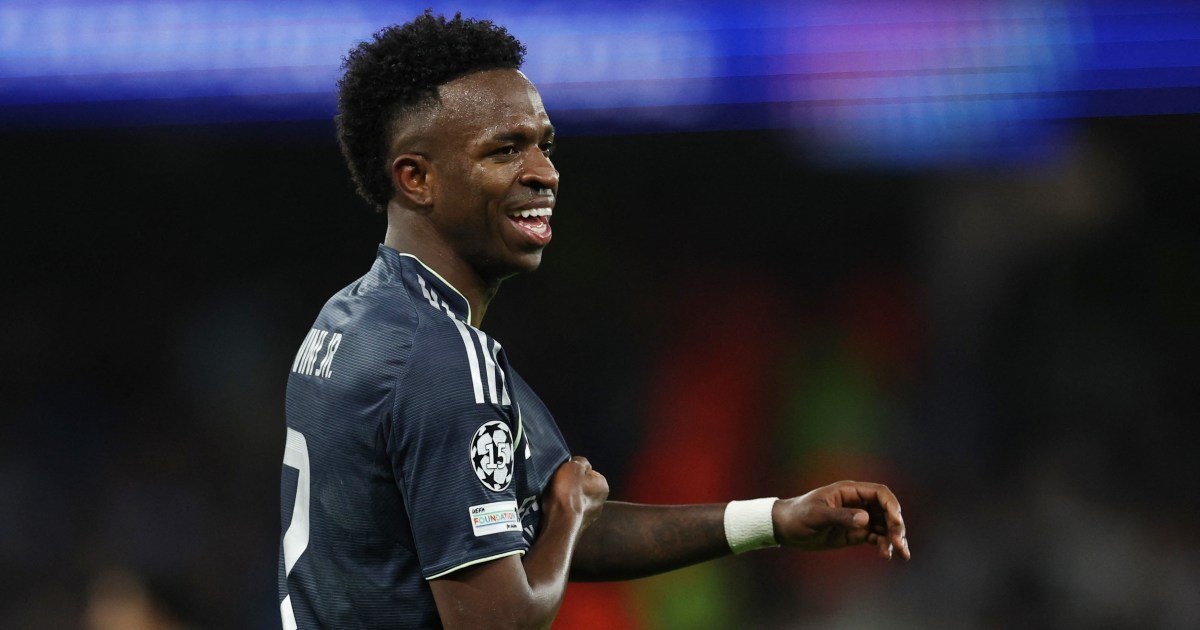
Real Madrid went into the Madrid derby at the Santiago Bernabeu on Sunday 22 March 2026 carrying the confidence of a Champions League quarter-final place and the anxiety of a league campaign that had begun to slip. The match, the twenty-ninth round of La Liga, kicked off at nine in the evening local time against a city rival who had beaten them to points at the Bernabeu often enough to make the fixture genuinely uncertain.
The European result had transformed the mood. Madrid eliminated Manchester City 5-1 on aggregate in the last sixteen, winning the first leg 3-0 at home on 11 March through a first-half hat-trick from Federico Valverde, then taking the second leg 2-1 at the Etihad Stadium on 17 March. City finished that night with ten men after Bernardo Silva was sent off following a VAR review for handling the ball on the line, and Vinicius Junior converted the resulting penalty before scoring again in second-half stoppage time. Erling Haaland’s goal before the interval proved a consolation. It was the fourth time in five seasons that Madrid had knocked City out of the competition.
Domestic form told a different story. Madrid had lost consecutive league matches to Osasuna and Getafe, results that left them four points behind Barcelona at the top of the table. Barcelona were scheduled to play Rayo Vallecano earlier the same Sunday, meaning the gap could have widened to seven points before Madrid kicked off. A derby defeat would have made the title race close to settled with nine rounds remaining.
The match that followed matched the occasion. Atletico Madrid led 1-0 at half-time through Ademola Lookman, and Madrid had to come from behind. Vinicius Junior equalised from the penalty spot at the start of the second half and Valverde put the hosts in front shortly afterwards. Nahuel Molina levelled for Atletico in the 66th minute. Six minutes later Vinicius scored again to make it 3-2, his second consecutive brace, and that was how the derby finished.
Valverde was sent off in the 77th minute, a decision Real Madrid’s own match report described as unjust, and the hosts held on with ten men. The win was Madrid’s fifth in succession across competitions heading into the international break, and it arrested the domestic slide that the defeats to Osasuna and Getafe had begun.
Vinicius Junior’s contribution defined the period. Two goals at the Etihad and two more in the derby inside five days is the kind of run that shapes a season, and it came at a point when the Brazilian’s form had been questioned during Madrid’s inconsistent league results. His penalty-taking in both matches was decisive rather than incidental: in each case the goal either opened the scoring or restored parity at a moment when the match could have turned the other way.
Valverde’s role in the two results is easy to overlook beside the Brazilian’s. A hat-trick from midfield in a Champions League knockout leg is a rare feat, and the Uruguayan then scored again in the derby before his dismissal. His combination of goals from deep and defensive work across the width of the pitch has been central to how Madrid have set up in the biggest matches.
The dismissal itself carried a cost beyond the ninety minutes. A red card brings an automatic suspension, and losing a midfielder of Valverde’s output for a subsequent league fixture is a material problem for a squad chasing a title from behind while also playing European quarter-finals.
Atletico’s performance deserved more than it received. Leading at the interval away at the Bernabeu, and equalising after falling behind, is not the record of a side outclassed, and Lookman and Molina both scored against a defence that had conceded once in two matches against Manchester City. Diego Simeone’s teams have historically been built to protect narrow leads, and losing a derby after twice being level pointed to a squad stretched by the demands of a long season.
The wider context is a La Liga title race that had been Barcelona’s to lose for much of the campaign. Madrid’s four-point deficit before the derby was recoverable but required both consistency and a favour or two from elsewhere, and the pattern of the season to that point had been one of Madrid excelling in Europe while dropping points domestically against opponents they would have expected to beat.
Madrid derbies carry a particular weight in Spanish football. The two clubs share a city and a training-ground rivalry that runs through youth systems and supporter families, and Atletico’s record at the Bernabeu improved markedly during Simeone’s tenure, which removed the assumption of a home win that once attached to the fixture. Meetings between them have decided league titles, cup finals and two Champions League finals in the past fifteen years.
For readers in Yemen, where Spanish football has a large following and matches are watched in cafes and community spaces despite unreliable electricity, the derby was one of the fixtures of the season. Real Madrid and Barcelona command the largest support, and the Madrid derby draws audiences comparable to a Clasico.
Madrid finished the weekend having closed the gap at the top and having secured a place in the Champions League quarter-finals, with the league resuming after the March international break.
About the Author