
Prime Minister Zindani and UNFPA Discuss Maternal Health and Women’s Protection
 Yemen Herald News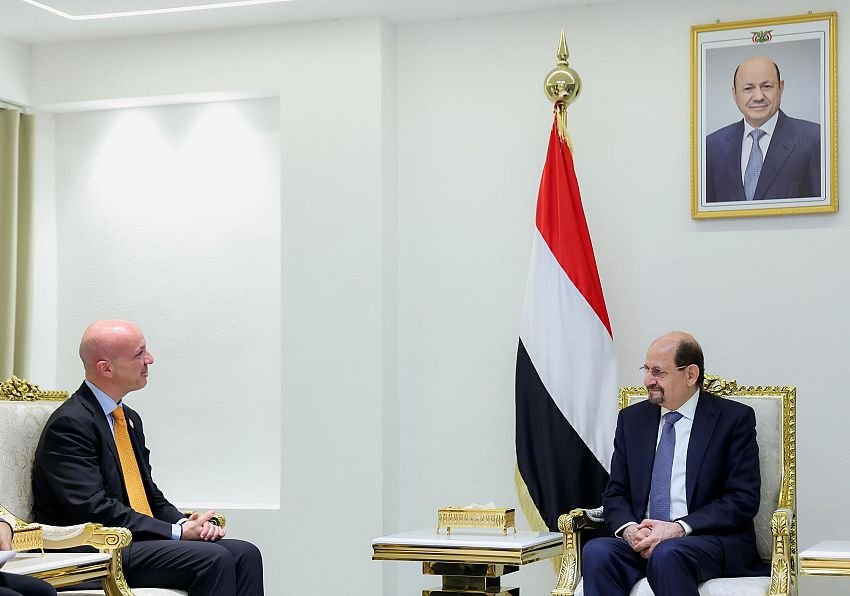
Yemen’s Prime Minister, Dr. Shaya Zindani, has met the representative of the United Nations Population Fund in Yemen, Francesco Galtieri, to discuss cooperation on public health, with a particular focus on the wellbeing of women and girls. The meeting, held on Monday in the interim capital, Aden, explored ways to strengthen collaboration in areas of acute need across the country.
The discussions centred on reproductive health, maternal health and the protection of women and girls, priorities that are especially pressing in a country whose health system has been battered by years of conflict. These areas are critical to improving health outcomes and safeguarding the wellbeing of some of the most vulnerable members of Yemeni society.
During the meeting, Prime Minister Zindani expressed support for the mission of the United Nations Population Fund, known as UNFPA, and emphasised the government’s commitment to strengthening its partnership with the organisation. He highlighted the importance of improving health services for citizens, particularly in light of the ongoing humanitarian crisis that continues to strain the country’s capacity to provide care.
The United Nations Population Fund plays a distinctive role in Yemen’s humanitarian response, focusing on reproductive and maternal health and on protection services for women and girls. Its work addresses needs that are often overlooked in emergencies but that carry profound consequences for the health and safety of large segments of the population.
Maternal health is an area of particular concern in Yemen. Years of conflict have degraded the health system to the point where many women lack access to safe delivery services and skilled birth attendants, contributing to elevated risks during pregnancy and childbirth. Strengthening maternal health services is essential to reducing preventable deaths among mothers and newborns.
Reproductive health services, similarly, are vital to the wellbeing of women across the country. Access to such care enables women to make informed decisions about their health and families and helps prevent complications that can arise in the absence of adequate services. In the Yemeni context, sustaining these services amid crisis presents significant challenges.
The protection of women and girls, another focus of the talks, addresses the heightened risks that they face in conflict and displacement. Insecurity, the breakdown of social structures and the pressures of hardship can expose women and girls to various forms of harm, and protection services seek to provide support, safety and recourse to those affected.
The humanitarian crisis in Yemen has placed women and girls in an especially difficult position. Displacement, poverty and the erosion of services have compounded the challenges they face, while the collapse of the health system has diminished access to the care on which their health depends. Addressing these needs is a central concern of humanitarian actors such as UNFPA.
The government’s expression of commitment to cooperation with UNFPA reflects an awareness of the importance of these issues and of the value of partnership with international organisations. With its own capacity severely constrained, the government relies heavily on the support of agencies such as UNFPA to help sustain essential services for vulnerable populations.
Improving health services more broadly, as emphasised by the prime minister, is a priority for a government seeking to demonstrate its capacity to serve citizens. The health sector has been among the hardest hit by the war, and rebuilding its ability to provide care is essential both to relieving suffering and to restoring public confidence in state institutions.
The setting of the meeting in Aden reflects the city’s role as the seat of the internationally recognised government and a hub for engagement with international organisations. Meetings between senior officials and the representatives of UN agencies form an important part of the coordination that underpins the humanitarian response and the delivery of services.
Partnerships with organisations such as UNFPA also help extend the reach of services beyond what the government could achieve alone. By working with international agencies that bring funding, expertise and operational capacity, the government can help ensure that assistance reaches those in need, even in areas where its own presence and resources are limited.
The focus on women and girls carries significance that extends beyond health. The wellbeing of women is closely tied to that of families and communities, and investments in their health and protection can yield broad benefits, contributing to the resilience and recovery of a society strained by prolonged conflict.
Sustaining and expanding cooperation of the kind discussed will depend on continued commitment and, crucially, on adequate funding. Humanitarian programmes in Yemen have frequently faced shortfalls, and the maintenance of services for women and girls requires reliable support. The government’s engagement with UNFPA reflects an effort to ensure that these needs remain a priority.
The needs are formidable. Aid agencies have repeatedly warned that pregnant and breastfeeding women in Yemen are among those at heightened risk of malnutrition, a condition that endangers both mothers and their children and that ripples outward into the health of the next generation. Programmes that combine maternal health care with nutritional support and protection services are therefore widely seen as central to any effective response, reinforcing the case for the kind of cooperation the prime minister and the UNFPA representative discussed.
For now, the meeting between Zindani and Galtieri reaffirmed the shared commitment of the Yemeni government and UNFPA to addressing the health and protection needs of women and girls. As the country continues to grapple with its humanitarian emergency, cooperation in these areas remains essential to safeguarding the wellbeing of a particularly vulnerable segment of the population.
About the Author




