Saudi-led coalition says Houthi missile and drone attacks wounded 73 in the kingdom’s south
 Yemen Herald News
ABHA, Saudi Arabia — Houthi missile and drone attacks struck cities and energy sites across southern Saudi Arabia on Tuesday, wounding 73 people and halting operations at several facilities.
The Saudi-led coalition said the wounded included women and children. It did not break the figure down by city.
Fires broke out at several of the targeted sites. Emergency crews were sent to contain the blazes and assess the damage.
The attacks hit Abha, Khamis Mushait, Jazan and Najran, four cities in the kingdom’s south near the Yemeni border.
Operations were suspended at some energy facilities, Saudi authorities said. They did not say how long the shutdowns would last.
Saudi Arabia’s energy ministry said the relevant authorities were dealing with the repercussions of the attacks.
The Houthi movement claimed responsibility. Its military spokesman said the group had launched a broad offensive with ballistic missiles and drones against Saudi Aramco installations in Abha, Najran and Jizan, and against an air base at Khamis Mushait.
Saudi authorities have not confirmed the Houthi account of which specific installations were hit.
Maj. Gen. Turki al-Malki, the coalition spokesman, called the attacks a serious escalation. He said the coalition “will take all necessary operational measures to deter the terrorist Houthi militia with utmost resolve.”
The Houthis reject that characterisation and present their cross-border strikes as retaliation for the coalition’s air campaign in Yemen.
Brent crude futures rose 1.67 per cent to 98.61 dollars a barrel on Tuesday morning. Saudi Arabia is the de facto leader of OPEC.
The kingdom’s southern region holds much of its oil infrastructure. The refinery at Jazan processes about 400,000 barrels a day and is among Saudi Arabia’s largest.
The coalition did not say what form a response would take, or when.
The strikes came during a widening escalation inside Yemen itself.
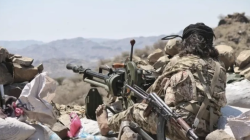
Yemen’s internationally recognised government began air strikes on Houthi positions in Taiz and Hodeidah on 4 September, according to the Yemeni military. Warplanes carried out at least 15 strikes that day against positions, gatherings and vehicles in the two western provinces, the military said.
The Houthis had pushed through western Taiz and southern Hodeidah toward Mokha and the Bab al-Mandab Strait, according to the same account.
Government forces said on 6 September they had taken full control of Hais district in Hodeidah governorate. The Houthis dispute government accounts of territorial gains.
Agence France-Presse put the combined toll from the southwestern fighting above 300 by Tuesday, drawing on figures given by both sides.
Hans Grundberg, the UN special envoy for Yemen, warned on 7 September that the fighting risked widening the conflict. He described the escalation as extremely alarming.
Grundberg said he was concerned by reports of civilian casualties, displacement and damage to civilian infrastructure. He urged all parties to cease hostilities and to use the UN Military Coordination Committee.
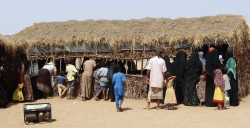
About 18,500 people have been displaced in Taiz and Hodeidah governorates since hostilities escalated on 3 September, according to the International Organization for Migration.
Urban centres and host communities across southern Taiz and the west coast, including Mokha, Hays, Mawza, al-Maafer and Jabal Habashi, are absorbing the newly displaced families, the agency said.
The Houthis have held Sanaa and much of northern Yemen since 2014. The internationally recognised government is seated in Aden.
The movement has attacked Saudi territory repeatedly since the coalition intervened in Yemen in March 2015. Cross-border attacks became rare after a UN-brokered truce took effect in April 2022.
That truce lapsed formally in October 2022, though its main provisions largely held until this year.
Yemen’s humanitarian position was already among the world’s worst before the current fighting. More than 22 million people need assistance, according to the UN humanitarian needs and response plan for 2026.
The plan records 18.3 million people as acutely food insecure and more than 2.2 million children under five as acutely malnourished, of whom 516,157 are severely malnourished.
It counts 5.2 million internally displaced people and seeks 2.16 billion dollars to reach 12 million of those in need. The appeal was 18 per cent funded at the start of September.
The United Arab Emirates condemned the attacks, describing them as deliberate targeting of civilians and of economic facilities.
Saudi Arabia has announced the formation of an international alliance to protect Red Sea shipping from Houthi attacks. Thirteen countries have agreed to join, according to the Saudi announcement.
The escalation has renewed concern that the Houthis could close the Bab al-Mandab Strait, the passage linking the Red Sea to the Gulf of Aden.
Egypt, Jordan, Qatar and Kuwait are aligned with Saudi Arabia against the Houthis. Fighting between the two sides has intensified since July, according to regional reporting.
The Houthis claimed an attack on an Aramco facility in Saudi Arabia in August. The kingdom had been preparing for further strikes since early that month, according to regional reporting.
Saudi authorities have coordinated their next steps with the United States Central Command and have briefed European partners, according to the same reporting.
Aid agencies had reached 663 households with household items across Taiz and Hodeidah by the end of last week, with further supplies in transit, the International Organization for Migration said.
Najran province and Jazan province both share a border with Yemen.
About the Author