Saudi-led coalition says it destroyed 136 Houthi military targets in overnight operation
 Yemen Herald News
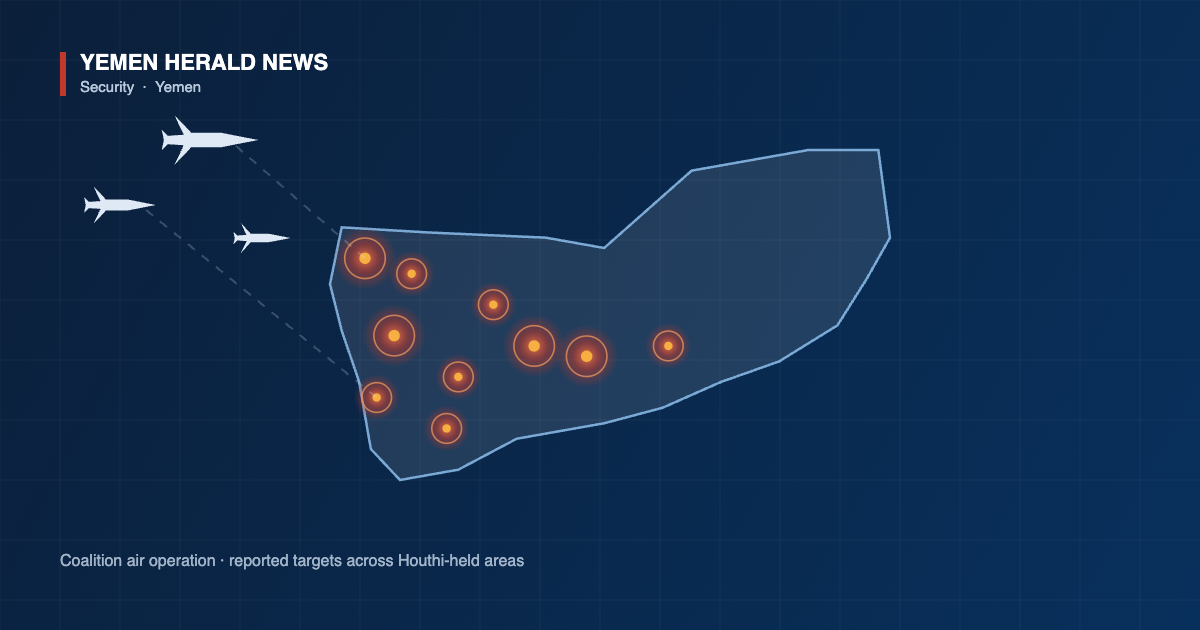
RIYADH, Saudi Arabia — The Saudi-led coalition said it destroyed 136 Houthi military targets in a large-scale operation across Yemen announced late on Friday.
Maj. Gen. Turki al-Malki, the coalition spokesman, set out the figure in a post on X.
He said the strikes hit a range of Houthi elements and capabilities.
“We are working to dismantle and destroy the ballistic missile network of the terrorist Houthi militia,” al-Malki said.
He said the coalition was giving air support to Yemen’s armed forces around the clock.
The account of the operation rests on the coalition’s own statement. Yemen Herald found no independent confirmation of the number of targets destroyed, and no party has published a damage assessment.
The coalition did not name the areas struck, saying only that they were under Houthi control. It gave no casualty figures.
Yemen Herald found no public response from the Houthi leadership to the announcement. The group disputes coalition accounts of its losses as a matter of routine.
The announcement came as government forces pressed an offensive they call Dawn of Yemen.
The Houthis launched an offensive in September to widen their control across south-western Yemen and the Red Sea coast, according to Security Council Report, which tracks the Security Council’s agenda.
The Yemeni government said on 5 October that it had retaken Mocha and positions near the Bab al-Mandab Strait with coalition air support.
The coalition said on 6 October that it had intercepted Houthi missiles aimed at Khamis Mushait and at an area near Riyadh.
Saudi Arabia’s General Authority of Civil Aviation said attacks on King Khalid International Airport, north of Riyadh, killed three Saudi citizens. The authority announced the toll on Friday.
Three people were wounded on 6 October in attacks on King Abdullah bin Abdulaziz Airport and Najran Airport, according to Security Council Report.
Saudi Arabia, Pakistan and Türkiye met on 5 October under the Mecca Defense Alliance and condemned the attacks on Saudi territory.
Hans Grundberg, the United Nations special envoy for Yemen, told the Security Council on Friday that the country had slid back into full-scale war.
He called on the Houthis to halt attacks on Saudi Arabia, on civilian infrastructure and on the kingdom’s energy sector.
Grundberg said at least 46 civilians had been killed and more than 130 injured since August, citing UN figures.
He said Houthi threats against commercial vessels linked to Saudi Arabia in the Red Sea were undermining freedom of navigation.
Fighting has also intensified in Taiz governorate, where Houthi advances threaten the city and could cut off government forces further south, Security Council Report said.
The war began when Houthi forces seized Sanaa in September 2014. A Saudi-led coalition intervened on the government’s side in March 2015.
A UN-brokered truce took effect in April 2022 and formally lapsed six months later. Front lines were largely static in the years that followed.
The United Nations humanitarian response plan for Yemen for 2026 estimates that more than 22 million people need some form of assistance.
The plan says 18.3 million people are acutely food insecure, and counts 5.2 million internally displaced people inside the country.
It projects that about 2.2 million children under five will face acute malnutrition this year, including more than 500,000 with the severe form.
The plan seeks $2.16 billion to reach 12 million people.
The International Organization for Migration has recorded more than 200,000 people displaced since the current fighting began.
The World Health Organization said cholera cases have tripled in recent weeks. Yemen imports close to 90 percent of its food.
Al-Malki had said earlier on Friday that the coalition destroyed three Houthi rocket launch platforms, which he described as a threat to regional security.
He said then that attacks on civilians and civilian facilities would be met with resolve.
Abdulaziz al-Wasil, Saudi Arabia’s representative to the United Nations, told the Security Council on Friday that the body had to address what he called a dangerous escalation in Yemen.
He said Riyadh would not allow Yemen to become a staging ground for threats to Saudi security or to freedom of navigation.
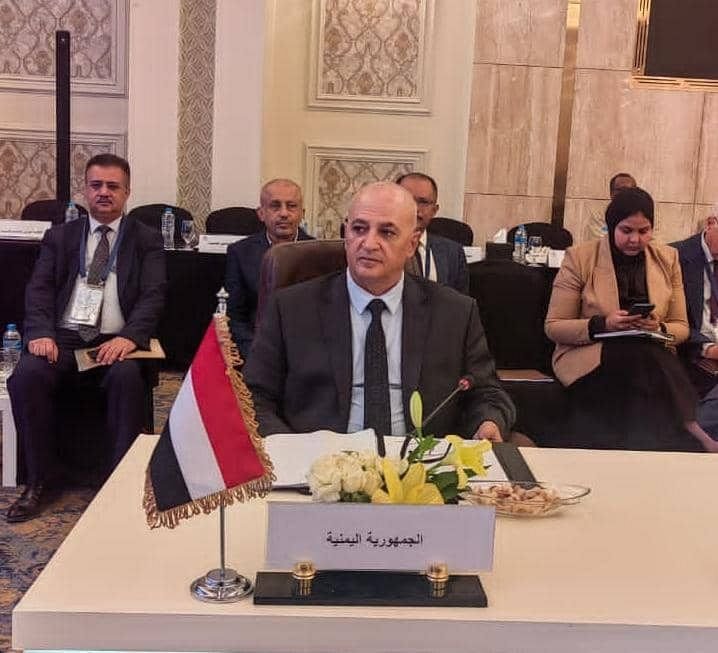
Abdullah Ali Fadhel al-Saadi, Yemen’s representative to the United Nations, told the same session that the Houthi threat was no longer an internal Yemeni affair.
He called for measures to cut the flow of funding, weapons and technology reaching the group. Council members were expected to press both sides on compliance with the Yemen sanctions regime.
UNICEF estimates about 71,000 children are among those displaced by the current fighting, and says hundreds of schools have closed.
The agency reported at least 15 children killed and 14 injured since 3 September.
Grundberg said 72 UN personnel remain detained by the Houthi authorities.
At least eight detainees, among them two UN employees, have been prosecuted by Houthi courts on espionage-related charges since 18 August and face a possible death sentence, according to Security Council Report.
Some of those held have been detained since 2021. One World Food Programme staff member was recently released.
Taiz is Yemen’s most densely populated governorate, and its third largest city carries the same name.
The coalition has not said how long the current operation will run.
About the Author