Saudi-led coalition says it downed three Houthi missiles over Riyadh as analysts describe a one-a-night pattern
 Adel Haddad

RIYADH, Saudi Arabia — The Saudi-led coalition said it intercepted three Houthi ballistic missiles over Riyadh early Saturday, the third straight day of air-raid alerts in the capital.
Coalition spokesman Turki al-Malki announced the interception, Agence France-Presse and Al Jazeera reported on Saturday. No debris, damage or casualties were reported.
Hours later the coalition said it destroyed a drone aimed at the kingdom’s south. It did not name a province.
Saudi civil defence issued eight public emergency alerts in the 24 hours from 7:30 a.m. Saudi time Friday, according to Al Jazeera. Alerts for Riyadh were raised and lifted quickly on each of the three days.
The Houthis did not publicly claim the Riyadh launches. The attribution rests on the coalition’s account, and Yemen Herald found no Houthi statement claiming them.
The pace of the launches has turned attention to how long Saudi air defences can absorb them.
The National reported on Friday that the Houthis were firing about one missile a night, a tactic the outlet said analysts described as copied from Iran.
Nawaf Obaid, a Saudi security analyst at King’s College London, told the paper the Houthis were “trying as much as they can to stretch Saudi air defences over time.”
Obaid said replenishing interceptors was the longer-term problem for the kingdom.
Francis Tusa, a defence analyst quoted by the same outlet, said judging the campaign by interceptions alone meant “missing 20 per cent of the picture.”
The National reported suggestions that 100 to 200 ballistic missiles remained in Houthi stocks. It named no source for the range.
One ballistic missile was intercepted over southern Saudi Arabia on Friday, the outlet reported. The coalition said two more were brought down over the Jizan region near the Yemeni border, with debris falling in Al-Shuqaiq.
Saturday’s interception was the second reported over Riyadh this month. The coalition said on Nov. 15 that it downed two missiles over the capital.
The exchanges followed what al-Malki called a special operation on Friday.
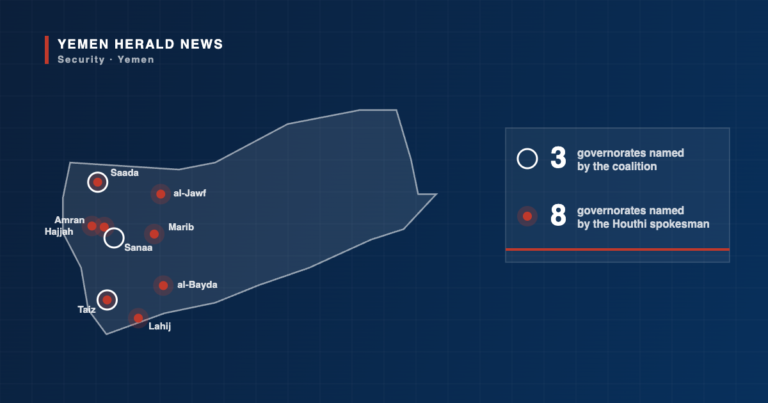
The coalition struck Hodeidah port on Yemen’s Red Sea coast and military targets in Sanaa, Saada and Taiz governorates, AFP reported.
Al-Malki said on X that the operation targeted operational capabilities at Hodeidah port used for smuggling and for moving weapons and ballistic missiles. Strikes in Sanaa hit missile and drone facilities and a supply depot, he said.
Houthi military spokesman Yahya Saree said on X that his forces struck the Al-Shuqaiq power station and Jizan port, calling the strikes accurate and direct and the damage extensive. The two sides’ accounts of the same launches do not agree.
Saree warned airlines that Saudi airspace was unsafe. He told people to stay away from Riyadh’s King Abdullah Financial District, which he called a military target.
The Houthis threatened Jeddah and other Saudi Red Sea ports. Their Humanitarian Operations Coordination Centre emailed shipping companies using Jeddah port and told them to evacuate, AFP reported.
The Houthis put the death toll from coalition strikes over the previous 24 hours at 41.
Yemen’s Saudi-backed armed forces said 31 airstrikes, 91 drone attacks and hundreds of artillery attacks left 193 Houthi fighters dead or wounded.
AFP reported that figures of that kind cannot be verified independently. Yemen Herald could not verify either count.
The Houthis also accused the coalition of striking a civilian boat early Friday and killing 19 people. The coalition did not respond publicly to that account.
Farhan Haq, spokesman for the UN secretary-general, said the UN stressed the need to safeguard the continuity of operations of Yemen’s Red Sea ports.
Hodeidah, Saleef and Ras Isa handle most imports into Houthi-held northern Yemen. Cargo bound for them is cleared through the UN Verification and Inspection Mechanism, which has run from Djibouti since May 2016 and is managed by the UN Office for Project Services.
The mechanism’s most recent published reports cover October, according to its own website.
Vice Foreign Minister Mustafa Noman met the mechanism’s director, Bana Kaloti, in Djibouti on Nov. 17 and pressed for tighter monitoring of ships bound for Houthi-held ports, the state news agency Saba reported. Saba said Noman told her the government does not obstruct food, medicine or other essentials. Yemen Herald found no independent account of that meeting.
The UN Security Council renewed its Yemen sanctions measures for a year on Nov. 18.
A Houthi strike two days before Saturday’s interception damaged the Public Investment Fund tower in Riyadh, Al Jazeera reported, describing it as the city’s tallest building. Accounts of whether it took a direct hit differed at the time.
The two sides have exchanged attacks since a four-year truce collapsed in July, according to AFP.
Footage broadcast by the Houthi-run Al-Masirah channel showed a damaged power station in Mocha after a coalition raid.
The National also listed air-defence systems the kingdom could buy, among them the Franco-Italian Samp/T and Aster, the German Iris-T, Britain’s Sky Sabre, South Korea’s Cheongung-II and Turkey’s Hisar and Korkut. It attributed the list to defence analysts it did not name.
Ukraine and Estonia have offered counter-drone equipment, the outlet reported.
Middle East Eye reported on Nov. 18 that Saudi Arabia had asked Western partners for additional drone defences.
Riyadh lies about 1,000 kilometres north of the Yemeni border.
About the Author