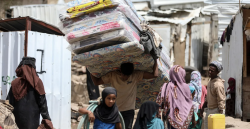
Displaced Families in Marib Face Deepening Food Insecurity as Rations Are Cut
 Yemen Herald News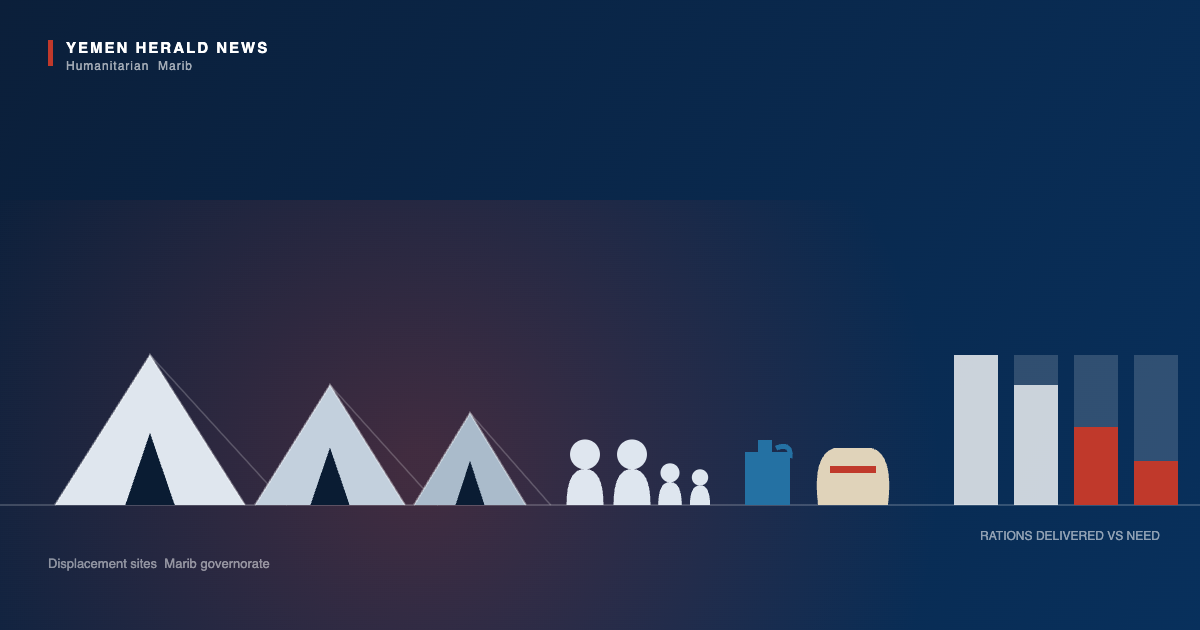
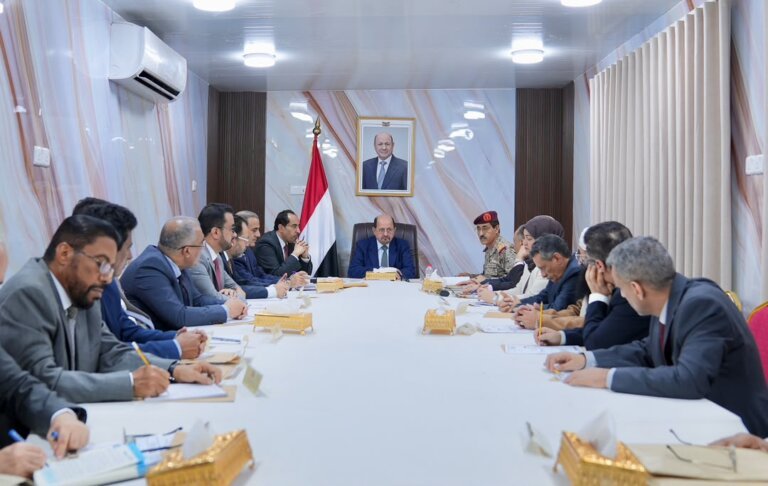
Reporting from Yemen’s Marib governorate in May 2026 described a sharp deterioration in food security among displaced families sheltering there. The Executive Unit for IDP Camp Management, the government body responsible for overseeing displacement sites, said at the time that more than 1.6 million internally displaced people in the governorate were facing severe food insecurity, and warned that conditions in many sites had worsened as assistance became less reliable. The figure has not been independently audited, but it is consistent with the pattern United Nations agencies have described in the governorate over several years.
Marib’s position in the war explains why so many people ended up there. The governorate lies east of Sanaa and remained under the control of the internationally recognised government after Houthi forces took the capital in 2014. For much of the first half of the conflict it was comparatively stable, and its oil and gas infrastructure supported a local economy that continued to function while other areas collapsed. Families fleeing Houthi-controlled governorates moved there in large numbers from 2015 onwards, and humanitarian assessments have since identified Marib as hosting the single largest concentration of displaced people anywhere in Yemen, with more than sixty per cent of the country’s displaced population recorded in the governorate.
The national picture against which those numbers sit is severe. Humanitarian planning figures for 2026 counted roughly 5.2 million internally displaced people across Yemen, alongside some 329,000 migrants and about 63,000 refugees and asylum seekers. The United Nations Office for the Coordination of Humanitarian Affairs, which published its Humanitarian Needs and Response Plan for the year in March 2026, assessed that 18.3 million people nationwide were acutely food insecure. Yemen has consistently ranked among the largest humanitarian emergencies measured by the number of people in need.
Assessments circulated during 2026 put around 234,000 families in Marib in severe food insecurity, an increase of roughly thirteen per cent on the equivalent 2024 figure, while close to 297,000 families in the governorate were judged to require life-saving assistance of some kind. The direction of travel in those numbers, rather than any single total, is what humanitarian officials have pointed to as the more reliable indicator, since methodologies and coverage differ between the bodies producing them. Counts of displaced people in Yemen are complicated further by the absence of a recent census, by movement between sites that goes unregistered, and by the fact that many displaced families live in rented rooms or with relatives in host communities rather than in recognised camps, which places them outside routine site-level monitoring altogether.
Displacement inside Marib has also been repeated rather than single. The Houthi offensive against the governorate that intensified through 2021 and into 2022 pushed front lines closer to populated districts and forced families who had already fled once to move again, in some cases several times. Aid organisations reported at the time that sites in the western districts were emptied and their residents absorbed into settlements nearer Marib city, compounding pressure on water, sanitation and shelter capacity that was already stretched.
Funding has become a decisive constraint. United Nations reporting in June 2026 described a hunger crisis deepening in Yemen as funding shortfalls left millions without support, with agencies reducing rations, narrowing eligibility or suspending programmes outright in some districts. When general food distributions are cut, displaced households with no land, no savings and irregular access to work are usually the first affected, because they have the fewest alternatives to fall back on.
Conditions in the displacement sites themselves compound the food problem. Many settlements around Marib are informal, built from tents and improvised shelters on open ground rather than planned camps with permanent infrastructure. Summer temperatures are extreme, and seasonal flash flooding has repeatedly damaged shelters and destroyed stored food and household possessions. Site management reporting has consistently identified shelter replacement as one of the most persistent unmet needs, with families living in tents long past the material’s usable life.
Access to water and health care sits alongside those pressures. Assessments for 2026 found that around sixty-three per cent of Yemen’s population lacked a safe and sustainable source of drinking water, and that a similar proportion of health facilities lacked basic equipment or maintenance. That combination matters directly for hunger outcomes, because untreated water and weak primary care turn moderate malnutrition into severe acute malnutrition far more readily, particularly in children under five and in pregnant and breastfeeding women.
Economic conditions in government-held areas have narrowed household purchasing power independently of aid levels. The Yemeni riyal has depreciated substantially in areas outside Houthi control, public sector salaries have been paid irregularly, and government revenue contracted after oil exports were suspended following attacks on export terminals in late 2022. The practical effect is that food can be present in local markets while remaining beyond the reach of displaced families, which is why agencies distinguish between food availability and food access when assessing the governorate.
Humanitarian organisations working in Marib have argued that the response requires predictable multi-year funding rather than emergency appeals renewed annually, given that most of the displaced population has now been away from home for close to a decade. Without a political settlement that allows returns, the caseload in the governorate is unlikely to shrink, and the reporting from May 2026 pointed to a situation that was becoming harder to manage rather than easier.
About the Author