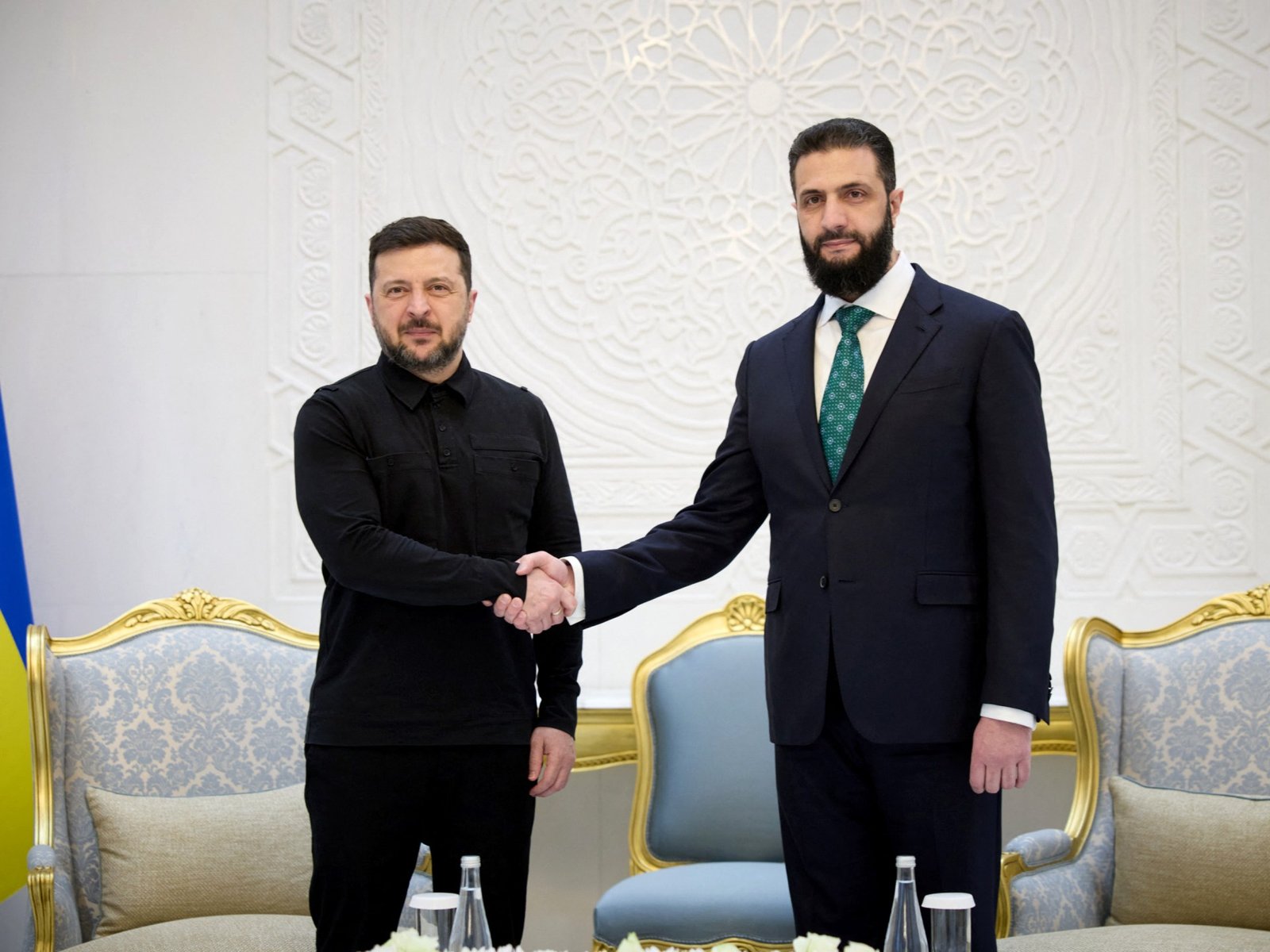
The recent agreement between Ukraine and Syria to enhance security cooperation marks a significant geopolitical shift in the Middle East, particularly as the region grapples with escalating tensions and the ongoing US-Israeli conflict with Iran. This partnership not only reflects Ukraine’s strategic pivot towards the Middle East but also underscores the evolving dynamics of power and influence in a region long dominated by traditional players.
The geopolitical landscape of the Middle East has been in flux, especially following the outbreak of the US-Israeli war on Iran. This conflict has prompted various nations to reassess their alliances and security strategies. Ukraine, having faced its own existential threat from Russia, has developed a robust military capability, particularly in counter-drone warfare. The recent visit of Ukrainian President Volodymyr Zelenskyy to Damascus signifies a bold move to extend Ukraine’s influence beyond Eastern Europe and into the heart of the Middle East, a region where security cooperation is paramount due to the persistent threats posed by Iranian proxies and other militant groups.
Moreover, Zelenskyy’s outreach to Syria comes on the heels of his successful military cooperation agreements with Gulf states such as Saudi Arabia and Qatar. These deals highlight Ukraine’s growing role as a military partner in the Middle East, leveraging its experience in countering drone warfare to assist nations that lack robust air defense systems. Syria, in particular, has been vulnerable to Iranian drone attacks, making Ukraine’s expertise highly relevant.
The implications of this newfound cooperation between Ukraine and Syria are profound. Politically, it signals a shift in alliances, as Ukraine positions itself as a key player in Middle Eastern security matters. This could lead to a reconfiguration of existing power structures, particularly as nations like Iran and its proxies may view this partnership as a direct threat to their influence in the region.
Economically, the agreement could foster greater stability in a region plagued by conflict, potentially opening avenues for trade and investment. Zelenskyy’s assertion that Ukraine is a reliable grain supplier further emphasizes the potential for agricultural collaboration, which is crucial for food security in a region that has faced significant disruptions due to ongoing conflicts.
From a security standpoint, the cooperation could enhance the capabilities of Syrian forces to counter Iranian threats, thereby altering the balance of power. However, this also raises the stakes for Iran, which may respond aggressively to perceived encroachments on its sphere of influence, leading to an escalation of hostilities.
Analyzing the strategic implications of this partnership reveals several risks and opportunities. On one hand, Ukraine’s military expertise could significantly bolster Syrian defenses against Iranian aggression, potentially deterring further attacks. This could embolden other nations in the region to seek similar partnerships with Ukraine, thereby expanding its influence.
However, the partnership also poses risks. Iran is likely to view this alliance as a direct challenge, prompting retaliatory measures that could destabilize the region further. Additionally, the involvement of Ukraine in Middle Eastern security affairs may complicate its relationships with other regional powers, particularly those that maintain ties with Iran.
Looking ahead, several scenarios could unfold as a result of this cooperation. One possibility is that Ukraine becomes a central player in Middle Eastern security, leading to increased military collaborations with other nations facing similar threats. This could create a coalition of states united against Iranian influence, fundamentally altering the regional security architecture.
Conversely, the partnership could provoke a backlash from Iran and its allies, leading to heightened tensions and potential military confrontations. The situation could escalate into a broader conflict, drawing in external powers and further complicating the already volatile landscape of the Middle East.
The cooperation between Ukraine and Syria represents a significant geopolitical development with far-reaching implications. As both nations navigate their respective security challenges, their partnership could reshape the dynamics of power in the Middle East. While the potential for enhanced security and stability exists, the risks of escalation and conflict remain ever-present. The coming months will be critical in determining whether this alliance will lead to a new era of cooperation or further entrench the region in conflict.
About the Author