WHO says Yemen’s health system is nearing breaking point as cholera, dengue and measles spread
 Yemen Herald News
GENEVA, Switzerland — Yemen’s health system is nearing breaking point as cholera, dengue and measles spread, the World Health Organization said on Tuesday.
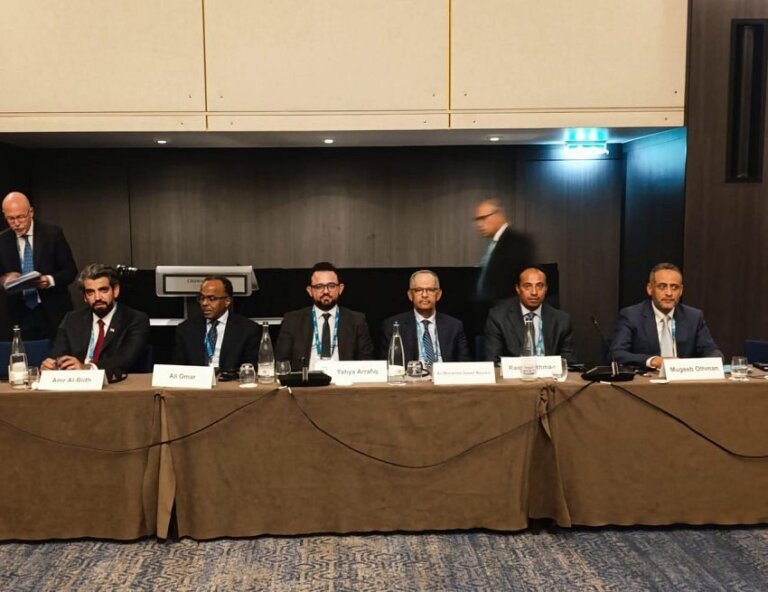
Dr Annette Heinzelmann, WHO’s regional emergency director for the Eastern Mediterranean, set out the agency’s assessment at a press briefing in Geneva on 29 September. She spoke by video link from Cairo, where the regional office is based.
“Yemen’s latest escalation is pushing an already fragile health system towards breaking point,” she said.
WHO recorded 7,784 suspected cholera cases and 22 deaths since the start of this year, according to the agency. It put dengue at 9,604 cases over the same period, with 37 deaths reported by Yemeni health authorities.
Measles has run higher. WHO reported more than 22,000 suspected cases and 128 deaths in 2026, which it linked to a fall in routine childhood immunisation.
Cholera has been reported in two displacement camps in Aden, the agency said.
Heinzelmann tied the spread to living conditions rather than to the pathogens alone.
“When we see population movements, people living in really — an overcrowded setting with limited access to water and safe sanitation, these are factors which can support a wider spread of cholera,” she said.
About 60 percent of health facilities were fully functional before the latest escalation, WHO said.
“Nine health facilities or assets have now been damaged, put out of service, closed or directly attacked,” Heinzelmann said. They lie near Taiz, Lahj and Hudaydah.
Emergency obstetric and newborn care has been suspended at two hospitals, in Marib and Ras al-Arah, as medical teams shift to treating the wounded, according to the agency.
WHO said several supply lines at its warehouse in Aden had been depleted to zero stock.
The agency has deployed more than 20 mobile medical teams. It said it had delivered nearly 60 tonnes of medical supplies, worth about $656,000, to 40 facilities across 10 governorates.
Funding is short. WHO said it had secured $2 million of the $9 million it needs for the response, leaving a gap of $7 million.
Health authorities in Aden have reported 4,481 casualties, including 830 deaths, since fighting resumed on 6 August, according to figures cited at the briefing.
WHO’s own situation report for the period to 26 September gave the same casualty total but put the death count at 838. The agency recorded 809 new casualties between 19 and 26 September, of which 164 were deaths and 645 injuries.
Fighting resumed in Yemen in August after a four-year truce collapsed.
Displacement has followed. The United Nations put the number uprooted inside Yemen at more than 180,000, with about 145,000 of them displaced during September.
More than 3,600 Yemenis have crossed into Djibouti since 10 September, WHO said. The agency expects a further 5,000 to 10,000 to follow.
Nearly 2,900 children were screened on arrival, the UN Office for the Coordination of Humanitarian Affairs said. More than one in four were acutely malnourished, and about 200 were severely malnourished.
The outbreaks sit on top of needs the United Nations had already set out before the fighting resumed. In its humanitarian response plan for 2026, published in March, OCHA said more than 22 million people in Yemen needed assistance and that 18.3 million were acutely food insecure.
That plan put the number of children under five with acute malnutrition at more than 2.2 million, of whom 516,157 were severely malnourished. It put the number of internally displaced people at 5.2 million. The plan sought $2.16 billion to reach 12 million people.
The current counts follow a larger cholera wave. OCHA reported 339,371 suspected cholera cases and 1,102 deaths across 23 governorates between March 2024 and the start of this year, a case fatality ratio of 0.32 percent.
Measles ran higher still in 2025. OCHA recorded 23,817 confirmed cases and 214 deaths that year, and said Yemen had the highest number of measles cases of any country between May and October 2025.
Dengue cases passed 24,000 in 2025, with 67 deaths across 15 governorates, OCHA said, a rise of 36 percent on 2024.
Yemen recorded 30 cases of variant poliovirus across 10 governorates in 2025, down from 187 the year before, according to the same OCHA reporting.
WHO published separate figures on global cholera trends the same day. It reported 451,499 cholera cases and 7,870 deaths worldwide in 2025 across 47 countries, with deaths up 30 percent on 2024.
Yemen was one of seven countries that together accounted for about 90 percent of reported cholera cases and deaths that year, according to that report. The others were Angola, Bangladesh, the Democratic Republic of the Congo, Nigeria, South Sudan and Sudan.
The cholera case fatality ratio stayed below 1 percent in health facilities worldwide in 2025, though it passed 1 percent in 12 countries, WHO said in the same report.
The agency said those global totals reflected surveillance data reported to it rather than the true burden, which it estimates is higher because many cases go unrecorded.
Production of oral cholera vaccine more than doubled between 2022 and 2025, rising from about 30 million to about 80 million doses a year, according to that report.
About the Author