Yemen asks Security Council to condemn missile and drone attack on Aden airport
 Yemen Herald News
ADEN, Yemen — Yemen’s government has asked the U.N. Security Council to condemn a missile and drone attack on Aden International Airport, its U.N. envoy said Saturday.
Abdullah al-Saadi, Yemen’s permanent representative to the United Nations, set out the request in letters to Secretary-General Antonio Guterres and to the president of the Security Council for October, the state news agency Saba reported.
The government called the strike on the civilian airport “a dangerous escalation and a blatant violation of international law.”
It said the attack had turned a danger to air routes over the southern Red Sea, which it had warned about before, into a direct assault on civilian infrastructure.
Al-Saadi asked the Council and the wider international community to take firm measures against those responsible, according to Saba.
The letters sought tighter restrictions on weapons transfers to the Houthi movement, stronger sanctions and stricter enforcement of the existing arms embargo.
Yemen Herald could not independently verify the contents of the letters. The account rests on the government’s own statement as carried by Saba, and no independent confirmation of the correspondence has been published.
The attack itself has been reported by several news organisations. Two ballistic missiles and drones struck the airport in the early hours of Wednesday, Oct. 7, according to the government, which blamed the Houthis.
Yemen’s transport ministry said the missiles were fired while a civilian aircraft was approaching to land, and that a flight was diverted.
Other aircraft, passengers and airport staff were at the facility at the time, the ministry said.
Greece took over the rotating presidency of the Security Council on Oct. 1, according to the Greek foreign ministry.
The letters also referred to an attack on Aden airport in December 2020 and accused the Houthis of disrupting flights at Sanaa International Airport and of holding Yemenia Airways aircraft.
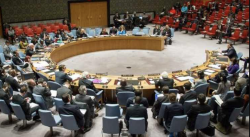
The appeal followed a Security Council meeting on Yemen on Friday, the Council’s 10236th session.
Hans Grundberg, the U.N. secretary-general’s special envoy for Yemen, told that meeting the country had returned to full-scale war.
“Ultimately, gains on the battlefield cannot substitute for the negotiations that will be required to settle the conflict,” Grundberg said.
He said fighting had continued in the highlands west and south of Taiz city and across into Lahj.
The government had launched a large-scale counter-offensive that week and had reported retaking areas around the Bab al-Mandab, he said.
Grundberg said the Houthi movement, which calls itself Ansar Allah, had carried out attacks on civilian and energy infrastructure in Saudi Arabia that killed and injured civilians.
Houthi threats against Saudi-linked commercial ships in the Red Sea undermine freedom of navigation for every country, he said.
“These threats are becoming enmeshed with the broader confrontation over control of maritime trade routes and the stresses on the international energy market,” Grundberg said.
He said 72 U.N. staff remained in detention and that meaningful progress toward their release had yet to be made.
Mohamed Yahya, assistant secretary-general for humanitarian affairs, told the same meeting that more than 200,000 people had been displaced across Yemen since the beginning of August.
That is the highest level of new displacement since the truce of 2022, he said.
Nearly 4,000 people had crossed the Bab el-Mandeb Strait to seek safety in Djibouti and Somalia, Yahya said.
Citing verified figures from the Office of the U.N. High Commissioner for Human Rights, he said at least 46 civilians had been killed and more than 130 injured since August.
More than half of those killed and nearly a third of those injured were children, he said.
Yahya said 2.2 million children under five were acutely malnourished, and that 250 school closures had cut 137,000 children off from feeding programmes.
He put the funding level of Yemen’s humanitarian appeal at 22%.
The United Nations has provided emergency assistance to 131,000 displaced people, he said.
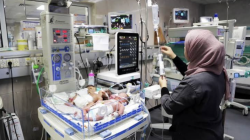
Yahya said Yemen’s health system was close to collapse, with rising cases of suspected measles and cholera adding to the risk of disease.
“Open the roads. Let humanitarians do their job. Let people access the relief they have been driven to need,” he said.
Inger Ashing, chief executive of Save the Children International, told the Council that 500,000 of those malnourished children were suffering from life-threatening severe acute malnutrition.
Her organisation had treated children with blast injuries, including shrapnel wounds to the eyes, abdominal wounds, broken limbs and head injuries, she said.
Yemen’s representative told the Council that Operation Dawn of Yemen was intended to restore state institutions.
“The objective of this operation is to end the war, to recover security, stability and peace in Yemen and the region,” he said.
Saudi Arabia’s delegate condemned an attack on King Khalid International Airport in Riyadh on Oct. 8 that killed three Saudi civilians.
He said Saudi Arabia had provided more than $12.6 billion in economic and development assistance and $4.5 billion in humanitarian aid to Yemen between 2012 and 2026.
The United Kingdom’s delegate put her country’s humanitarian commitment for the year at $137 million.
The United States representative urged Iran to end its support for the Houthis.
Security Council resolution 2140, adopted in 2014, established asset freezes and travel bans on individuals undermining Yemen’s stability and created a panel of experts to monitor the measures.
The Council is due to renew the sanctions regime in mid-November.
About the Author