U.S. Embassy to Yemen reaffirms support for Saudi Arabia and the Yemeni government
 Yemen Herald News
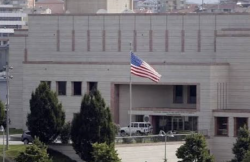
ADEN, Yemen — The U.S. Embassy to Yemen said Saturday that Washington remains steadfast in its support for Saudi Arabia and Yemen’s internationally recognised government.
The embassy said the United States would stand alongside both countries in defending their sovereignty and security, according to a statement reported by the news site Yemen Online.
It stressed the protection of the sovereignty, territorial integrity and stability of both countries.
The statement pointed to collective efforts to counter threats to regional security and to keep the Arabian Peninsula and international waterways stable.
The embassy also restated U.S. backing for initiatives promoting peace, security and a comprehensive political settlement in Yemen.
The statement named no individual official and carried no direct quotations.
Yemen Herald could not independently verify the statement. The account rests on the U.S. Embassy to Yemen as reported by a single outlet, and no independent confirmation of its wording has been published.
Washington set out a similar position on the record a day earlier.
At a Security Council meeting on Yemen on Friday, the United States representative condemned Houthi attacks on Saudi energy infrastructure and urged Iran to end its support for the group, according to the United Nations account of the session.
“When this Council renews the Yemen sanctions regime in mid-November, it must act on the Panel of Experts’ long-standing recommendations to take steps to cut off the flow of these items to the Houthis,” the representative said.
He was referring to dual-use components and precursor chemicals.
Security Council resolution 2140, adopted in 2014, established asset freezes and travel bans on individuals undermining Yemen’s peace and stability, and created the panel of experts that monitors the measures.
The embassy statement follows attacks on airports inside Saudi Arabia.
Three Saudi civilians were killed in an attack on King Khalid International Airport in Riyadh on Oct. 8, Saudi Arabia’s delegate told the Council.
The Saudi Civil Aviation Authority gave the same toll, and the attack was reported by international news organisations.
Saudi Arabia reopened King Khalid International Airport after the attack.
The United Arab Emirates condemned attacks on Abha and King Khalid airports.
Hans Grundberg, the U.N. secretary-general’s special envoy for Yemen, told the Council on Friday that Yemen had returned to full-scale war.
“Ultimately, gains on the battlefield cannot substitute for the negotiations that will be required to settle the conflict,” Grundberg said.
He said the Houthi movement, which calls itself Ansar Allah, had carried out attacks on civilian and energy infrastructure in Saudi Arabia that killed and injured civilians.
Houthi threats against Saudi-linked commercial ships in the Red Sea undermine freedom of navigation for every country, Grundberg said.
He said fighting had continued in the highlands west and south of Taiz city and across into Lahj.
The government had launched a large-scale counter-offensive that week and had reported retaking areas around the Bab al-Mandab, he said.
Yemen’s representative told the Council that the aim of Operation Dawn of Yemen was to restore state institutions.
“The objective of this operation is to end the war, to recover security, stability and peace in Yemen and the region,” he said.
He said the Houthi threat was no longer an internal Yemeni affair, citing dangers to Red Sea shipping.
Yemen’s representative accused the Houthis of cooperating with Al-Shabaab and urged the Council to curb weapons smuggling and financing networks.
Saudi Arabia’s delegate said his country had provided more than $12.6 billion in economic and development assistance and $4.5 billion in humanitarian aid to Yemen between 2012 and 2026.
He called for stronger enforcement of sanctions and warned of threats to regional security and global shipping.
Pakistan’s delegate condemned attacks on Saudi infrastructure and reaffirmed his country’s solidarity with Riyadh.
The United Kingdom’s delegate condemned what she called the Houthis’ dangerous escalation and put her country’s humanitarian commitment for the year at $137 million.
She called for the release of all detained U.N. and humanitarian personnel.
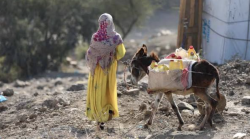
Mohamed Yahya, assistant secretary-general for humanitarian affairs, told the same meeting that more than 200,000 people had been displaced across Yemen since the beginning of August.
That is the highest level of new displacement since the truce of 2022, he said.
Nearly 4,000 people had crossed the Bab el-Mandeb Strait to seek safety in Djibouti and Somalia, Yahya said.
Citing verified figures from the Office of the U.N. High Commissioner for Human Rights, he said at least 46 civilians had been killed and more than 130 injured since August.
More than half of those killed were children, he said.
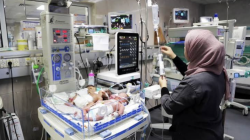
Yahya said 2.2 million children under five were acutely malnourished, and that Yemen’s humanitarian appeal was 22% funded.
Grundberg said 72 U.N. colleagues remained in detention and that meaningful progress toward their release had yet to be made. “Their release is especially urgent,” he said.
Inger Ashing, chief executive of Save the Children International, told the Council that 500,000 of Yemen’s acutely malnourished children were suffering from life-threatening severe acute malnutrition.
“Children are being hit as they flee to find safety,” Ashing said, adding that her organisation had treated children with shrapnel wounds, broken limbs and head injuries.
Bahrain’s delegate denounced the Houthis’ targeting of sacred Islamic sites, and asked when the Council would move beyond condemnations to practical measures.
About the Author