Masam destroys 299 landmines and explosive remnants in Yemen’s Al-Dhale
 Yemen Herald News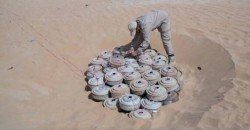
AL-DHALE, Yemen — Demining teams with the Saudi-funded Masam project destroyed 299 landmines and unexploded munitions in Yemen’s Al-Dhale governorate on Sept. 30, the project said.
The controlled detonation was carried out in the Zukhar area, Masam said in a statement published Thursday.
The items included one thermobaric rocket, 10 anti-personnel landmines, 13 assorted shells and nine improvised explosive devices, according to the project.
They also included 177 rounds of ammunition, 85 fuzes and four hand grenades.
Engineer Adeeb Rajab, commander of Masam’s Second Special Tasks Team, said the munitions had been gathered over recent months by the project’s Team 18.
Rajab told Masam’s media office the material came from Qa’tabah, Shakhb, Al-Ribi and Al-Qaflah in Al-Dhale.
Yemen Herald could not independently verify the operation. The account rests on Masam’s own statement and on Rajab’s remarks to the project’s media office, and no independent confirmation has been published.
Rajab said the remnants had posed a threat to people living nearby.
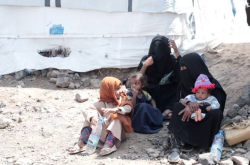
He said Al-Dhale had recorded several incidents in recent months in which civilians handled unexploded ordnance, and that children, women and shepherds were among them. Those incidents caused deaths and injuries, he said. He gave no figures.
Masam teams run mine risk education sessions in several parts of Al-Dhale, Rajab said.
Female teams attached to the project hold awareness sessions for women and children, he said. Residents are asked to report suspicious objects rather than handle them, and specialist teams are sent to remove them.
Masam said it cleared 5,164 explosive threats across Yemen during September.
The project puts its running total at 593,489 landmines, unexploded munitions and improvised devices found and cleared since it began work in 2018. It gave that figure on Sept. 27.
Masam reported 549,452 items as of March 20 and 567,182 as of June 12, the latter covering 151,554 anti-tank mines, 7,358 anti-personnel mines, 8,464 improvised devices and 399,806 items of unexploded ordnance.
The project said in June that it had cleared 81.3 million square metres of land and was running 42 demining teams.
It also said 33 of its staff had been killed in the line of duty over eight years.
Ousama Algosaibi, the project’s managing director, said in June that mine-laying in Yemen had not stopped for a single day and that no part of Yemeni territory could be treated as safe from Houthi mines. The Houthi movement rejects accounts that attribute mine-laying to its forces.
Masam is funded by Saudi Arabia and says it works in areas held by Yemen’s internationally recognised government. Maj. Gen. Amin Saleh al-Aqili heads the government’s National Mine Action Committee.
Team 18 has worked in Al-Dhale for several years. Masam said in 2023 that the team had cleared 35 minefields in the governorate, removing more than 1,500 anti-personnel mines and 400 improvised explosive devices, and securing 210,000 square metres of houses, farmland, pasture and roads.
That clearance covered Al-Ribi, Shakhb, Al-Batin, Al-Qaflah, Wadi Al-Hadrami, Debian and Bab Gluq, the project said at the time.
In an earlier account of its work in Qa’tabah, Masam said Team 18 had removed 500 anti-personnel mines from four villages there and destroyed 100 explosive devices. It said residents who had left those villages because of the contamination returned after the clearance.
Al Jazeera reported in September that Houthi forces and government units were fighting for the Kahboub Mountains in Taiz and Lahj, both of which neighbour Al-Dhale, and that the Houthis had taken Mocha port and Mayyun Island earlier in the month.
The World Health Organization recorded 674 people killed and close to 3,000 wounded in Yemen between Aug. 6 and late September.
Yemen is a state party to the Anti-Personnel Mine Ban Convention. Its original deadline for clearing anti-personnel mines was March 1, 2009.
It has since been granted three extensions, to 2015, to 2020 and to 2023, and has asked for a fourth of five years, to March 1, 2028.
The country’s mine action structure dates to the late 1990s. The National Mine Action Committee was set up in June 1998 and the Yemen Executive Mine Action Centre in January 1999.
In its third extension request Yemen recorded 326 hazardous areas covering just under 13 million square metres. It told the convention that survey work was incomplete and that renewed fighting had added to the contamination.
Save the Children has said at least 339 children were killed and 843 wounded by landmines and unexploded ordnance in Yemen after the truce of April 2022. The organisation recorded 107 civilian casualties in the first half of 2025, most of them children.
A study published in 2022 by Yemeni human rights groups counted 534 children and 177 women killed by mines and explosive remnants between April 2014 and March 2022. It recorded injuries across 17 provinces, with Taiz the worst affected.
Clearance organisations have described the obstacles as persistent. They include areas that teams cannot reach, the absence of records showing where devices were laid, shortages of trained staff and equipment, and floods that move mines from the places where they were mapped.
The Danish Refugee Council has cleared more than 23,302 square metres of mines and explosive remnants in Yemen.
Masam said separately that it cleared 30,000 square metres of farmland north of Al-Makhazin in Hajjah governorate on Thursday.
About the Author