Mass Rally in Shabwa Backs Hadramout Protesters After Deadly Mukalla Crackdown
 Yemen Herald News
Thousands of southerners gathered in the town of Azan, in the Mayfa’a district of Yemen’s Shabwa governorate, on Wednesday for a mass demonstration in solidarity with the people of neighbouring Hadramout, days after a deadly crackdown on protesters in the port city of Mukalla. The rally, organised by the Southern Transitional Council (STC), brought together local officials, members of the movement’s National Assembly, advisers and prominent civilian, military and social figures, and formed part of a wider wave of protests the council had called across several southern districts.
The demonstrations were triggered by events in Hadramout, where, according to rights groups and the STC, security and military forces opened fire on a peaceful pro-STC rally in Mukalla on 4 April 2026. Two protesters were killed and several others wounded when live ammunition was used to disperse the crowds, in an incident that drew condemnation from Yemeni and international observers. Human Rights Watch described the response as an apparent use of excessive force, adding weight to southern demands for accountability over the handling of the protests.
The bloodshed was followed by a wide-scale arrest campaign. The STC and local monitors say more than a hundred people were detained in connection with the Mukalla protest, among them a number of minors, while the Yemeni Interior Ministry issued orders for the arrest of senior southern figures accused of inciting the demonstrations. The council has rejected those measures as politically motivated, framing them as an attempt to silence peaceful dissent in a region where its support runs deep and its grievances have long gone unaddressed. Among those targeted, according to southern sources, were acting STC officials in Hadramout accused of encouraging the rallies, a step the movement said would only harden local resolve rather than deter further protests.
In Azan, demonstrators waved southern flags and carried images of Aidarous al-Zubaidi, the STC president and a member of Yemen’s ruling Presidential Leadership Council, as they chanted slogans denouncing what they called violations against the people of Hadramout. The strong turnout, organisers said, reflected a shared sense of destiny between Shabwa and Hadramout and a determination to resist attempts to marginalise southern voices. The presence of senior officials at the front of the march underscored the degree of organised political backing behind the movement. Similar gatherings were reported in other parts of Shabwa, part of a coordinated show of strength intended to signal that anger over the Mukalla shooting extended across the south rather than being confined to Hadramout itself.
Salem al-Shaklia, deputy head of the STC in Shabwa, called for a cohesive southern response to the situation in Hadramout and urged unity among the region’s political and military forces. Saleh al-Aqel bin Rashid, a member of the movement’s advisory council, stressed the importance of solidarity and of continuing to pursue what he described as the south’s goals of freedom and self-determination. Both framed the Azan rally as part of a longer campaign rather than an isolated reaction to a single episode in Mukalla.
The unrest sits within Yemen’s broader conflict, which has ground on for more than a decade since fighting escalated in 2015. The war has pitted the internationally recognised government and a Saudi-led coalition against the Iran-aligned Houthi movement, which controls the capital, Sanaa, and much of the north. In the south, the STC has emerged as a powerful force with its own security apparatus and a longstanding aspiration for greater autonomy, at times cooperating with and at times clashing with the government it nominally shares power with in Aden.
The council has increasingly presented itself as the principal representative of southern interests, seeking not only local governance but a larger role in national politics and in any future settlement. Its leaders accuse rivals of trying to re-empower Islamist and armed groups in the south, a charge those factions reject. The competing narratives illustrate how fractured Yemen’s politics have become, with control over territory, institutions and public legitimacy contested between multiple actors even within the broad anti-Houthi camp.
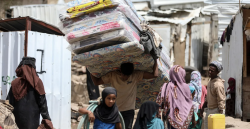
The demonstrations also unfold against a dire humanitarian backdrop. Years of war have displaced millions of Yemenis and left much of the population dependent on aid, while economic hardship and disrupted public services have deepened popular grievances. For many in Shabwa and Hadramout, the protests are as much about basic rights, security and dignity as about the wider constitutional question of the south’s status, lending the movement a resonance that extends well beyond formal party politics. Aid agencies have repeatedly warned that political instability and periodic bouts of violence make it harder to deliver assistance and to sustain the fragile services on which ordinary families rely.
Developments in the south also carry implications beyond Yemen’s borders. Hadramout and Shabwa are home to oil and gas resources and sit near vital shipping lanes, giving regional powers, including Saudi Arabia and the United Arab Emirates, a keen interest in the balance of power there. Analysts caution that continued unrest could complicate efforts to stabilise the country. For now, the rally in Azan has energised southern political discussion, and organisers have signalled that further demonstrations are likely as they press their demands for accountability over the events in Hadramout.
About the Author