
Yemen Opens Aden Workshop with WHO to Build a Hospital Performance Framework
 Yemen Herald News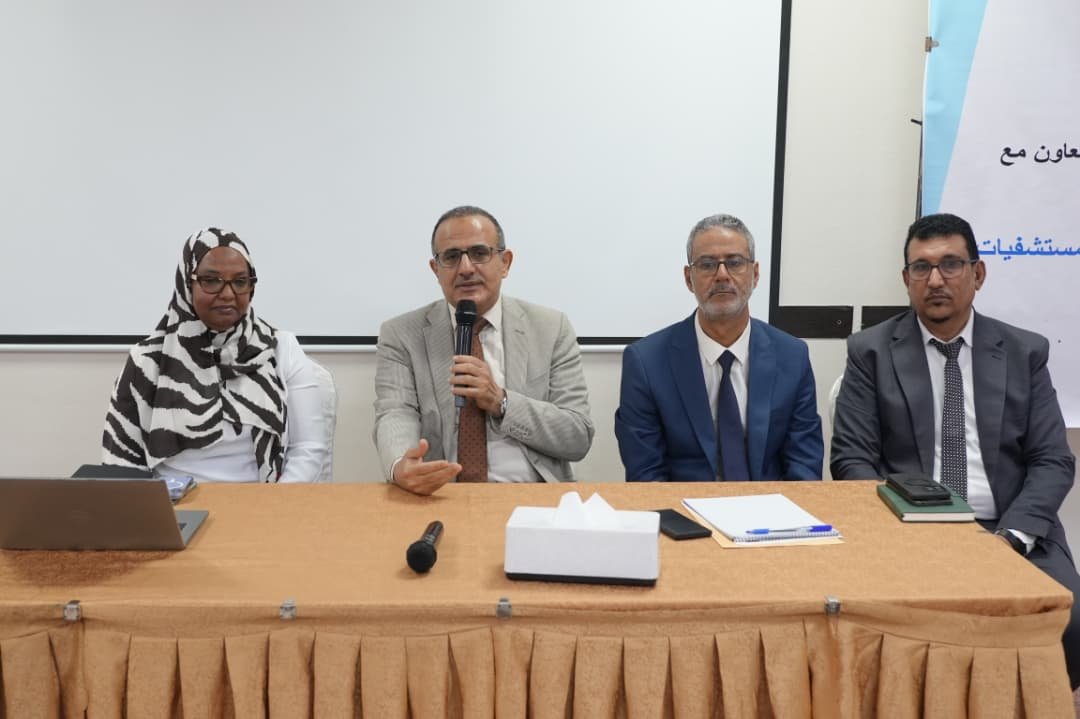
Yemen’s Minister of Public Health and Population, Dr. Qasem Buhaibeh, has opened a consultative workshop in Aden aimed at building national agreement on a framework for measuring and improving hospital performance. The initiative, launched at the start of the week, is intended to address the urgent need to raise the quality and efficiency of healthcare services across the country, a need made all the more pressing by the humanitarian crisis that has deepened during the conflict raging since 2015.
The workshop was organised by the General Directorate of Hospitals, working under the ministry’s medical services administration, in cooperation with the World Health Organization. It brought together 25 participants, among them directors of public and private hospitals and representatives of health offices from the governorates under government control, often referred to locally as the liberated governorates. By assembling officials from different parts of the health system, the organisers sought to ground the discussion in the practical realities faced by facilities on the ground rather than in abstract policy.
At the centre of the talks was a proposed framework for evaluating hospital performance. Participants were asked to examine the model from both national and international perspectives, to assess its main dimensions, to identify priorities for putting it into practice, and to weigh the challenges and opportunities involved in adopting it. The aim, organisers said, was to arrive at a shared national vision rather than a set of standards imposed from the top down, so that hospitals across the system could measure themselves against common benchmarks.
The backdrop to the workshop is a health system that has been severely weakened by years of war. The conflict has damaged or closed hundreds of medical facilities, disrupted supply chains for medicines and equipment, and driven many trained staff from their posts. The result has been a steep decline in the quality and reach of care at the very moment when needs have risen, leaving large parts of the population without reliable access to treatment.
The scale of those needs remains immense. According to United Nations estimates for 2025, around 19.5 million people in Yemen require some form of humanitarian assistance, while roughly 4.8 million remain displaced from their homes. Health services have had to contend not only with the direct effects of fighting but also with recurring outbreaks of preventable diseases, malnutrition and the strain placed on hospitals by a population with limited alternatives. In that environment, even modest improvements in how hospitals are managed can have an outsized effect on patient care.
The involvement of the World Health Organization reflects a wider international effort to shore up Yemen’s health sector. By working alongside national authorities, the agency is helping to transfer technical expertise and to align local practice with recognised standards. Officials framed the cooperation as a way of combining outside knowledge with domestic ownership, so that any framework adopted would be both credible internationally and realistic given the conditions inside the country.
The workshop also fits within a broader policy push. Yemeni health authorities have moved to launch a national strategy for the quality of health care covering the second half of the decade, a programme designed to set out longer-term goals for safety, effectiveness and patient experience. A hospital performance framework of the kind discussed in Aden would provide one of the practical tools needed to turn such a strategy into measurable progress, giving managers and regulators a way to track whether services are actually improving. National quality strategies of this kind typically aim to standardise clinical practice, strengthen patient safety and create accountability mechanisms that survive changes in personnel, all of which depend on reliable performance data of the sort the proposed framework is meant to generate.
Supporters of the initiative argue that establishing clear performance measures is essential if scarce resources are to be used well. With funding tight and demands heavy, the ability to identify which hospitals are performing well, where bottlenecks lie and how standards vary between facilities can help direct support to where it is most needed. Without such information, decisions about staffing, equipment and investment risk being made with little evidence to guide them.
For now, the framework remains under discussion, and officials acknowledged that adopting and implementing it will be a gradual process shaped by the country’s fragile circumstances. Reaching consensus among the many actors involved, securing the data needed to make the measures meaningful, and sustaining the effort over time will all be significant challenges. Yet participants presented the workshop as a constructive step, and a sign that even amid conflict the authorities are trying to build the institutional foundations for a stronger and more resilient system capable of serving patients more reliably in the years to come.
Looking ahead, officials suggested that further workshops and consultations of this kind would be needed to refine the framework and to align Yemen’s hospitals with modern standards of care. As the conflict continues to shape almost every aspect of life, a more coherent approach to managing healthcare is seen as essential both to restoring public confidence and to protecting the health of a population that has already endured so much.
About the Author




