Yemen’s Deputy Foreign Minister and Ukraine’s Envoy Discuss Bilateral Cooperation
 Yemen Herald News
In a notable diplomatic exchange, Yemen’s Vice Foreign Minister, Mustafa Noman, held a virtual meeting with Anatolii Petrenko, the non-resident Ambassador of Ukraine to the Republic of Yemen. The two officials reviewed the state of bilateral relations and exchanged views on a range of regional and international developments, signalling a mutual interest in maintaining and strengthening cooperation despite the considerable challenges facing both countries.
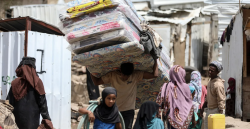
The discussion was framed by the ongoing difficulties confronting Yemen, including the protracted conflict that escalated in 2015 and the humanitarian emergency it has produced. United Nations estimates for 2025 put the number of Yemenis in need of assistance at around 19.5 million, with roughly 4.8 million displaced from their homes. Recurring public-health crises, including outbreaks of cholera and measles, have added further strain to a population already stretched to its limits, lending urgency to the government’s diplomatic efforts to secure support.
Against that backdrop, Noman and Petrenko underscored the value of strengthening diplomatic ties and of constructive dialogue as a route to a more durable partnership. The meeting reflected Yemen’s broader strategy of cultivating relationships with a wide range of countries even as it grapples with internal conflict, an approach intended to keep the internationally recognised government engaged on the world stage and to widen the circle of states sympathetic to its position on the international stage.
During the talks, Noman reaffirmed the government’s commitment to following up on outstanding consular and humanitarian matters between the two countries, stressing the importance of handling such issues in line with international law and established diplomatic norms. Consular cooperation often forms a practical backbone of relations between states, covering the welfare of citizens, travel documentation and the handling of individual cases, and its prominence in the discussion pointed to a desire to keep channels functioning smoothly.
Ambassador Petrenko serves as Ukraine’s non-resident envoy to Yemen while based in the region as Kyiv’s ambassador to Saudi Arabia. The arrangement, common for countries that maintain relations without a full resident mission, allows Ukraine to sustain diplomatic contact with Yemen despite the security situation that has led many governments to operate their Yemen portfolios from outside the country. For Kyiv, engagement with states across the Middle East has taken on added importance as it seeks to broaden its international support amid its own war.
Both Yemen and Ukraine are navigating the consequences of major conflicts, a parallel that, while far from exact, gives each a particular appreciation of the value of international solidarity. Ukraine has spent years rallying diplomatic backing in the face of war on its own territory, while Yemen has long sought to maintain the legitimacy and recognition of its government through active engagement abroad. Meetings such as this one allow both sides to compare notes and to keep their working relationship alive even when other, more pressing priorities dominate their respective agendas. Smaller bilateral relationships of this kind, though rarely the focus of public attention, form part of the dense web of contacts through which states pursue their interests and seek allies in international institutions.
The exchange of views on regional and international matters reflected the wider geopolitical environment in which both countries operate. Yemen’s government has frequently emphasised the strategic importance of the Red Sea and the security of its shipping lanes, a theme of concern far beyond the country’s borders, while Ukraine’s war has reshaped global discussions around security, energy and food supplies. Conversations between their diplomats inevitably touch on a world in which distant conflicts are increasingly interconnected.
For Yemen, maintaining a network of bilateral relationships carries practical as well as symbolic weight. Diplomatic engagement can translate into humanitarian support, political backing in international forums and assistance on specific issues affecting Yemeni citizens abroad. By keeping lines open with countries such as Ukraine, the foreign ministry seeks to ensure that Yemen’s voice continues to be heard and that its interests are represented across a broad spectrum of partners.
The virtual format of the meeting reflected the practical realities of contemporary diplomacy, particularly for officials operating amid security constraints and geographic distance. Video conferencing has become a routine tool for sustaining contact when in-person meetings are difficult, allowing diplomats to maintain momentum in their relationships without the logistical burdens of travel. Its use here underlined how both governments have adapted to the demands of conducting foreign policy under challenging conditions. Many embassies accredited to Yemen now operate from neighbouring countries, and remote engagement has become a normal feature of the country’s diplomatic life, enabling officials to maintain relationships that would otherwise be difficult to sustain.
While the meeting did not produce any dramatic announcements, it served to reaffirm the commitment of both sides to ongoing cooperation and dialogue. In diplomacy, such regular contacts often matter as much as headline agreements, gradually building the trust and familiarity on which more substantial cooperation can later rest. For Yemen and Ukraine, the exchange represented a modest but meaningful step in nurturing a relationship that both appear keen to sustain despite the formidable pressures each continues to face, and a sign that even modest diplomatic ties retain value in a turbulent international landscape.
About the Author