
Yemen Urges Shift From Emergency Aid to Resilience in Talks With WFP’s Acting Chief
 Yemen Herald News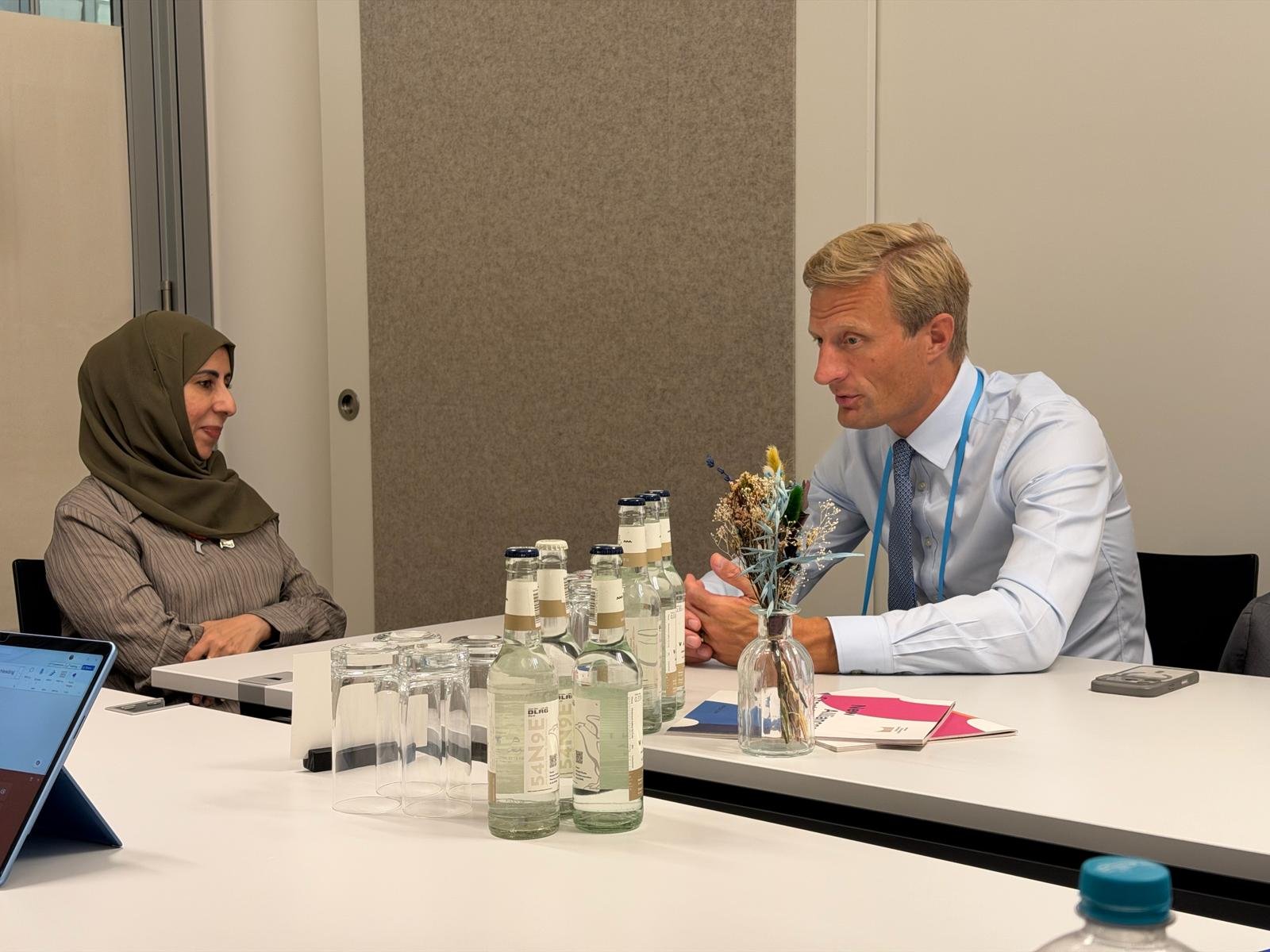
Yemen has pressed the international community to look beyond emergency relief and invest in the country’s long-term resilience, arguing that a decade of crisis response has done little to break the cycle of dependency. The appeal came from Dr. Afrah al-Zouba, Yemen’s Minister of Planning and International Cooperation, during talks held on the sidelines of the Hamburg Sustainability Conference with Carl Skau, the newly installed Acting Executive Director of the World Food Programme.
Skau assumed the WFP’s top job in early June 2026, stepping up from his role as Deputy Executive Director and Chief Operating Officer after Cindy McCain’s departure. His meeting with al-Zouba placed Yemen high on the agenda at a moment of leadership transition for the agency, which remains one of the largest providers of assistance in the country. A Swedish diplomat with more than two decades of experience in humanitarian and multilateral affairs, Skau has stressed the need for sustained donor engagement even as global funding tightens.
Much of the discussion focused on how to make food assistance both more effective and more efficient. Al-Zouba urged that aid programmes lean more heavily on local markets, a shift she argued would cut delivery costs while injecting money into Yemen’s own economy. Buying food closer to where it is distributed, rather than shipping it from abroad, could stretch limited budgets further and help sustain traders and farmers who have struggled through years of disruption.
Accompanied by Yemen’s Ambassador to Germany, Louay al-Eryani, the minister called for food assistance to be woven into national systems rather than delivered in isolation. She pointed in particular to social protection schemes and school feeding programmes, suggesting that linking relief to these structures could smooth the transition from emergency handouts to durable development. Such an approach, she said, would leave communities better equipped to absorb future shocks instead of lurching from one crisis to the next.
At the heart of al-Zouba’s message was a call for Yemen to move away from its heavy reliance on humanitarian aid. She set out a vision built on investment in resilience, community empowerment and the creation of sustainable economic opportunities. That pivot, she argued, is essential as the country continues to reckon with the consequences of the conflict that escalated in 2015 and the humanitarian emergency that has since engulfed millions of its people.
The minister also voiced concern about falling international funding, warning that shrinking budgets threaten to unravel critical relief operations. She pressed development partners and the wider international community to step up their advocacy on Yemen’s behalf, noting that the country bears an outsized burden from global problems it did little to cause. Despite contributing negligibly to challenges such as climate change, she said, Yemen ranks among the nations most exposed to their effects.
Skau, for his part, reaffirmed the WFP’s commitment to Yemen and underlined the importance of steady support from donors. He echoed the case for greater investment in national capacity, resilience and long-term development, framing such spending not as charity but as a way to reduce the need for open-ended emergency operations. In a country where an estimated 18 million people require humanitarian assistance and food insecurity remains widespread, he argued, consistent funding is indispensable.
The exchange carried implications reaching well beyond Yemen’s immediate needs, touching on the broader question of political and economic stability in a region shaped by conflict and rivalry. Yemen’s war has drawn in a range of outside actors, complicating the humanitarian picture and straining the systems meant to keep people fed. Against a backdrop of mass displacement and recurring disease outbreaks, the argument for rethinking how international aid is delivered has grown more urgent.
Advocates of the resilience approach contend that building local capacity and reducing dependence on outside relief could mark a turning point for Yemen. If international partners align their efforts with the government’s recovery agenda, they say, the groundwork could be laid for a more stable and self-reliant future. In that reading, the conversations in Hamburg were less about a single funding pledge than about reframing the relationship between Yemen and its donors.
Whether that vision can be realised remains uncertain. Yemen’s institutions are stretched thin, its economy fractured by war and currency collapse, and much of the population still depends on monthly food rations to survive. Shifting resources toward development while emergency needs remain acute is a delicate balancing act, and one that requires donors to think in years rather than months.
For now, the meeting served as a marker of intent from both sides. Al-Zouba used the platform to make the case that Yemen wants to be a partner in its own recovery, not merely a recipient of aid, while Skau signalled that the WFP is open to that conversation even as it manages its own leadership change and budget pressures. Turning those signals into concrete programmes will be the test of whether the Hamburg talks amount to a genuine shift or another statement of good intentions. For Yemenis living on the front line of the emergency, the difference between the two is measured not in policy language but in whether the next harvest, the next salary and the next meal become a little more certain.
About the Author




