Yemeni Party Coalition Backs al-Alimi and Vows to Defend National Sovereignty
 Yemen Herald News
Yemen’s National Coalition of Political Parties has declared its full support for President Rashad al-Alimi and the Presidential Leadership Council, pledging to stand behind the government as it confronts what it describes as mounting threats to national sovereignty. The coalition, which brings together a number of the country’s established parties and is led by former prime minister Ahmed Obaid bin Dagher, said it would back the political leadership, the armed forces and the security services until stability is restored and the Houthi insurgency is brought under control.
In its statement, the coalition condemned what it called the aggressive conduct of Iran and the Houthi movement, describing recent actions as a blatant violation of Yemen’s sovereignty and a challenge to the authority of the state. It accused the Houthis of disregarding constitutional norms and dismissing international resolutions, and said their behaviour reflected their role as instruments of Iranian influence in the region.
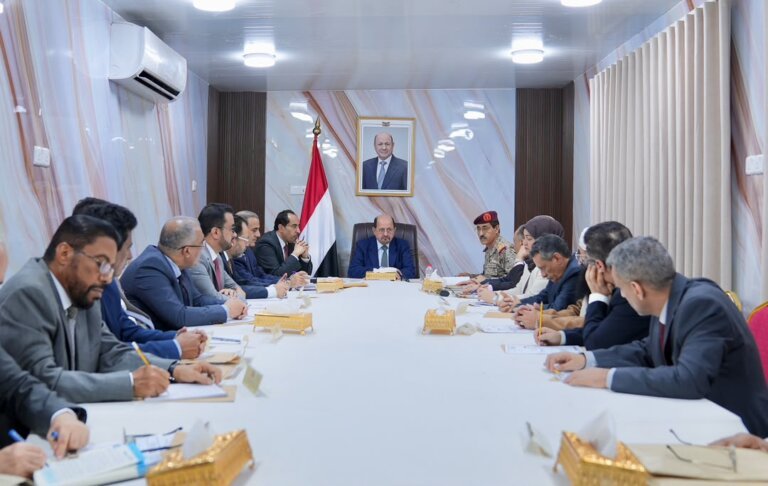
The declaration followed a meeting between al-Alimi and coalition leaders, at which the president briefed them on the latest escalation. According to the government, that escalation centred on the arrival at Sana’a airport — which is under Houthi control — of an Iranian aircraft it says carried military expertise and equipment, an episode officials have cast as a direct breach of Yemeni sovereignty. Al-Alimi told the party leaders that the Houthis had never been a genuine partner for peace but rather, in his words, an existential threat.
Al-Alimi has repeatedly urged political parties to take a more active part in countering Iranian influence, describing them as the political backbone of the state and arguing that their ability to shape public opinion is as important as military effort. The coalition echoed that message, saying the parties would work to rally public support behind what officials call the state project and behind the government’s reform agenda.
The coalition argued that continued Houthi defiance poses a grave threat not only to Yemen’s security but to the stability of the wider Arab region. It said allowing the group to operate unchecked would serve what it characterised as a broader Iranian agenda, and it urged the international community to move beyond observation toward concrete measures that could deter further aggression and hold those responsible to account.
Parties within the coalition also voiced support for military action they consider necessary to counter the Houthi threat, saying repeated provocations require a reassessment of existing peace efforts. They called for existing UN resolutions aimed at curbing Houthi aggression to be enforced, together with sanctions targeting Iran and the affiliates the coalition described as facilitators of the destabilisation.
The coalition’s appeal came as the Iranian flights drew scrutiny at the United Nations, where Britain, the United States, France and Bahrain requested a Security Council session on Yemen. Diplomats there voiced concern over the unauthorised landings and warned that any transfer of weapons or expertise to the Houthis would breach resolutions 2216 and 2140 — the same instruments the coalition wants enforced.
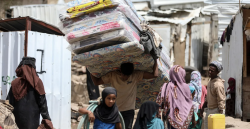
The statement tied the security picture to Yemen’s humanitarian crisis, warning that prolonged instability would deepen civilian suffering. More than a decade of war has driven large numbers of Yemenis from their homes and strained basic services, and the country continues to face recurring outbreaks of disease such as cholera and measles as fighting disrupts aid delivery and public health systems.
Geography added weight to the coalition’s warnings. Yemen sits astride vital shipping lanes in the Red Sea and at the Bab al-Mandab Strait, and the coalition cautioned that the use of Yemeni territory to advance Iranian objectives could threaten not only domestic governance but also international shipping. Secure passage through those waters is central to global trade, and any sustained disruption would carry economic consequences well beyond the region.
The coalition called for a coherent international response that combines deterrence with political backing for the Presidential Leadership Council. Its stated aim is to help create the conditions for restoring governance and beginning reconstruction, while signalling to the Houthis that continued escalation will carry consequences. The show of solidarity, coalition leaders suggested, reflects a moment in which internal unity and outside support could together help the government reclaim the initiative.
Bin Dagher, who has held senior government posts including the premiership, has positioned the coalition as a vehicle for consolidating support among the parties opposed to the Houthis. That bloc has often struggled to maintain a united front, and the statement appeared aimed as much at projecting cohesion among those parties as at sending a message to their opponents.
Even as it expressed confidence in the armed forces’ ability to defend the country, the coalition acknowledged that the situation is complex and will demand a sustained strategy combining readiness on the battlefield with diplomatic engagement. It framed the parties’ partnership with the leadership as essential to charting a path toward peace and to preventing the political front from fragmenting under pressure.
For a country worn down by more than a decade of conflict, the coalition presented its message as a call for a unified front — one capable of addressing the immediate threat it attributes to the Houthis while also confronting the longer-term challenges of rebuilding institutions and sustaining humanitarian relief. Whether that unity holds, and whether it translates into effective action, is likely to shape the next phase of Yemen’s crisis.
About the Author