Yemen Presses for Deeper Arab Industrial Cooperation at AIDSMO Assembly in Tripoli
 Yemen Herald News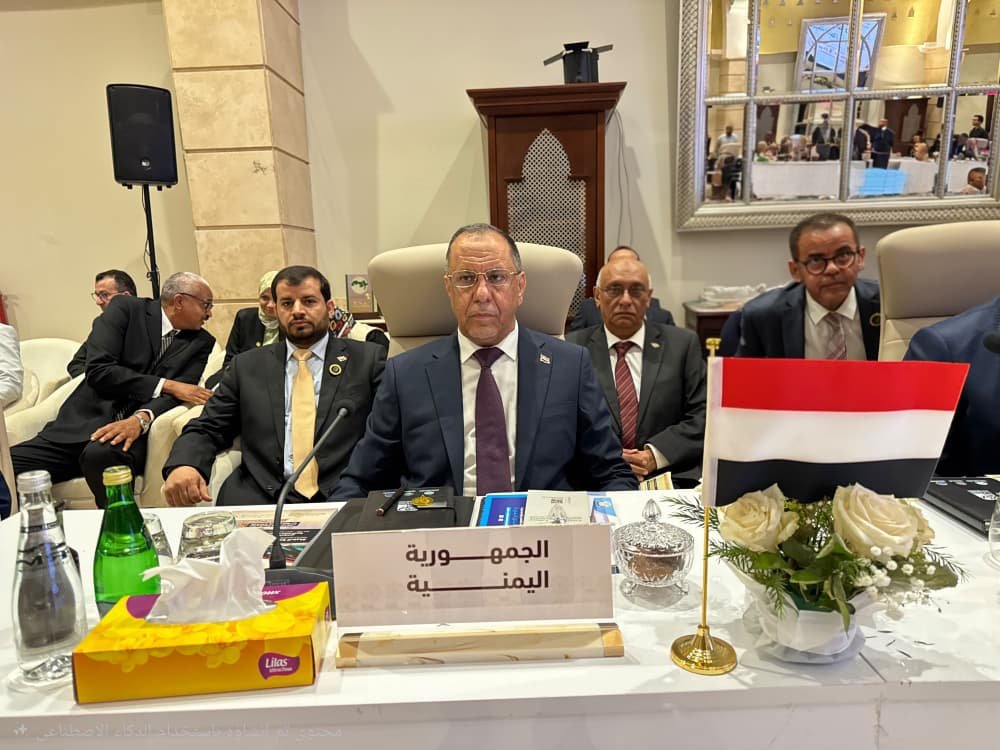
Yemen used the 29th General Assembly of the Arab Organization for Industrial Development, Standardization and Mining, held in the Libyan capital Tripoli from 14 to 16 July 2026, to press for deeper industrial cooperation with fellow Arab states. The country’s Minister of Industry and Trade, Dr. Mohammed al-Ashwal, led the national delegation at the ministerial-level gathering, which brought together senior officials from across the Arab world to discuss how the region can better integrate its industrial, standardization and mining policies.
Libya’s Ministry of Industry and Minerals hosted the assembly, and Prime Minister of the Government of National Unity Abdul Hamid Dbeibah opened the proceedings. Delegations from twenty-one Arab countries took part, underscoring the breadth of interest in reviving joint Arab industrial action at a time when many economies in the region are contending with supply-chain disruption, currency pressure and the accelerating shift toward digital production methods.
Speaking at the assembly, Dr. al-Ashwal said Yemen’s participation reflects a strategic determination to play an active role in specialized Arab institutions rather than remain on the margins of regional economic decision-making. He argued that by drawing on the experience and technical knowledge available within the region, Yemen can modernize its industrial base, raise the competitiveness of its products and lay foundations for long-term economic growth despite the exceptionally difficult circumstances the country faces.
The minister called for stronger strategic partnerships among Arab states and for sustained investment in advanced technologies, including artificial intelligence, which he described as essential to building an industrial sector capable of withstanding both local and global shocks. In his view, a resilient and adaptable manufacturing base is not a luxury for Arab economies but a requirement for protecting jobs and reducing dependence on imports of basic goods.
Industrial and food security featured prominently on the agenda. Dr. al-Ashwal argued that closer coordination among member states would open up new investment opportunities, ease the transfer of technology and encourage a culture of knowledge exchange across the Arab world. For countries whose food supplies depend heavily on imports, as Yemen’s do, linking industrial policy to food security is a matter of national stability as much as economics.
The Tripoli assembly had a substantive working agenda to match the rhetoric. Participants reviewed nineteen projects designed to strengthen Arab industrial integration, promote sustainable industrial development and expand the use of artificial intelligence in the industrial and mining sectors. Delegates also formally launched the Arab Industrial Indicators Platform, a unified database intended to give governments accurate, comparable data on industrial performance across Arab countries and to support better-informed economic policymaking.
For Yemen, the push to engage with these initiatives comes against a bleak domestic backdrop. The conflict that escalated in 2015 has devastated the national economy, dividing financial institutions between rival authorities, driving sharp depreciation of the currency in government-held areas and destroying or idling much of the country’s limited industrial capacity. Factories that once produced food, cement and consumer goods have closed or operate far below capacity, and private investment has largely dried up.
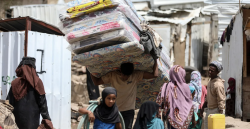
The human cost of that collapse is severe. United Nations agencies estimate that more than 22 million Yemenis need humanitarian assistance in 2026 and that some 5.2 million people remain displaced inside the country. Aid officials have repeatedly warned that humanitarian relief alone cannot substitute for a functioning economy, which is why the government’s efforts to rebuild productive sectors carry weight beyond the conference hall.
Seen in that light, industrial development is one of the few available levers for improving daily life in government-controlled areas. A recovering manufacturing sector could generate jobs for a young population with few employment options, produce goods locally that are currently imported at high cost, and broaden the tax base that the internationally recognized government needs to pay salaries and deliver services. Regional partnerships of the kind discussed in Tripoli could also help Yemeni firms access financing, equipment and technical training that are unavailable domestically.
Whether the ambitions announced at the assembly translate into concrete projects will depend on implementation, and Yemen’s ability to follow through is constrained by insecurity, fragmented governance and scarce public funds. Even so, the delegation’s presence in Tripoli signals that the government intends to keep Yemen anchored in Arab economic institutions and to position the country to attract investment and technology as conditions allow. For a state so often discussed only through the lens of war and humanitarian crisis, the attempt to talk about factories, standards and data platforms is itself a statement of intent.
The organization behind the gathering, known by its acronym AIDSMO, is a specialized Arab League agency headquartered in Rabat, Morocco, that coordinates member states’ policies on industrial development, technical standards and mineral resources. Its general assembly is the main forum where joint Arab industrial projects are approved, and membership gives crisis-hit economies such as Yemen access to technical committees and training programmes they could not easily replicate alone.
Yemen’s government has particular reason to seek outside support. The halt of crude oil exports after attacks on southern export terminals in late 2022 stripped the state of its largest source of foreign currency. With hydrocarbon revenues constrained, officials have increasingly pointed to manufacturing, fisheries and mining as sectors that could eventually diversify the economy, provided security conditions permit and external partners help finance the rebuilding of basic infrastructure such as power supply and ports.
About the Author