Yemen’s al-Alimi Bawazir asks Washington to move beyond containing the Houthis
 Yemen Herald News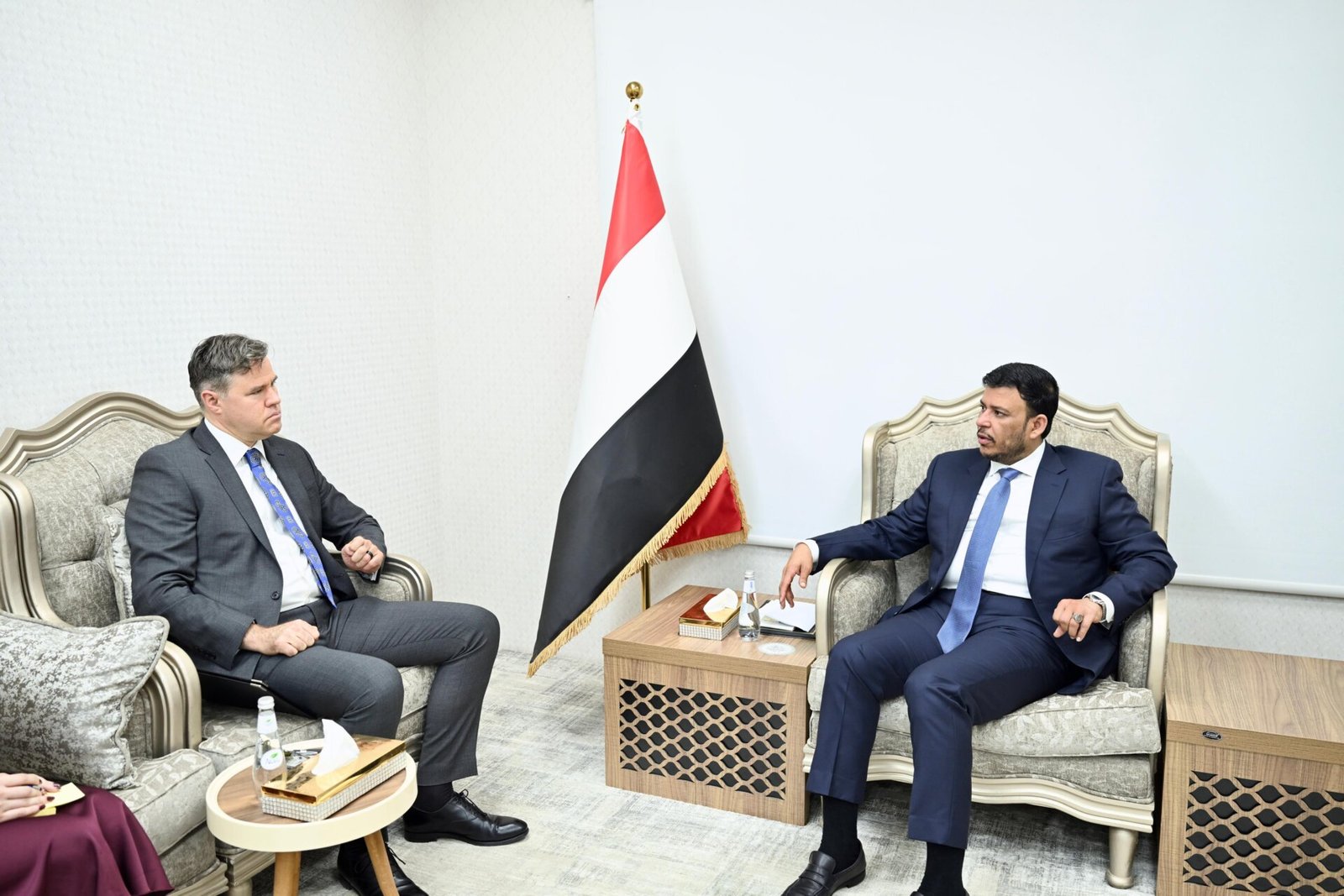
RIYADH, Saudi Arabia — A member of Yemen’s Presidential Leadership Council urged the United States on Monday to move beyond containing the Houthis, the state news agency Saba reported.
Dr. Abdullah al-Alimi Bawazir received Neil Hop, chargé d’affaires of the U.S. embassy to Yemen, the agency said.
The two discussed bilateral relations and prospects for wider cooperation, according to Saba.
The account rests on Saba, which is run by Yemen’s internationally recognised government. The U.S. mission to Yemen has not published a readout, and no independent outlet has reported the meeting.
Al-Alimi welcomed Hop and said the council and the government would provide what his mission needed, Saba reported.
He called for a more advanced phase of partnership that would strengthen Yemeni state institutions, the agency said.
The talks covered U.S. support for the government in countering terrorism, safeguarding security and protecting freedom of navigation, according to Saba.
Al-Alimi briefed Hop on missile and drone attacks he attributed to the Houthis against the cities of Mokha and Marib, the agency reported.
He said the attacks had also struck ports, armed forces positions, displacement camps and civilian facilities, according to Saba.
Al-Alimi said the attacks exposed the group as an instrument of Iran in the region, the agency reported. The Houthis deny that Tehran directs them.
He said the Houthis claim that areas under their control are under siege while themselves targeting ports, airports and economic facilities and threatening commercial vessels and food and fuel supplies, according to Saba.
He said the escalation placed a responsibility on the international community, and on the United States above all, to protect Yemenis’ access to their ports, airports and vital facilities, the agency reported.
Al-Alimi said protecting international shipping could not be separated from the causes of the war on land, according to Saba.
He called for a firmer American and international stance toward parties that arm the group, and for pressure to stop outside interference, the agency said.
He said any regional understandings should produce sovereign states in which force is held only by constitutional institutions, according to Saba.
Hop reaffirmed U.S. support for the council and the government, the agency reported.
Hop arrived as chargé d’affaires for the U.S. mission to Yemen on Aug. 5, the mission said in its own announcement.
He is a career member of the Senior Foreign Service with the rank of counselor and has spent more than 24 years in State Department and interagency foreign policy and national security posts, according to the mission.
His overseas assignments include political counselor at the U.S. embassy in Riyadh.
The U.S. mission to Yemen has worked from Saudi Arabia since it suspended operations at its embassy in Sanaa in February 2015.
Middle East Eye reported that Hop met the council’s vice president in Riyadh shortly after taking up the post.
The attacks al-Alimi described have been reported independently.
Al Jazeera reported that missile and drone strikes on the Red Sea port of al-Makha killed at least seven people on Aug. 10. Four were military personnel and three were civilians, and about 30 people were wounded, most of them civilians.
Strikes there the previous day killed at least 11, the broadcaster reported.
Marib’s government media office said six ballistic missiles and four drones hit residential districts of the city on Aug. 15, wounding four people and damaging homes, according to Al Jazeera.
Attacks on military camps in Marib and Hadramout in early August killed at least 30 government soldiers, the broadcaster reported.
The Houthis said the al-Makha operation used ballistic missiles and drones and was a response to what they called a continued Saudi military buildup.
At sea, the group has targeted more than 100 merchant vessels since November 2023 and sunk two of them.
Semafor reported that a Houthi attack on a Red Sea cargo ship killed six people this month, the first deadly strike in the Bab el-Mandeb strait in about a year.
The group paused its campaign after the Gaza ceasefire in October 2025 and declared a renewed ban on Israeli-linked shipping in June, as fighting between Iran and Israel resumed.
Traffic through Bab al-Mandab remains well below pre-crisis levels. The Suez and Red Sea route carries about 12 percent of global trade, and ships routed around southern Africa add 10 to 14 days to a voyage.
The U.S. Maritime Administration maintains a standing advisory covering the Red Sea, the Bab el-Mandeb strait, the Gulf of Aden, the Arabian Sea and the Somali Basin.
The European Union’s naval mission in the corridor, Aspides, began operations in February 2024 and escorts merchant ships through the area.
The humanitarian picture al-Alimi referred to is set out in the United Nations response plan published in March.
It records more than 22 million people in need across Yemen and 18.3 million who are acutely food insecure.
More than 2.2 million children under five are acutely malnourished, of whom 516,157 are severely malnourished, according to the plan.
It counts 5.2 million internally displaced people and seeks 2.16 billion dollars to reach 12 million of them.
The Presidential Leadership Council was formed in April 2022 with eight members, chaired by Rashad al-Alimi, when President Abd-Rabbu Mansour Hadi transferred his powers to it.
Abdullah al-Alimi Bawazir served as director of the office of the presidency under Hadi before joining the council.
About the Author