Yemen’s cabinet approves steps to carry out general mobilisation and notes $60 million Saudi deposit
 Yemen Herald News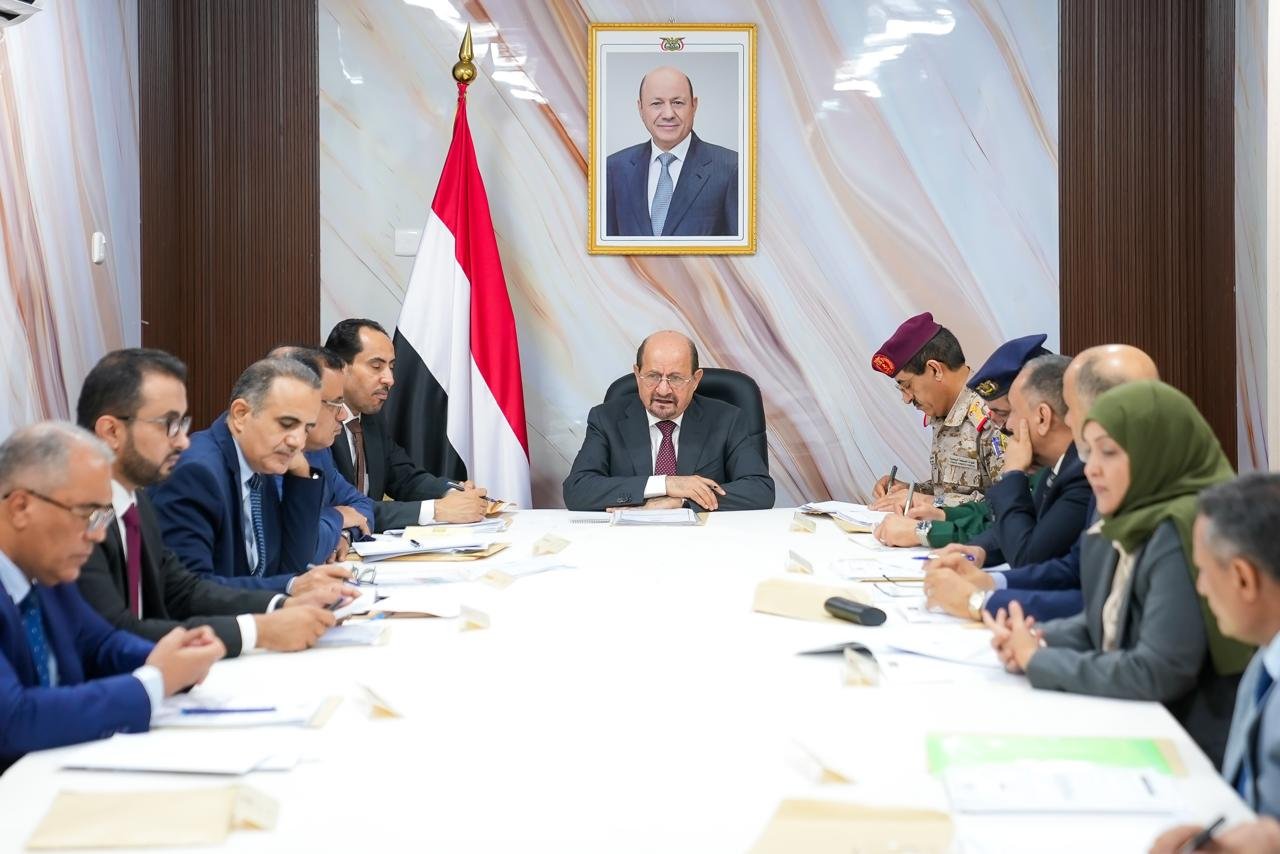
ADEN, Yemen — Yemen’s cabinet approved a package of measures on Thursday to turn a general mobilisation declared last week into working government programmes.
Prime Minister Shaya al-Zindani chaired the session in Aden, the government’s temporary capital, the state news agency Saba reported.
The account of the session comes from Saba. No independent confirmation of the cabinet’s deliberations has been published.
The measures are meant to raise the readiness of state institutions, Saba said. Ministers agreed the mobilisation would be followed up directly and at regular intervals.
The cabinet said the phase required institutions to double their efforts and to mobilise national capabilities and resources, according to the agency.
It said preparedness had to be strengthened across institutional, military, security, economic and humanitarian work.
Saba said the package covered economic, financial and service steps. Those included keeping markets stable and securing supplies of essential goods.
Ministers called for salaries and other state obligations to be met on time, the agency said.
They also discussed strengthening the health and service sectors and dealing with the electricity crisis to reduce its effect on residents.
The cabinet praised an annual address by King Salman bin Abdulaziz Al Saud that set out Saudi backing for the Yemeni government, Saba said.
It thanked Saudi Arabia for continuing economic support and noted the deposit of a third instalment of budget support worth $60 million at the Central Bank of Yemen.
That transfer was reported separately by Reuters and Arab News, which put it at close to $60 million and cited Saudi Arabia’s ambassador.
Saudi Arabia deposited $1 billion in the Aden-based central bank in February 2023, Al Jazeera reported at the time.
The general mobilisation was declared on Sept. 28. Yemen’s House of Representatives approved a request from Rashad al-Alimi, chairman of the Presidential Leadership Council, to declare it.
The chamber’s press service said the measure took effect at once and runs until the causes that prompted its adoption are resolved.
It said the mobilisation was intended to counter escalation by the Houthis, defend citizens and the republican system, and preserve state sovereignty.
Al-Zindani has led the cabinet since February. He served as foreign minister from March 2024 until July, when Afrah al-Zouba took that post and became the first woman to hold it.
Aden has served as the government’s seat since the Houthis took control of Sanaa and the cabinet moved south.
The mobilisation followed Houthi gains on Yemen’s Red Sea coast. Houthi forces seized the port of Mokha on Sept. 10, UPI and The National reported.
The Foundation for Defense of Democracies said in an analysis published on Sept. 14 that Houthi forces had taken the Red Sea coast and islands near the Bab al-Mandab strait.
Those positions sit on the approach to one of the world’s busiest shipping lanes.
The International Organization for Migration said more than 82,000 people had left Yemen’s western coast since the start of September.
The agency counted 18,500 departures in 72 hours on Sept. 7 and put the running total at 46,000 on Sept. 11, when it said the number was rising by the hour. It passed 76,000 the following day.
People fled the west coast and three districts of Taiz governorate — Maqbanah, Jabal Habashi and Al Ma’afer — and moved into Lahj and Aden and north toward Ibb, the agency said.
IOM said those who left needed shelter, food, water, household goods, health care and protection.
The Executive Unit for the Management of IDP Camps in Taiz governorate counted 65,845 people displaced between Aug. 10 and Sept. 15, its director-general, Ali al-Shumairi, told Al Jazeera. He said about 95 percent came from five districts.
At the Mushrifa camp, the supervisor, Osama al-Wafi, said more than 1,500 families had arrived over six days and that most were living in the open for lack of shelter.
The UN Office for the Coordination of Humanitarian Affairs recorded at least 14 civilians killed or wounded between Sept. 1 and Sept. 11, two of them children.
The World Health Organization recorded 67 deaths and 288 injuries across seven governorates between Aug. 6 and Aug. 24.
The World Bank said in an economic monitor published on May 21 that Yemen’s real gross domestic product fell 1.5 percent in 2025, and projected a further contraction of 0.5 percent this year.
It said oil exports remained blocked and that government revenues had fallen to 5.6 percent of gross domestic product in 2025.
Nearly 75 percent of the population lives below the poverty line, according to the same report. The bank said humanitarian funding covered 28 percent of the needs set out in the UN response plan, down from 56.5 percent in 2024.
Britain announced 10 million pounds in emergency aid for Yemen on Sept. 26. Stephen Doughty, the British minister of state for the Middle East, said the latest violence had caused humanitarian suffering and harmed civilians.
The United Nations says more than 22 million people in Yemen need humanitarian assistance. Its humanitarian response plan for March 2026 put the number of acutely food insecure people at 18.3 million.
The plan recorded more than 2.2 million children under five as acutely malnourished, 516,157 of them severely. It counted 5.2 million people displaced inside the country.
The plan sought $2.16 billion to reach 12 million people. Saba did not say when the cabinet would next meet.
About the Author