Yemen’s Defense Minister Chairs an Extraordinary Marib Meeting to Review Combat Readiness
 Yemen Herald News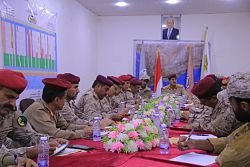
Yemen’s Defense Minister, Lieutenant General Tahir al-Aqili, convened an extraordinary military meeting in Marib province to examine the latest developments on the battlefield and to assess the combat readiness of the armed forces. Held on Tuesday, the expanded session brought together a wide range of senior commanders, including the Chief of the General Staff, the Inspector General, assistants to the Defense Minister, and the heads of various military authorities and departments. The commanders of the Sixth and Seventh Military Regions and the Chief of Staff of the Third Military Region were also among those present.
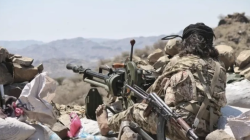
The discussions concentrated on recent field updates, the implementation of military plans and programmes, and the impact of both regional and domestic developments on the situation across the country. Participants reviewed the complex realities of the front lines, addressing the immediate pressures confronting individual units and weighing practical measures intended to reinforce them. Detailed briefings formed the core of the gathering, giving commanders an opportunity to share firsthand accounts of conditions in their respective sectors.
By drawing on reports from units in the field, the leadership sought a clearer picture of where resources and capabilities were most stretched and where adjustments might yield the greatest benefit. The exchange underscored a recognition that effective coordination between dispersed commands has become increasingly important amid the shifting demands of a prolonged conflict, in which front lines have remained largely static but the risk of renewed escalation persists.
Al-Aqili used the meeting to stress the importance of raising combat readiness, tightening military discipline and improving cooperation among the different formations and units. He also pointed to the need to continue institutional development and reform within the armed forces, framing such efforts as essential to building a more durable and professional military structure. In recent appearances the minister has also highlighted qualitative training as a way of preparing units for the demands of modern warfare, arguing that better-drilled forces are less dependent on numbers alone. His emphasis on capability improvement reflected a broader strategic intent to fortify resilience rather than merely react to events as they unfold.
The choice of Marib as the venue carried its own significance. The oil- and gas-rich province east of the capital has been one of the most strategically important strongholds of the internationally recognised government, serving as both an economic lifeline and a military bulwark. It also hosts one of the largest concentrations of internally displaced people in the country, with hundreds of thousands sheltering after fleeing fighting elsewhere, which has made its stability a priority for the government and its backers alike.
That government, led by Prime Minister Shaya Mohsen al-Zindani and overseen by a Presidential Leadership Council under Rashad al-Alimi, has sought to consolidate and professionalise a patchwork of military formations assembled over years of war. The drive to standardise command structures and improve discipline speaks to a recurring challenge for the recognised government, whose forces have at times been divided along regional and factional lines.
The wider context remains one of fragile calm. A United Nations-brokered truce first agreed in 2022 has substantially reduced large-scale fighting, though sporadic clashes have continued along several fronts and a comprehensive political settlement has remained elusive. Years of hostilities have hampered reconstruction and deepened a humanitarian crisis that has left much of the population dependent on aid and exposed to chronic insecurity.
Regional dynamics add further complexity to the picture. Yemen’s conflict has long been shaped by the involvement of outside powers, with Iran widely regarded as a backer of the Houthi movement, while Gulf states, including Saudi Arabia and the United Arab Emirates, have exerted influence over various factions on the ground. This external dimension means that calculations about readiness and strategy cannot be separated from a fluid geopolitical environment in which alliances and priorities can shift with little warning, reinforcing the value of careful planning.
Much of the leadership’s focus rests on anticipating the tactics of Houthi forces, who have repeatedly demonstrated an ability to adapt their methods of warfare, from drone and missile strikes to attacks on shipping in the Red Sea. Those maritime assaults, which began in late 2023 and disrupted one of the world’s busiest trade routes, drew international naval responses and underscored how the group’s reach now extends well beyond Yemen’s land borders, complicating the government’s own planning. By leveraging intelligence and field reporting from across the regions, al-Aqili and his commanders signalled a deeper awareness within the military hierarchy of the many challenges facing Yemeni forces and of the need to prepare for difficult scenarios in a structured way.
Despite the considerable obstacles, the leadership has continued to project a determination to provide a measure of stability and security in an environment that remains volatile and unpredictable. The months ahead are likely to prove significant for both military operations and humanitarian conditions in Yemen, as the pressures of the conflict intersect with the urgent needs of civilians. For the armed forces, the task is to maintain discipline and readiness while managing limited resources; for the government more broadly, it is to balance security imperatives against the demands of relief and recovery. The Marib meeting, in that sense, formed part of a continuing effort to keep the military prepared while the search for a lasting peace grinds slowly on.
About the Author