Yemen’s Planning Minister Courts Kuwaiti and German Backing for Recovery at Hamburg Conference
 Yemen Herald News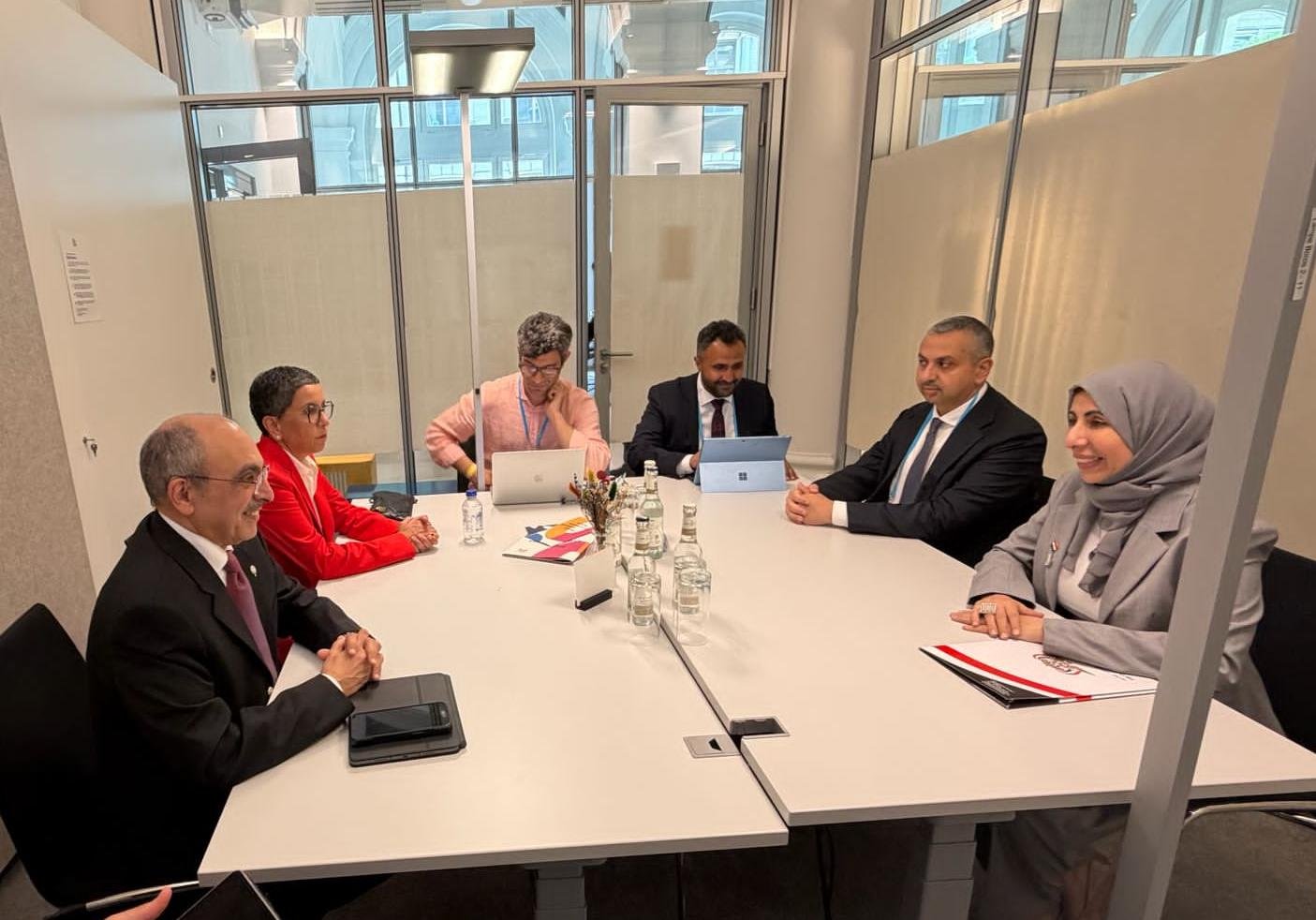
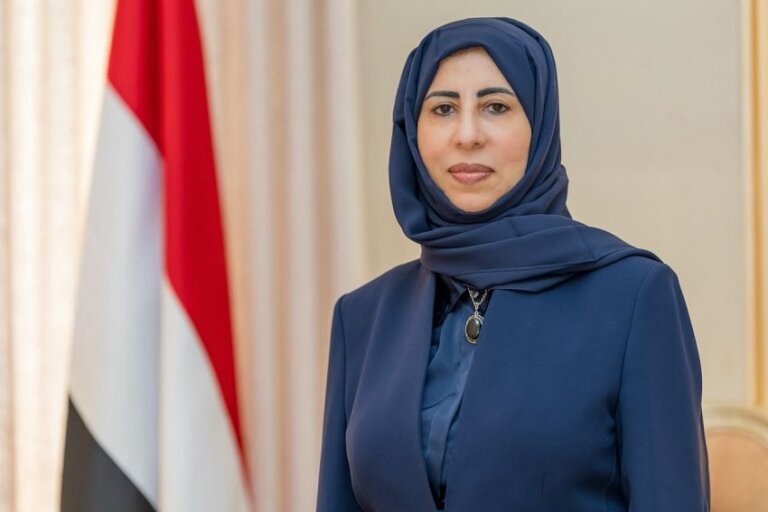
On the sidelines of the Hamburg Sustainability Conference 2026, Yemen’s Minister of Planning and International Cooperation, Dr. Afrah Al-Zouba, held separate talks with senior officials from Kuwait and Germany aimed at deepening development cooperation and easing the conditions facing her country. The discussions unfolded against the backdrop of a prolonged conflict that has devastated Yemen and produced one of the world’s most severe humanitarian crises. Both meetings centred on concrete projects intended to address urgent needs while supporting the country’s gradual shift from emergency relief toward longer-term, sustainable development.
In her meeting with Waleed Al-Bahar, Director General of the Kuwait Fund for Arab Economic Development, Dr. Al-Zouba reviewed the portfolio of priority projects financed by the fund. The talks, attended by Yemen’s Ambassador to Germany, Louai Al-Eryani, and Kuwait’s Ambassador to Germany, Reem Al-Khaled, gave particular attention to initiatives in water, transport and energy, sectors widely seen as foundational to recovery because they underpin both the delivery of basic services and the creation of opportunities that can help stabilise communities strained by years of war.
Dr. Al-Zouba used the exchange to stress that Yemen’s path toward recovery depends on gradually shifting the focus from immediate humanitarian assistance to building durable development frameworks. She underlined the importance of strengthening public institutions and ensuring the reliable delivery of fundamental services. That emphasis reflects a broader government strategy to move beyond crisis response and lay foundations capable of supporting more self-sustaining growth, even as acute needs continue to demand attention across much of the country.
Al-Bahar reaffirmed the Kuwait Fund’s commitment to supporting Yemen through a turbulent period, disclosing plans to dispatch a technical team to assess what would be required to resume projects that had been halted. Both sides agreed to keep working toward restarting stalled initiatives at a time when financial resources across the region are increasingly stretched and competition for development funding has intensified.
The minister’s agenda also featured a substantive meeting with Niels Annen, a State Secretary at Germany’s Federal Ministry for Economic Cooperation and Development. Their conversation addressed the broader partnership between Yemen and Germany, with Dr. Al-Zouba highlighting the government’s economic reform efforts and its preparations for a National Development Plan covering the years 2027 to 2029. She also pointed to measures intended to strengthen private-sector participation, including public-private partnership schemes designed to mobilise investment and expertise beyond what the state alone can provide.
Annen reiterated Germany’s intention to remain a steadfast development ally and expressed appreciation for the cooperation between German development agencies and Yemeni institutions. He indicated that Germany would continue to support both immediate humanitarian efforts and longer-term development at a time when Yemen’s economy remains severely weakened by conflict. Years of fighting have damaged infrastructure, disrupted trade and eroded the institutions responsible for managing public finances and delivering services.
Rebuilding under such conditions is a formidable task, and Yemeni officials have increasingly argued that emergency aid, while indispensable, cannot by itself reverse the deeper damage. Investment in productive sectors and in the machinery of governance is regarded as necessary to break a cycle of dependency and decline. That conviction helps explain the prominence given to institution-building and service delivery in both sets of talks, where planners emphasised water, energy and vocational training in the hope of combining tangible improvements in daily life with skills and systems that can endure.
The involvement of established partners such as the Kuwait Fund and German development bodies is seen as lending both financing and technical credibility to that agenda. The Kuwait Fund has been a long-standing financier of infrastructure across the Arab world, while Germany ranks among the largest bilateral donors to Yemen, and officials in Sanaa’s internationally recognised government hope sustained engagement from both can help anchor a more predictable recovery.
The choice of venue was itself significant. The Hamburg Sustainability Conference, held on 29 and 30 June 2026, brings together government ministers, development institutions and private-sector leaders to discuss financing and partnerships for sustainable development. This year’s gathering placed global hunger high on the agenda, convened as roughly 266 million people worldwide face acute food insecurity, a theme of direct relevance to Yemen, where millions struggle to secure enough to eat.
For Yemen, participation offered a platform to engage directly with potential partners and to present its priorities to an audience capable of mobilising resources. The diplomacy also reflected the agenda of a government that has placed economic reform near the centre of its programme. Officials have spoken repeatedly of the need to modernise public institutions, improve transparency in the management of resources and create conditions capable of attracting investment, arguing that a credible reform record is essential to unlocking the kind of long-term financing the country needs.
Taken together, the Hamburg meetings underscored a recurring message from Yemen’s planners: that the country’s trajectory will be shaped less by emergency relief alone than by whether partners are willing to invest in reconstruction, institutions and productive sectors. The roles played by Kuwait and Germany illustrate the kind of sustained, multifaceted support that Yemeni officials hope to secure as they work to chart a course toward greater stability.
About the Author