Yemen’s deputy agriculture minister reviews World Bank-funded irrigation project with UNDP in Aden
 Yemen Herald News
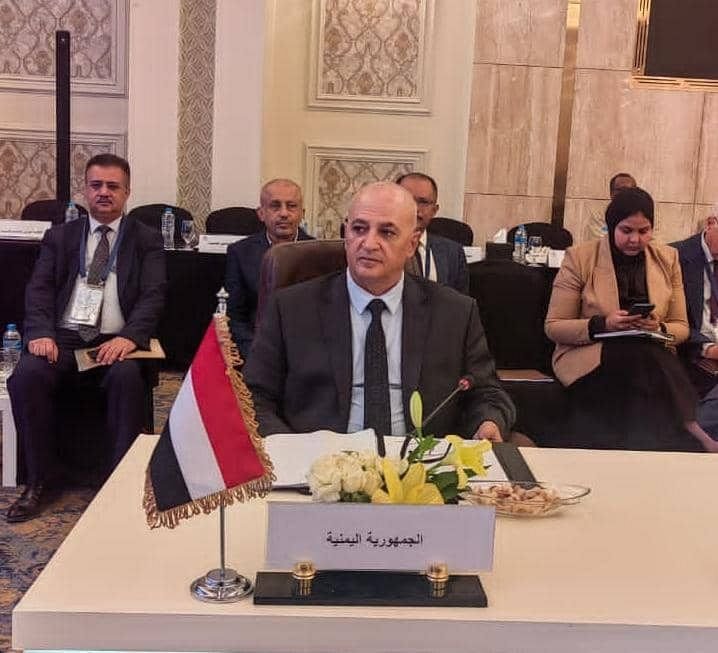
ADEN, Yemen — Yemen’s deputy agriculture minister for irrigation met a United Nations Development Programme team in Aden on Tuesday to review a World Bank-funded water and irrigation project.
Eng. Ahmed al-Zamki, deputy minister of agriculture and irrigation for the irrigation and land reclamation sector, went through the project’s aims and its first phase with the team, the state news agency Saba reported.
The account of the meeting rests on that Saba report. No independent confirmation of the talks has been published.
The project is carried out by UNDP with the United Nations Office for Project Services and funded by the World Bank Group, Saba said.
Its first phase covers the Tuban Basin in Lahj governorate and Wadi Hajar in Hadramout governorate.
UNDP lists the operation as the Improved Water Management and Irrigation for Sustainability and Efficiency Project, shortened to IWISE, and names the two areas as the Aden-Tuban and Wadi Hajir basins.
The World Bank approved it on June 4 within a country partnership framework for the 2026 to 2030 fiscal years.
The bank put the project’s value at $153.6 million. UNDP describes the initial funding as a $150 million grant.
Four operations sit in that framework, worth $285 million together, according to the bank.
The others are a health, nutrition and water project at $94 million, a second urban services emergency project at $21 million and a public institutions project at $20 million.
The bank called the water operation the first phase of a multi-phase approach to Yemen’s water scarcity.
It said the framework aims to widen access to water, sanitation and hygiene services from 3.4 million to 6.4 million people by 2030.
The framework is titled “Better Livelihoods and More Jobs Amid Fragility.” It sets three outcomes: improving nutrition, widening access to electricity and strengthening agribusiness and fisheries.
UNDP says the project targets 850,000 people for improved climate resilience.
Another 475,000 are to benefit from work on terrestrial and aquatic systems and 375,000 from climate-resilient infrastructure, the agency says.
It lists 15,500 hectares to be placed under conservation or sustainable management and 7,500 hectares to receive irrigation and drainage services.
Saba said the project aims to develop water resource management, raise the efficiency of water use and support adaptation to climate change.
Its components include a climate and water information management system, known as CWIMS, and updated monitoring networks for meteorological and groundwater data, the agency said.
Other components cover integrated management of water and irrigation basins and the rehabilitation of dams, ponds, tanks and canals.
The work extends to protecting riverbanks and restoring agricultural terraces and farm infrastructure, according to Saba.
Saba said it also supports water user associations, basin committees and local offices, and builds their capacities.
UNDP sets out four components: a national CWIMS, integrated watershed management, wider climate-resilient agricultural irrigation and restored water supply and sanitation infrastructure.
The agency says the last of those is directed at urban and peri-urban areas and at communities of displaced people.
A UNDP framework paper on Yemen’s water resources, published in November 2022, described the country’s groundwater monitoring base as narrow.
It said sustained monitoring had been carried out in four areas: the Amran and Ibb basins, Wadi Tuban and the Abyan Delta.
Wadi Tuban covers 535 square kilometres, according to that paper.
The paper said data collection and information systems were scattered across autonomous agencies working on water resources, supply and sanitation and irrigation.
It put Yemen’s renewable water resources at about 2,500 million cubic metres a year, against annual demand of about 3,970 million cubic metres.
Groundwater is drawn at more than twice the rate it is recharged, the paper said, and agriculture accounts for about 84 percent of demand.
The paper also recorded terraces collapsing in places where male labour had migrated away, and described water user associations as still forming.
It said the National Water Resources Authority was created by presidential decree in 1995 to handle water planning, monitoring and legislation.
The paper said spate irrigation, which channels seasonal floodwater onto fields, had historically watered up to 30,000 hectares along a single wadi, under sharing arrangements recorded in writing for at least 600 years.
It said concrete weirs built to modernise those systems had concentrated water among upstream users, and that many downstream fields had been abandoned.
In Hadramout, the paper identified the Mukalla sandstone aquifer as the country’s largest groundwater system, averaging 300 to 400 metres in thickness.
It counted about 900 water well-drilling rigs in Yemen, of which about 278 were licensed.
Estimates in the paper put the number of active wells at 52,000 to 55,000.
Citing 2020 figures from the Joint Monitoring Programme, it said 61 percent of Yemenis had access to a basic or improved water source, and none to a supply classed as safely managed.
The United Nations humanitarian needs and response plan for Yemen, published in March, said more than 22 million people in the country need assistance.
It recorded 18.3 million people as acutely food insecure and 5.2 million as internally displaced.
The plan said more than 2.2 million children under five are acutely malnourished, among them 516,157 with severe acute malnutrition.
It sought $2.16 billion to reach 12 million people.
Lahj borders Aden in southern Yemen. Hadramout lies to the east.
Saba did not name the UNDP officials who attended.
About the Author