Yemen’s Health Minister and UNICEF Representative Discuss Expanding Support for the Health Sector
 Yemen Herald News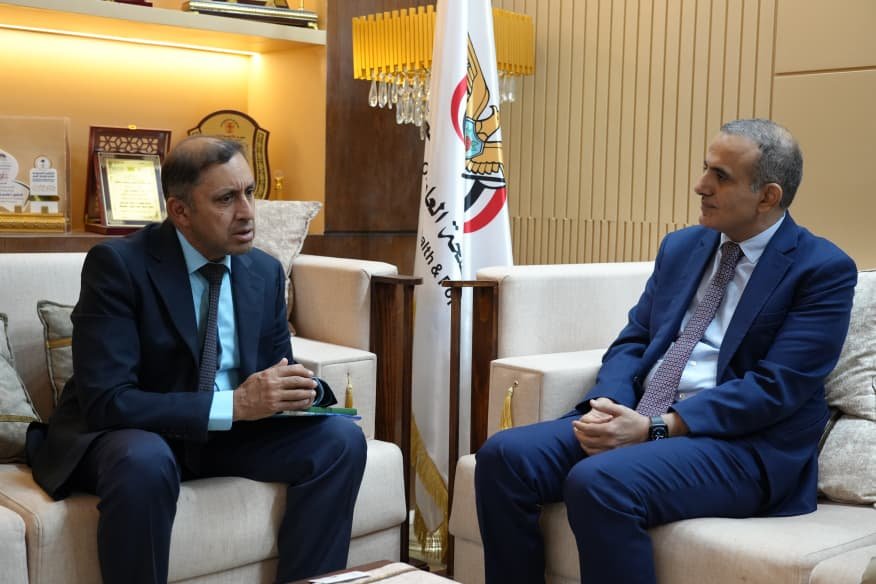
Yemen’s Minister of Public Health and Population, Dr. Qasem Buhaibeh, met in Aden with Akil Iyer, UNICEF’s Representative to Yemen, for talks on deepening cooperation and expanding the agency’s support for the country’s battered health sector. The meeting brought together two of the most important actors in Yemen’s health response at a moment when years of conflict, disease outbreaks and shrinking donor budgets have left the system under exceptional strain.
The discussions centred on practical ways to improve how health programmes are delivered. Both sides placed particular emphasis on linking future support to measurable performance indicators covering the quality of services, the soundness of financial management and the development of modern health information systems. Officials argue that tying assistance to clear, verifiable benchmarks will help ensure that scarce resources translate into more effective and sustainable outcomes for patients rather than being absorbed by administrative inefficiency.
Dr. Buhaibeh reaffirmed his ministry’s commitment to working closely with UNICEF and to aligning the agency’s programmes with national health priorities. He also set out the mounting challenges confronting the sector, chief among them the continued decline in humanitarian funding, which he said has placed growing strain on the delivery of essential services across the country.
The talks build on a series of recent engagements between the ministry and UN agencies, including cooperation on a Pandemic Fund project launched with international partners to strengthen Yemen’s ability to detect and respond to epidemic disease threats, and earlier discussions between ministry officials and UNICEF on reinforcing their health partnership.
The funding squeeze is being felt across Yemen’s entire aid operation. International appeals for the country have been persistently underfunded in recent years as donor attention has shifted to other crises, forcing agencies to scale back programmes, close facilities and prioritise only the most acute needs. Health services, which depend heavily on external support for salaries, medicines and equipment, are among the most exposed when contributions fall short.
The backdrop to the meeting is a health system that has been degraded by more than a decade of war. Since the conflict escalated in 2015, fighting between the internationally recognised government, backed by a Saudi-led coalition, and the Iran-aligned Houthi movement has damaged or destroyed a large share of the country’s medical infrastructure, while the division of the country has fractured its institutions. Health workers have gone unpaid for long stretches, hospitals struggle with shortages of fuel and supplies, and many facilities operate only partially or not at all.
The consequences are visible in Yemen’s disease burden. The country has endured recurring outbreaks of cholera and measles, alongside persistent threats from diphtheria, dengue and other preventable illnesses, with children bearing a disproportionate share of the toll. Malnutrition compounds the danger: severely malnourished children are far more vulnerable to infections that a functioning health system would routinely treat. United Nations agencies estimate that well over half of Yemen’s population, more than 18 million people, requires some form of humanitarian assistance.
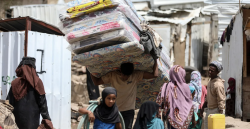
Dr. Buhaibeh also drew attention to the pressure created by internal displacement. With roughly 4.5 million people displaced from their homes over the course of the war, host communities and the limited facilities that serve them face demand far beyond their capacity. Displaced families frequently live in overcrowded settlements with poor access to clean water and sanitation, conditions in which disease spreads quickly and health needs multiply.
UNICEF occupies a central place in the response. The agency supports vaccination campaigns, therapeutic feeding programmes for malnourished children, water and sanitation projects, and the rehabilitation of primary health facilities across both government-held and Houthi-controlled areas. Its ability to sustain that work, however, depends on the same donor funding that officials in Aden warn is drying up, giving both sides of the table a shared interest in demonstrating that every contribution is spent well.
That shared interest helps explain the meeting’s focus on performance measurement. By strengthening financial controls and building reliable health information systems, the ministry hopes to give donors confidence that support channelled through Yemeni institutions reaches the intended clinics and patients. Better data would also allow planners to identify gaps in coverage, track disease trends in close to real time and direct resources to the districts where they are needed most.
Beyond the immediate crisis, the collaboration is intended to lay foundations for longer-term recovery. Rebuilding a resilient national health system will require trained staff, dependable supply chains and institutions capable of managing services without permanent external support. Officials acknowledge that such a transformation will take years, but argue that embedding sound management practices now will make eventual reconstruction faster and less costly.
The wider political environment will weigh heavily on those ambitions. Yemen’s peace process remains stalled, the country’s economy is under severe pressure, and regional tensions continue to complicate the delivery of aid. How much progress the ministry and UNICEF can make will depend in part on developments far beyond the health sector.
For now, both parties leave the Aden talks with a clear agenda: protect essential services from the worst effects of the funding decline, tighten the systems that govern how assistance is spent, and keep the health needs of Yemen’s children and displaced families in front of an increasingly distracted international community. In a country where preventable disease still claims lives daily, the stakes of that agenda are difficult to overstate.
About the Author