Yemen’s Interior Minister Thanks the Netherlands for Backing Police Reform
 Yemen Herald News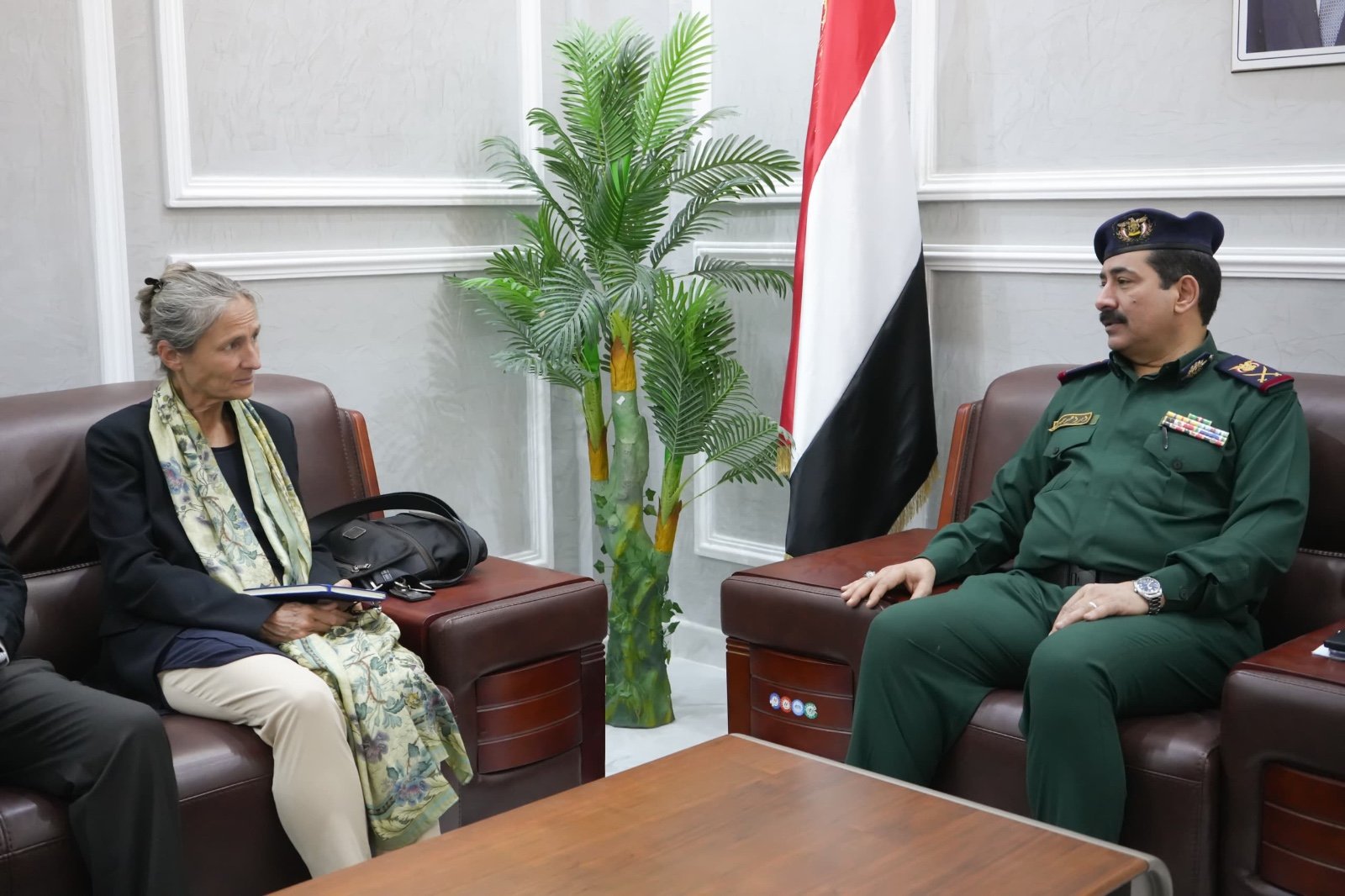
Yemen’s Minister of Interior, Major General Ibrahim Haidan, has thanked the Netherlands for its continued support to the Ministry of Interior, singling out Dutch help in training and empowering female police officers. Haidan made the remarks during a meeting in Aden, the internationally recognised government’s temporary capital, with the Dutch ambassador to Yemen, Jeannette Seppen. The two discussed police reform and capacity building, and the minister underlined the importance of sustained Dutch assistance to the institutional changes the ministry is trying to implement.
The meeting came at a demanding moment for Yemen’s security sector, which continues to grapple with the effects of a war that began in 2015 and with the threat the government attributes to Houthi forces. The internationally recognised government, backed by a Saudi-led coalition, controls parts of the south and east, while the Houthi movement holds the capital, Sanaa, and much of the north. Years of conflict have hollowed out state institutions, disrupted policing and left law-enforcement bodies short of training, equipment and funding.
Haidan set out the ministry’s approach to rebuilding, describing plans for institutional reforms intended to strengthen law enforcement in a country strained by violence and political fragmentation. He presented Dutch cooperation, and the training of policewomen in particular, as a step toward a more capable and inclusive police force. The Netherlands has for several years supported women, peace and security work in Yemen, including police training delivered with United Nations agencies, and the government in Aden has sought to build on that engagement.
The training of female officers has practical as well as symbolic value. Women police can carry out tasks that are difficult for male officers in a conservative society, from searching and interviewing women to responding to cases of gender-based violence and supporting vulnerable groups. Advocates argue that a more diverse force improves community trust and gives police a fuller picture of local problems, ultimately strengthening public safety. Such initiatives also align with broader efforts to widen women’s participation in institutions from which they have often been excluded.
Ambassador Seppen reaffirmed the Netherlands’ commitment to supporting Yemen, describing her country as invested in the stability of the region. The Netherlands has directed assistance to Yemen across several sectors, and its engagement on security and the rule of law forms part of a wider international effort to help the government deliver basic services and maintain order in the areas it controls. Dutch officials have framed support for policing and women’s empowerment as complementary to humanitarian and development work.
The exchange reflected a broader international concern about Yemen’s stability and its implications for regional security, given the country’s position along the Red Sea and the Bab al-Mandab Strait, crucial maritime routes for global trade. Instability in Yemen carries consequences well beyond its borders, and international partners have an interest in helping the government build functioning security institutions. That interest has grown as attacks on shipping and the wider Gulf conflict have underscored the strategic importance of Yemen’s coastline.
Sustaining reform, however, is difficult amid continued insecurity. The government points to Houthi military activity as a persistent obstacle to stabilisation, arguing that it undermines both the authorities and the security of neighbouring states drawn into the conflict. A fragile and often-tested lull in fighting has not removed the risks, and officials say lasting improvements in policing will require both steady external support and a broader easing of the war.
For international partners, the challenge is to ensure that assistance produces tangible gains in governance and security rather than being absorbed by a fractured system. Yemen’s political landscape, marked by competing factions and outside influences, complicates efforts to deliver aid effectively, and donors have emphasised coordination and accountability. Programmes such as police training are relatively concrete, with measurable outputs, which is part of their appeal to governments wary of open-ended commitments.
The focus on policewomen is notable as an attempt to modernise and diversify a security service long dominated by men. If sustained, backers hope it could improve relations between the police and the communities they serve and help embed reforms that outlast the current crisis. The initiative also offers a model of targeted cooperation that other partners might replicate, building institutional capacity piece by piece even as the wider conflict remains unresolved.
The humanitarian dimension looms over any discussion of governance. UN agencies estimate that more than 18 million Yemenis need humanitarian assistance and that millions have been displaced by the war, a scale of need that stretches the state’s limited capacity and makes functioning security services all the more important for delivering aid and maintaining order. Officials and their international partners increasingly frame accountable, effective policing as part of the foundation on which recovery and the safe delivery of assistance ultimately depend.
Looking ahead, the path to stabilisation in Yemen remains difficult, but the commitment voiced by partners such as the Netherlands suggests a possible way forward. Continued dialogue, investment in training and steady institutional reform could, over time, help lay foundations for more effective governance. For now, the meeting in Aden served to reaffirm a working partnership, with the minister thanking the Netherlands for its support and the ambassador pledging that her country would continue to stand with Yemen as it tries to rebuild its security institutions.
About the Author