Yemen’s Planning Minister Meets German-Yemeni Association to Deepen Cultural Ties
 Yemen Herald News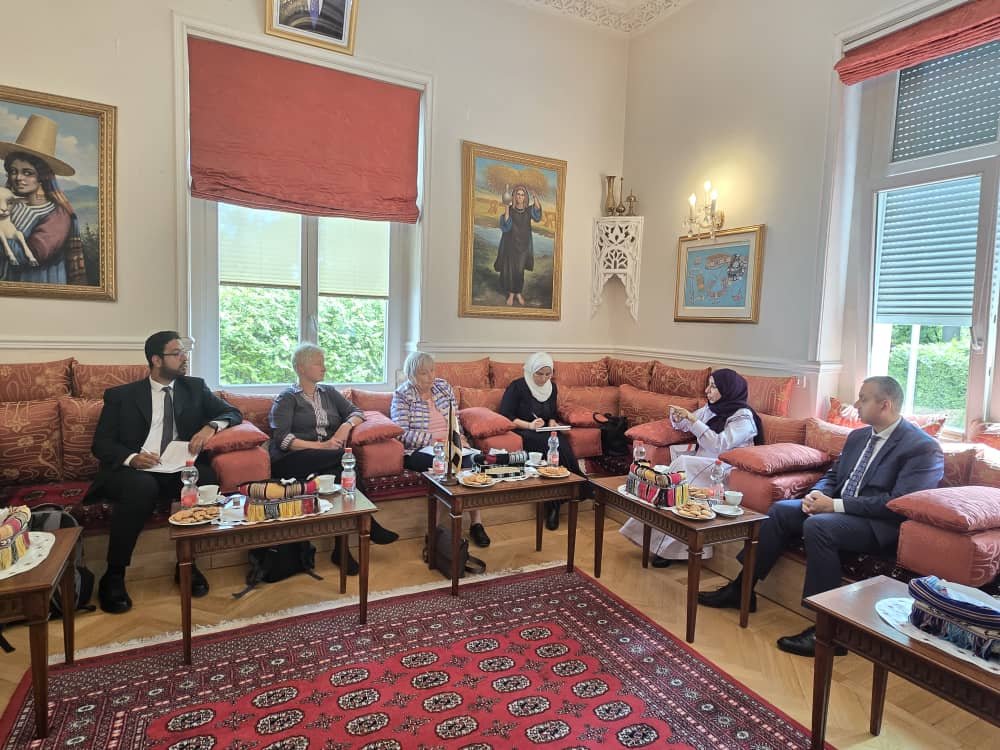
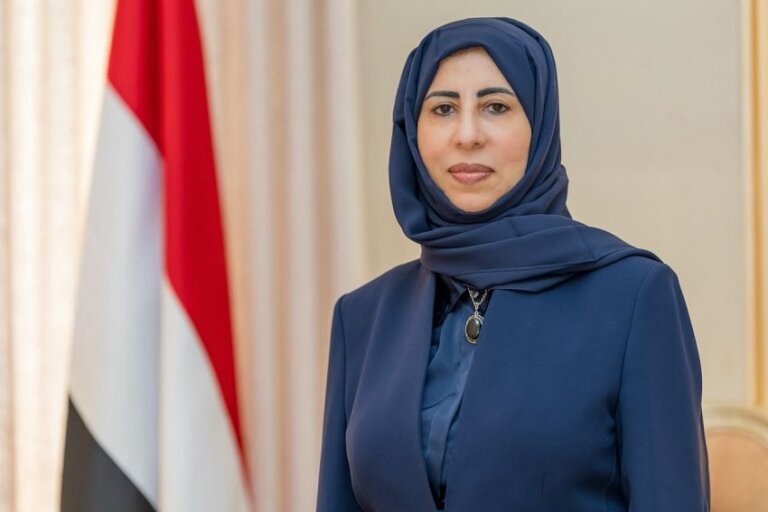
Yemen’s Minister of Planning and International Cooperation, Dr. Afrah Abdulaziz Al-Zouba, has met with the leadership of the German-Yemeni Association in Berlin to explore ways of deepening cultural cooperation between the two countries. The association’s delegation was led by its president, Gudrun Orth, and the meeting also brought in Yemen’s Ambassador to Germany, Louay Al-Iryani. The discussions centred on public diplomacy and cultural exchange, with both sides seeking practical initiatives to showcase Yemen’s heritage to European audiences at a time when the country’s image abroad is dominated by war.
Dr. Al-Zouba used the encounter to thank the association for its long-standing efforts to build friendship and mutual understanding between the Yemeni and German peoples. She framed cultural engagement not as a peripheral concern but as part of Yemen’s wider recovery strategy, arguing that a fuller picture of the country, one that includes its history, arts and traditions, can help attract the international attention and support that reconstruction will require. Presenting Yemen as more than a theatre of conflict, she suggested, is itself a form of development work.
For her part, Gudrun Orth reaffirmed the association’s commitment to strengthening Yemeni-German relations and underlined the value of initiatives that highlight Yemen’s history and culture. She praised the existing collaboration between the association, the Yemeni embassy in Berlin and the Ministry of Planning and International Cooperation, describing it as a foundation on which further joint projects could be built. Both delegations agreed that sustained, practical cooperation would matter more than symbolic gestures, and they discussed how cultural programmes might be organized in the period ahead.
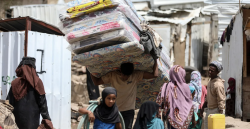
The meeting took place against the backdrop of a humanitarian emergency that has few parallels in the modern world. Yemen’s civil war, which escalated dramatically in 2015, has left the country divided and its infrastructure shattered. International agencies estimate that more than 18 million people still depend on some form of humanitarian assistance, while several million others have been displaced from their homes. The conflict, shaped by the rivalry between the Houthi movement and a Saudi-led coalition, has crippled the economy and drained the resources needed for basic services.
It is within this context that cultural diplomacy takes on added significance. Officials in Sanaa’s internationally recognized government have increasingly argued that Yemen’s rich cultural inheritance, from its ancient cities and distinctive architecture to its literary and musical traditions, offers a way to reconnect with the outside world. By promoting that heritage, they hope to counter a narrative defined almost entirely by violence and deprivation, and to remind international partners of what is at stake in the country’s survival and eventual renewal.
Yemen’s cultural credentials are considerable and internationally recognized. The country is home to several UNESCO World Heritage sites, among them the Old City of Sana’a with its towering earthen tower-houses, the walled city of Shibam whose mud-brick high-rises earned it the nickname the Manhattan of the desert, and the historic town of Zabid, once a centre of Islamic learning. Much of this heritage has been placed on the list of sites in danger because of the war, lending urgency to efforts that keep Yemen’s cultural legacy in the international spotlight and mobilize support for its protection.
The German-Yemeni Association has long occupied a modest but meaningful place in that effort. Operating from Germany, it has worked to sustain people-to-people links, support cultural events and keep Yemen visible within European civil society even as the war has made direct engagement more difficult. Its partnership with the embassy in Berlin gives it a channel to coordinate with Yemeni institutions, and the association’s willingness to expand joint projects was welcomed by the minister as a sign that interest in Yemen has not faded despite the length of the crisis.
Cultural cooperation of this kind cannot, on its own, address the scale of Yemen’s needs. The country continues to grapple with recurring outbreaks of preventable disease, including cholera and measles, that strain an already fragile health system. Food insecurity remains widespread, and the collapse of public revenues has made it difficult to pay salaries or maintain services. Any cultural initiative must therefore be understood as one strand of a much larger recovery agenda, complementing rather than substituting for humanitarian relief and economic support.
Even so, advocates argue that soft-power engagement carries value that is easy to overlook. Building relationships through culture can lay the groundwork for broader political and economic ties and help maintain goodwill among foreign publics whose governments are being asked to fund aid and reconstruction. For a country that risks slipping from international attention as other crises compete for headlines, keeping Yemen present in European cultural and academic life may prove a quiet but useful investment.
Whether the ambitions discussed in Berlin translate into concrete programmes will depend on continued commitment from both sides. Cultural projects require funding, coordination and stability, all of which remain in short supply. Yet the meeting between Dr. Al-Zouba, Ambassador Al-Iryani and the German-Yemeni Association signalled a shared determination to keep the channels of exchange open. In a period defined by hardship, the effort to present Yemen’s cultural face to the world reflects a belief that the country’s identity and potential extend far beyond the conflict that currently defines it.
About the Author