Planning Ministry and WFP Discuss Wider Humanitarian and Development Support for Yemen
 Yemen Herald News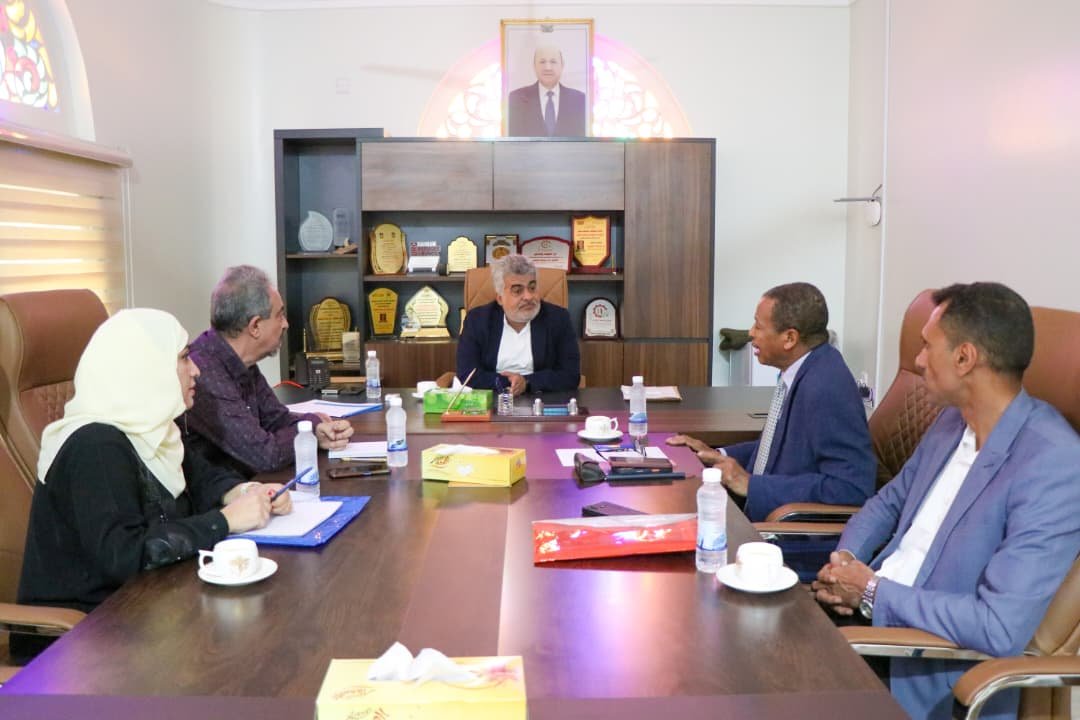
Yemen’s government and the World Food Programme have opened a fresh round of talks on how to sustain food assistance to a population facing one of the world’s most severe hunger emergencies. Deputy Minister of Planning and International Cooperation Dr. Nizar Basuhaib received WFP Yemen Country Director Al-Khidir Daloum in Aden, where the two reviewed the agency’s portfolio of humanitarian and development projects across the country and examined how additional funding might be secured for the interventions the government considers most urgent.
According to the Ministry of Planning and International Cooperation, the meeting concentrated on identifying areas of cooperation and assessing which programmes deserve priority as resources tighten. Basuhaib pressed for interventions that strengthen food security and restore livelihoods, arguing that assistance should reach households whose ability to buy food has collapsed alongside the currency. He also called on WFP to widen the scope of its work in Yemen and to coordinate more closely with his ministry and other government bodies so that aid tracks national planning priorities rather than running in parallel to them.
Daloum restated WFP’s commitment to Yemen and said the agency wanted to deepen its cooperation with the government so that its programmes align with the country’s most pressing needs. Both sides framed the discussion around a single constraint: the scale of need has grown while the money available to meet it has not. That gap has forced humanitarian agencies operating in Yemen to make increasingly narrow choices about who receives support, in what form, and for how long. Aden, the seat of the internationally recognised government, has become the main hub for that decision-making, hosting most of the meetings between ministries and the international agencies still operating in the south.
The numbers behind those choices are stark. In a joint statement issued in June, the Food and Agriculture Organization, WFP and UNICEF reported that roughly 47 percent of the population in government-controlled areas, about five million people, were facing crisis levels of acute food insecurity or worse, with some 1.4 million of them in emergency conditions. The agencies projected that the figure would climb to about 5.4 million, or 51 percent, during the June-to-September lean season, and that the number in emergency conditions would rise further, to an estimated 1.8 million, between October and December.
Funding has moved in the opposite direction. WFP launched a redesigned targeted emergency food assistance programme in government-held areas in February, a shift that narrowed its caseload from about 3.4 million people to roughly 1.6 million and concentrated the remaining rations on the households judged most food-insecure. Agencies working in nutrition, health, water and sanitation have described similar contractions in their own operations. The result is that a growing share of Yemenis who would previously have qualified for support now fall outside the assistance net entirely.
That contraction is one reason the Aden meeting placed such emphasis on development work rather than relief alone. Government officials have argued for some time that emergency rations, however necessary, cannot substitute for functioning agriculture, fisheries, markets and public services. Projects that help farmers replant, restore irrigation, rebuild rural roads or return people to paid work reduce the number of families who need a monthly food basket in the first place, an argument that carries more weight when the food basket itself is shrinking.
Yemen’s economic conditions make that transition difficult. Years of conflict since 2015 have split the country’s monetary and fiscal institutions, disrupted the oil exports that once underwrote public salaries, and left the currency trading in government-held areas at a fraction of its pre-war value. Because Yemen imports most of its staple food, exchange-rate movements pass almost directly into the price of bread and flour. Public health has suffered alongside the economy, with recurrent cholera outbreaks and high rates of child malnutrition recorded across much of the country.
The Ministry of Planning and International Cooperation has positioned itself as the government’s coordinating channel for the United Nations agencies and donors operating in the areas it controls, and Basuhaib has held a series of similar meetings this year with the World Bank, UNICEF and other partners. The stated aim is to align externally funded programmes with a single set of national priorities rather than allowing each agency to plan separately, a persistent complaint about the way assistance has been delivered in Yemen since the war began.
For now, WFP remains the largest single provider of food assistance in the country, and its operations extend beyond emergency rations to school feeding, nutrition support for mothers and young children, and cash transfers used in place of in-kind aid where local markets still function. Those programmes are the ones most exposed to the funding gap the two officials discussed, and the ones the ministry says it wants protected as Yemen attempts to move from emergency relief towards recovery.
Neither side announced a new funding commitment or a specific programme at the Aden meeting, and no figures were attached to the discussion of expanded interventions. What the talks did signal is where the government wants the conversation to go: towards longer-horizon projects, closer coordination with line ministries, and a larger overall envelope at a moment when donors across the humanitarian system are cutting rather than adding. Whether that shift materialises will depend on pledges that have yet to be made.
About the Author