Yemen’s Prime Minister Presses New Public-Private Partnership Unit to Speed Up Investment Projects
 Yemen Herald News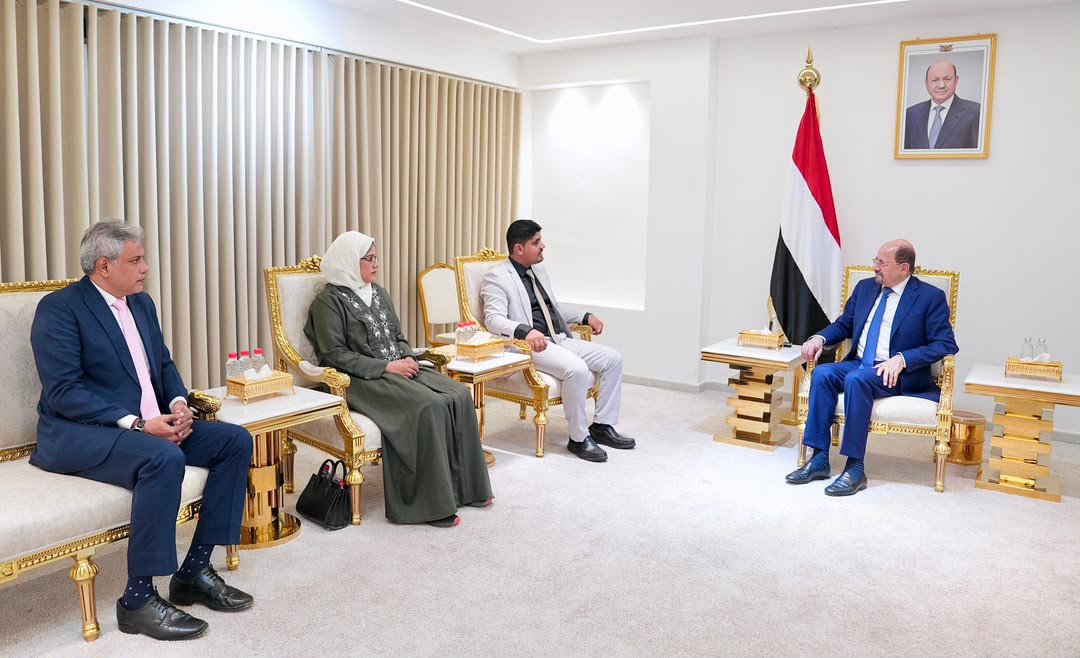
Yemen’s prime minister, Dr Shaya al-Zindani, told the head of the government’s new Public-Private Partnership Unit on Thursday that building an effective working relationship with private business is now a top priority for his cabinet. He was speaking in Aden, the interim capital, at a meeting with Dr Abdullah Bawazir, who leads the unit, and its members.
The unit is a recent creation. Zindani issued the decision establishing it, giving the body broad executive and supervisory authority over every stage of a partnership project: setting national priorities, commissioning economic feasibility studies, managing contracting and procurement, and monitoring delivery and performance once work is under way. Concentrating those functions in a single office is intended to give private investors one identifiable counterpart inside government rather than a scattered set of ministries.
At Thursday’s meeting the prime minister pressed the unit to move quickly through the regulatory and technical procedures that partnership projects require, arguing that delay is itself a deterrent to investment. He framed the unit’s work as part of a wider effort to restart service delivery and development projects that the state has been unable to finance on its own.
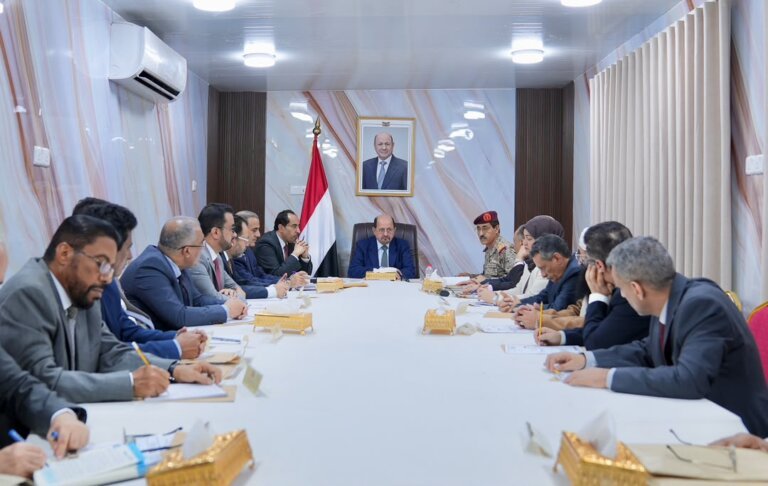
The initiative did not appear without warning. Zindani had earlier signalled his intention to create the unit during a meeting in Aden with the leadership of the Aden Chamber of Commerce and Industry and a group of private sector representatives, describing it then as a practical step toward a relationship built on transparency, trust and a clearer division of roles between the state and private business.
The economic backdrop explains the urgency. Yemen has been at war since 2015, and the damage to output has proved persistent rather than temporary. The World Bank reported in May 2026 that national real GDP fell by about 1.5 per cent in 2025 and projected a further contraction of roughly 0.5 per cent across 2026. Activity across most sectors, the Bank said, remains constrained by a difficult business environment, restricted access to finance and weak domestic demand.
Public finances are under particular strain. Oil exports, once the government’s principal source of hard currency, remain blocked, and government revenues have fallen to around 5.6 per cent of GDP — a level that leaves very little room to fund infrastructure from the budget. That fiscal squeeze is the central reason ministers have turned toward private capital: without it, there is no realistic domestic source of financing for electricity, water, ports or road projects.
The currency has compounded the problem. The riyal has depreciated sharply in areas under government control, reaching roughly 2,100 to the US dollar in Aden by late 2024. The internationally recognised government has since introduced a series of stabilisation measures, including revoking licences held by some money exchangers, capping foreign currency purchases for personal use, and creating a committee to oversee how hard currency is allocated to importers.
External support has not filled the gap. Humanitarian financing has fallen steeply, with the United Nations response plan for Yemen funded at only about 28 per cent of assessed needs. Millions of people continue to require assistance and, by widely cited estimates, more than four million remain displaced from their homes. Against that background, the government’s argument is that private investment is not an alternative to relief but a route out of dependence on it.
There is a practical logic to the approach. Through a decade of conflict, Yemeni private firms — traders, telecoms operators, fuel importers, small manufacturers and the banking sector — have kept much of the economy functioning where state institutions could not. Ministers say partnership arrangements would let the government draw on that operational capacity and local knowledge, particularly in power generation and water supply, where demand is acute and public capital is absent.
The obstacles are equally clear. Public-private partnerships depend on enforceable contracts, predictable regulation and courts capable of settling disputes — conditions that are hard to guarantee in a country with divided institutions and competing authorities. Investors also weigh security risk, the state of ports and roads, and the difficulty of moving money in and out of the country. Whether the new unit can offer credible guarantees on any of these points will determine how much capital it actually attracts, and the government has not yet published a project pipeline or a timetable.
Yemen has attempted private participation before, notably in water supply and sanitation, with mixed results, and officials will be conscious that a formal unit on paper is not the same as completed projects on the ground.
The medium-term outlook offers modest encouragement. The International Monetary Fund projects growth rising gradually from about 0.5 per cent in 2026 to roughly 2.5 per cent by 2030, supported by non-oil exports, remittances and domestic production of refined products for electricity generation. In June 2026 the World Bank Group launched a new country partnership framework for Yemen alongside projects aimed at livelihoods and job creation, signalling continued institutional engagement.
For now the Public-Private Partnership Unit remains an administrative structure whose value has yet to be demonstrated. Its early tests will be procedural rather than dramatic: how quickly it can complete feasibility studies, whether its procurement rules are transparent enough to reassure bidders, and whether the government can honour the commercial terms it agrees. Zindani’s meeting in Aden set the political direction. Delivery is the harder part.
About the Author