
President al-Alimi Says Houthi-Controlled Regions Have Become the Worst Places on Earth to Live
 Yemen Herald News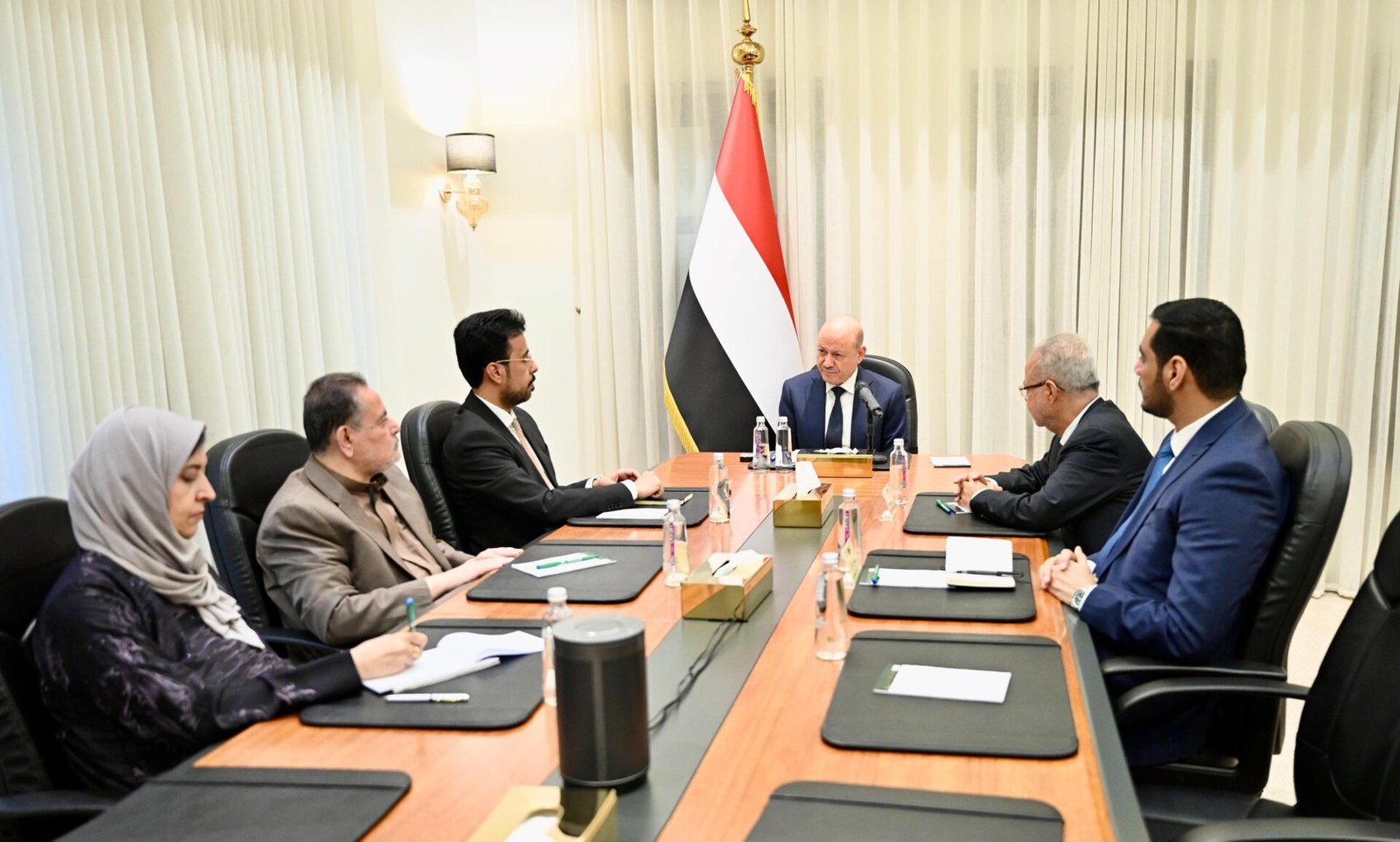
President Dr. Rashad al-Alimi, chairman of Yemen’s Presidential Leadership Council, has blamed the Iran-aligned Houthi militias for the country’s long humanitarian ordeal, saying the group’s rule has turned the regions under its control into some of the worst places on earth to live. Speaking during a meeting with senior political figures, al-Alimi described the conditions facing citizens in Houthi-held areas as unacceptable and said they reflected the failure of the militia’s governance rather than any shortage of national resources or will.
The president said Yemenis have grown weary of what he called the Houthis’ disruptive rhetoric and reckless behaviour, and he declared that the era of intimidation and manipulation was coming to an end. The government, he insisted, will no longer tolerate such tactics, nor allow foreign powers to dictate the terms of its peace efforts or its security decisions, a pointed reference to Iran, which the Yemeni government and its Gulf partners accuse of arming and directing the movement, a charge Tehran denies.
Al-Alimi framed the government’s recent conduct as responsible rather than hesitant. Recent developments, he said, had been handled with a sense of responsibility that put state sovereignty and civilian safety first, and he welcomed any humanitarian initiative consistent with Yemeni law and national sovereignty. Those who interpret the state’s restraint as weakness or retreat, he argued, misread both the Yemeni spirit and the leadership’s determination to achieve the people’s aspirations at the lowest possible cost.
The president also sketched his conditions for a durable settlement of the conflict. Sustainable peace, he said, must address the root causes of the crisis, restore the authority of the legitimate state, guarantee equal rights and duties for all citizens, and end the presence of armed groups operating outside state control. Any future negotiations or agreements, he added, would proceed from the strength of the state and the resolve of its people rather than from coercion or threats, and Yemen’s stability would be built on the reconstruction of national institutions rather than on entrenching the status quo maintained by the Houthis and their allies.
Al-Alimi paired the warnings with an acknowledgment of the support that has kept the internationally recognised government functioning. He credited Saudi Arabia’s political, economic and humanitarian assistance with sustaining state institutions through the war’s hardest periods, saying their resilience and continued fulfilment of obligations would not have been possible without the kingdom’s backing. Riyadh has been the government’s principal patron since leading the military coalition that intervened in the war in 2015.
On the domestic front, the president pointed to a programme of institutional reform intended to demonstrate that the government can outperform its rivals in administration as well as rhetoric. The measures include strengthening the independence of oversight and accountability bodies, improving the environment for investment, unifying decision-making within the state, and building up the armed forces and security services so that institutions can discharge their responsibilities across the territory the government controls.
His remarks land at a moment of heightened tension. The government has spent recent weeks confronting what it describes as escalating violations of Yemeni sovereignty, including unauthorised flights into Houthi-held Sanaa and renewed Houthi threats against shipping, and al-Alimi has repeatedly urged international partners to respond firmly. The rhetoric from both sides has sharpened as UN-led efforts to revive a stalled peace process struggle for traction.
The humanitarian backdrop gives the president’s language its force. More than a decade after the Houthis seized Sanaa in late 2014 and drove the government from the capital, the United Nations estimates that well over half of Yemen’s population, upwards of 18 million people, needs some form of assistance, and millions remain displaced. Human rights organisations and UN bodies have documented heavy taxation, arbitrary detention and restrictions on aid and personal freedoms in Houthi-run areas, findings the movement rejects but which the government cites as evidence of misrule.
Economic divergence between the two zones has widened the gap in daily life. The government has sought to stabilise the currency and pay salaries in the areas it administers, while residents of the north describe shrinking incomes, unpaid public wages and an economy squeezed by levies imposed by the de facto authorities. Independent verification is difficult in a divided country, but aid agencies consistently report acute need on both sides of the front lines, with particular severity in the densely populated north-west.
The geopolitical setting compounds the stakes. Yemen sits astride the Bab al-Mandab strait, one of the world’s most important shipping chokepoints, and the overlapping interests of Iran, Saudi Arabia and global powers in the Red Sea have repeatedly pulled the conflict into wider regional confrontations. Al-Alimi’s call for a more decisive posture toward the Houthis is aimed in part at international partners weighing how far to back the government as maritime and airspace disputes intensify.
Whether the president’s declaration that the era of intimidation is ending marks a genuine shift or a rhetorical marker will depend on what follows: the pace of reform in government-held areas, the willingness of donors to sustain support, and the choices of a movement that has so far shown little appetite for the settlement al-Alimi describes. For millions of Yemenis on both sides of the divide, the measure of progress will be simpler, counted in salaries paid, services restored and a war that finally recedes from daily life.
About the Author




