Yemen minister urges a stronger but independent Social Fund for Development
 Yemen Herald News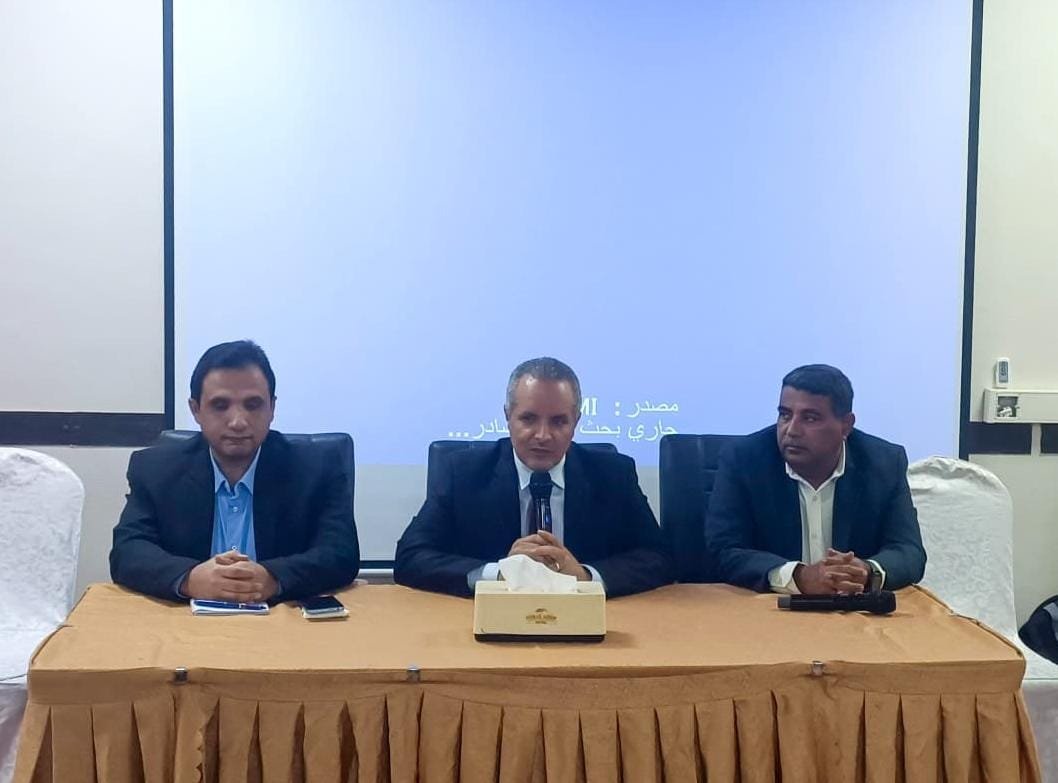
Yemen’s Minister of Social Affairs and Labour, Mukhtar al-Yafei, has called for a stronger Social Fund for Development while insisting that the institution keep its independence, telling a workshop in the interim capital Aden that the fund remains one of the country’s most important national bodies for social protection and local development.
Al-Yafei told participants that strengthening the fund means reinforcing governance, transparency and institutional stability rather than extending political control over it. He described preserving the fund’s role and its institutional independence as a shared responsibility, one that would allow it to keep delivering programmes from Aden while covering every governorate and serving eligible families and vulnerable groups without discrimination.
The workshop was convened to set out a new strategic direction for the fund. Its central premise is that Yemen’s needs have outgrown the emergency model that has dominated aid delivery for the past decade, and that the country now requires programmes designed for recovery and long-term development. Al-Yafei argued that the current phase should empower citizens by turning immediate needs into openings for economic productivity and social stability, rather than locking households into indefinite dependence on relief.
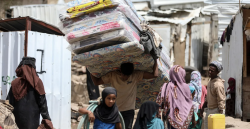
The scale of the problem is difficult to overstate. The United Nations estimates that more than 22 million people in Yemen will need humanitarian assistance and protection during 2026, among them roughly 5.2 million internally displaced people. Some 18.3 million are acutely food insecure, and more than two million children under five are acutely malnourished. Aid agencies have appealed for 2.16 billion dollars this year to reach about 12 million people, a target that has repeatedly gone underfunded.
Al-Yafei said the discussions reflected a broad consensus that Yemen needs a fresh vision and realistic strategies capable of addressing the country’s most serious challenges directly. Development priorities, he suggested, should be reordered around stable and durable pathways that can absorb current and future pressures. The aim is not simply to distribute aid but to build resilience and a measure of self-sufficiency among a population that has spent years relying on outside support.
Mohammed Al-Ban, the fund’s acting executive director, echoed that assessment. He said the newly formulated strategic vision is meant to underpin the fund’s work as it adapts to the country’s changing needs, and that it rests on a comprehensive reading of a socio-economic landscape reshaped by years of conflict and institutional decay.
Al-Ban took on the role after his predecessor, Wissam Qaed, was killed in Aden earlier this year. Reports at the time described the killing as an assassination, and it drew attention to the insecurity facing development professionals in areas held by the internationally recognised government. It also left the fund’s leadership in flux at a moment when donors were already asking whether Yemeni institutions could absorb and manage large programmes.
The fund itself long predates the war. Created in the late 1990s with World Bank backing, it built a reputation over two decades as one of Yemen’s more effective and least politicised public bodies, financing rural water schemes, school construction, cash-for-work programmes and small business lending. That record explains much of why donors have continued to work with it even as other state institutions fractured. The government has since moved the fund’s administration to Aden, a step the prime minister has described as a sovereign decision.
That relocation underlines the political context in which the workshop took place. The internationally recognised government in Aden continues to compete for authority with rival factions in the south and with the Houthi movement, which controls Sanaa and much of the north. Any institution operating on both sides of the front lines has to navigate that division carefully, and the fund’s claim to nationwide, non-partisan coverage is central to its ability to keep doing so.
Yemen’s stability also carries weight well beyond its borders. Tensions in the Red Sea and around the Bab al-Mandab strait have kept the country in the calculations of regional and international powers. The involvement of the Saudi-led coalition, and the influence the Yemeni government says Iran exercises through its support for the Houthis, complicate the picture further and raise the stakes for effective governance and credible development work.
Humanitarian organisations and international observers stress that close coordination between local authorities and foreign partners is essential if development money is to be spent effectively. A model built on empowerment rather than dependency, they argue, would do far more for the long-term sustainability of any programme the fund launches.
Much will depend on whether the fund can stay adaptable. Involving communities in planning and carrying out projects tends to build local ownership and keeps programmes aligned with what people actually need, and it also provides a practical check against waste. A transparent, well-governed fund would give citizens a reason to trust at least one national institution, which is no small matter in a country where confidence in the state has eroded badly.
Officials at the workshop framed the move from emergency response to development as a strategic necessity and, after years of hardship, something closer to an obligation. Whether the new strategy delivers will be measured in schools rebuilt, water systems restored and livelihoods recovered rather than in planning documents. For now, the Aden meeting marks a deliberate attempt to reimagine what recovery in Yemen might look like and to give Yemenis a larger role in shaping it.
About the Author