
Yemen’s Central Bank Board Reviews Monetary Stability Programs as IMF Deal Advances
 Yemen Herald News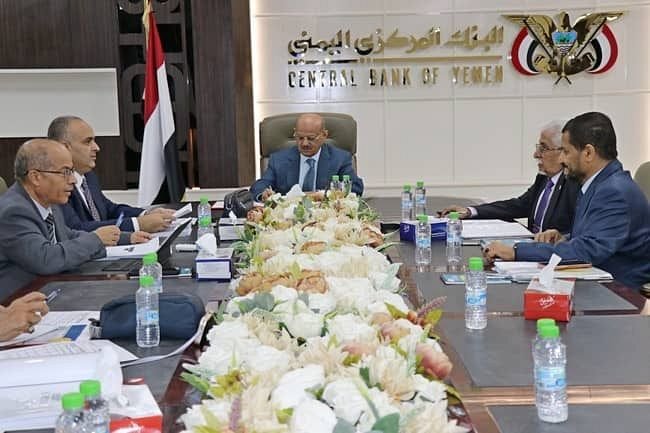
The Board of Directors of the Central Bank of Yemen met in Aden under Governor Ahmed Ghaleb to review developments across the country’s monetary and banking sectors and to assess progress on programmes designed to strengthen monetary and financial stability, safeguard the banking system and improve payment systems and financial services. The state news agency SABA reported the session on 29 July 2026.
According to that account, the board examined technical, administrative and supervisory reports alongside updates on institutional reforms aimed at strengthening governance, regulatory oversight and compliance, and at modernising the banking regulatory framework in line with international best practice. The stated purpose is to reinforce confidence in the financial sector and widen financial inclusion, a difficult objective in an economy where cash remains dominant and formal banking penetration is low.
The board reaffirmed the importance of continuing the government’s economic and financial reform agenda, carried out in coordination with the central bank, describing it as a foundation for macroeconomic stability, a better business environment and a return to recovery and sustainable development. Ghaleb briefed members on recent economic and financial developments, on progress in implementing structural reforms, and on steps taken by the government and the bank to lift institutional performance.
The most consequential item was the governor’s account of consultations with the International Monetary Fund. An IMF staff team led by Esther Pérez-Ruiz held talks with Yemeni authorities in Amman from 5 to 16 July 2026, and those discussions closed with a staff-level agreement on the policies that would underpin a Staff-Monitored Programme. The proposed programme would run for 18 months and remains subject to approval by IMF management.
The Fund’s assessment set out how narrow Yemen’s room for manoeuvre has become. GDP is projected to contract for a fifth consecutive year, by 1.5 percent in 2026, which the IMF attributed to worsening terms of trade linked to the war in the Middle East, energy shortages and weak demand. The external position depends heavily on remittances and sustained donor support to finance an import bill that is largely humanitarian in nature, with the current account deficit expected to stay near 3.4 percent of GDP and reserve coverage below adequate levels.
On the fiscal side, the Fund noted that government spending has already been cut substantially since oil exports halted in 2022, so the programme concentrates on raising domestic revenue rather than further austerity. Authorities liberalised the customs exchange rate in May 2026, bringing customs duties and general sales tax receipts closer to the real value of imports, and plan to tighten tax compliance, particularly among large taxpayers and state-owned enterprises. Stronger tax and customs collection, together with increased Saudi budget support, are expected to move the fiscal position to a small deficit.
Transparency measures form a second strand. Previously off-budget revenues and expenditures are being brought into the central government budget from 2026, expenditure controls are being tightened across central and local entities, and the balances of various government bodies are to be consolidated as part of work towards a Treasury Single Account, reducing idle cash.
Monetary and exchange rate policy under the programme aims to preserve price stability and build external resilience. Implementation is to be guided by clear quantitative anchors, with money supply growth aligned to underlying demand and strict limits on monetary financing of the budget. Greater exchange rate flexibility is intended to let the rate act more as a shock absorber, while rebuilding international reserves from critically low levels is a stated priority.
Several of the programme’s financial-sector commitments overlap directly with the reform file the board reviewed. Authorities have agreed to adopt comprehensive risk management regulations for banks, extend supervision to all deposit-taking institutions, publish banks’ audited financial statements and move to risk-based anti-money-laundering and counter-terrorist-financing supervision. A phased plan to raise cost recovery in the electricity sector is also envisaged, alongside protection for social spending and preparatory work on a targeted social protection system.
The IMF expects the economy to begin stabilising in 2027 if regional conditions improve and domestic demand recovers, though it cautioned that reserve buffers will remain thin. Sustained implementation, the Fund said, would strengthen the fiscal position and lay the ground for substantive talks with international partners on meaningful debt restructuring.
The economic stakes are visible in humanitarian data. The United Nations humanitarian needs and response plan for 2026 estimates that more than 22 million people in Yemen require assistance or protection, including 5.2 million internally displaced people, and puts the number who are acutely food insecure at 18.3 million. Aid agencies have appealed for 2.16 billion dollars for the year. Because so much of what Yemen consumes is imported, the exchange rate and the functioning of the banking system feed directly into what families can afford.
Monetary authority in Yemen also remains divided. The central bank headquartered in Aden operates under the internationally recognised government, while a separate authority in Houthi-controlled Sana’a issues its own directives, leaving two currency zones and complicating the reach of any reform agreed in Aden. Neither the board statement nor the IMF release addressed that division.
For now the reforms described in Aden remain a programme of intent. The staff-monitored arrangement carries no financing of its own; its value lies in building a track record that could later unlock concessional support and debt negotiations. Officials appear to be betting that steady implementation will persuade creditors and donors.
About the Author




