Local Administration Minister and German Ambassador Discuss Decentralisation
 Yemen Herald News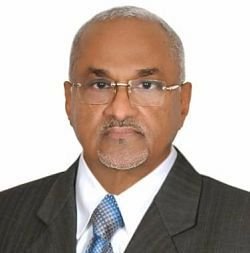
Yemen’s Local Administration Minister and Germany’s ambassador have discussed a national strategy for strengthening decentralisation across the country. In a virtual meeting, Engineer Badr Basalma and the Ambassador of the Federal Republic of Germany to Yemen, Thomas Schneider, examined ongoing efforts to formulate the strategy, which is intended to empower governorates to manage their own affairs more effectively.
The proposed strategy focuses on building the capacities of local leaders and staff, an approach expected to enhance governance and to contribute to sustainable development across the country. Minister Basalma underlined the importance of these efforts to improving the overall efficiency of state institutions, framing decentralisation as central to more effective and responsive government.
During the meeting, Basalma also provided an update on preparations for the National Conference for Partnership and Integration, scheduled for late April 2026. The conference is intended to address reforms in the relationship between the central government and local authorities, a question that lies at the heart of the decentralisation agenda.
Decentralisation has long occupied a prominent place in debates over how Yemen should be governed. Proponents contend that devolving authority and resources to governorates and districts brings decision-making closer to citizens, improving responsiveness and accountability. In a country marked by considerable regional diversity, the case for empowering local authorities has recurred across successive discussions about the structure of the state.
The conflict has given this debate renewed urgency. With central authority weakened and the country fragmented, local authorities have frequently been left to shoulder responsibilities that would ordinarily belong to national institutions. Their capacity to do so, however, varies widely and is often limited by shortages of funding, personnel and expertise, underscoring the importance of building their capabilities.
The emphasis on empowering governorates reflects a vision of governance in which local authorities have greater capacity to manage their own affairs. Enabling governorates to take on a larger role in administration and service delivery can improve the responsiveness of government and allow decisions to reflect local conditions and needs more closely.
Building the capacities of local leaders and staff is essential to realising this vision. Effective decentralisation depends not only on the transfer of authority but on the ability of local officials to exercise it well. Investing in training and skills development helps ensure that local authorities can fulfil expanded responsibilities competently and effectively.
The National Conference for Partnership and Integration represents a significant step in the reform process. Convening stakeholders to address the relationship between central and local government provides an opportunity to build consensus, clarify roles and chart a path toward a more decentralised system, lending structure and momentum to the reform agenda.
Germany has been among the international partners engaged with Yemen on questions of governance and development. Its support for efforts to strengthen decentralisation reflects a recognition that capable and accountable local institutions are important to the country’s stability and recovery, complementing other forms of assistance provided by the international community.
Regulating the relationship between the central government and local authorities is a central aspect of the reform effort. Defining the respective roles, responsibilities and resources of different levels of government can help improve coordination and reduce friction, contributing to more effective governance in a country where authority has been dispersed by conflict.
The focus on sustainable development links decentralisation to broader goals of recovery and progress. Effective local governance can support development by enabling authorities to plan and implement projects attuned to local needs, and by fostering the accountability and participation that contribute to durable improvements in the lives of citizens.
Improving the efficiency of state institutions, highlighted by the minister, speaks to a fundamental challenge facing Yemen. Years of conflict have strained the machinery of the state, and enhancing the effectiveness of institutions at both central and local levels is essential to the functioning of government and to the delivery of services on which citizens depend.
The engagement with Germany also reflects the importance of international partnerships to Yemen’s reform efforts. With domestic resources constrained, the government relies on the support and expertise of partners to advance its agenda, and maintaining these relationships is an ongoing priority for the ministry as it pursues decentralisation and institutional reform.
Realising the goals of the decentralisation strategy will require sustained commitment, resources and coordination among the many actors involved. Reform of this kind is a long-term undertaking, and its success depends on translating strategies and conferences into tangible changes in the distribution of authority and in the capacity and performance of local institutions.
The timing of the forthcoming national conference adds weight to the discussions. Gatherings of this kind offer a rare opportunity to move debates about decentralisation from the realm of principle into concrete arrangements, bringing together officials, local leaders and partners to hammer out how authority and resources should be shared. Much will depend on whether the conference produces agreements that can be implemented in practice, but its convening signals an intent to treat the reform of central and local relations as a priority rather than an aspiration deferred to some indefinite post-war future.
For now, the meeting between Basalma and Schneider reaffirmed the shared interest of Yemen and Germany in strengthening decentralisation and local governance. As the country works to rebuild its institutions and improve governance, cooperation of this kind, together with initiatives such as the forthcoming national conference, remains an important element of the reform effort.
About the Author