Abyan governor and Saudi reconstruction programme review development projects in the governorate
 Yemen Herald News
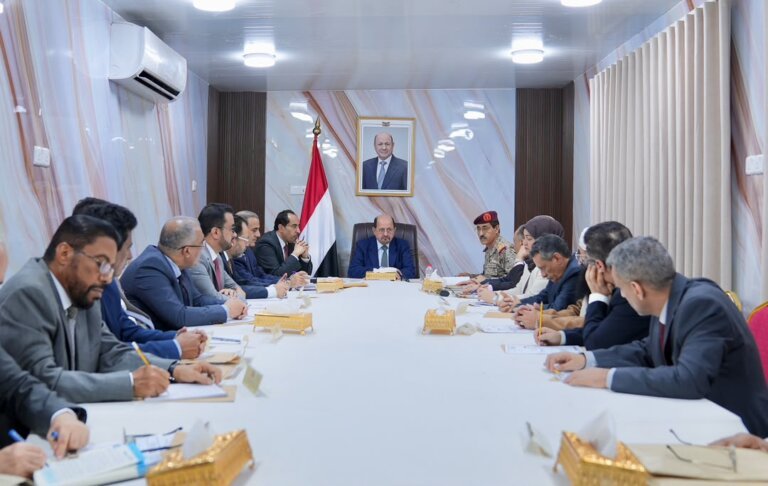
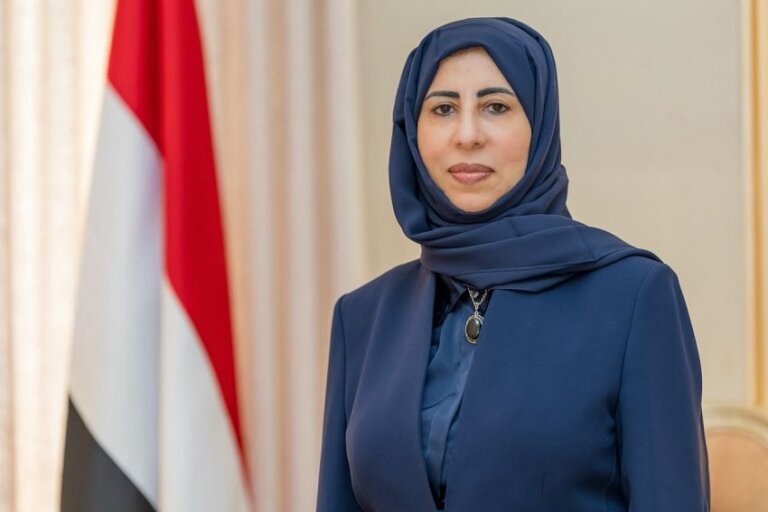
Officials in Abyan and the Saudi Development and Reconstruction Program for Yemen met in the governorate in May 2026 to review the programme’s project portfolio there, according to accounts of the meeting published at the time. The talks brought together the governor of Abyan, Dr Mukhtar al-Rabash al-Haithami, and Engineer Ahmed Madkhali, who directs the programme’s office in Aden. Reports of the meeting described a review of infrastructure work under way in the governorate and of proposals for further support, rather than the announcement of any new financing package.
The programme, usually referred to by its English acronym SDRPY, is a Saudi non-profit body established in 2018 to channel Riyadh’s development and reconstruction spending in Yemen. Its general supervisor is Mohammed Saeed Al-Jaber, who also serves as Saudi Arabia’s ambassador to Yemen. The organisation says it works across the governorates under the internationally recognised government’s control, concentrating on electricity, water, transport, health, education, agriculture and fisheries. Its Aden office handles delivery in the southern governorates, which is why Abyan’s dealings run through Madkhali rather than through Riyadh directly.
Abyan sits on Yemen’s southern coast between Aden and Shabwa, a mix of coastal plain, wadi farmland and mountainous interior. It has been among the more unsettled southern governorates for two decades. Al-Qaeda in the Arabian Peninsula seized towns in the governorate in 2011 and again in 2015 before being pushed back by government and southern forces, and Abyan was one of the main theatres of the 2019 and 2022 confrontations between forces loyal to the government and those aligned with the Southern Transitional Council. Successive rounds of fighting left roads, clinics, schools and the electricity network in poor condition.
That damage is the practical backdrop to the meeting. Yemen’s public services were fragile before 2015 and have deteriorated sharply since. Electricity supply in the southern governorates depends heavily on ageing diesel generation, and outages lasting many hours a day are routine, worsening in summer when demand peaks. Water networks in several districts have not been fully rehabilitated. Health facilities outside the main towns are thinly staffed and often lack reliable power, which limits what they can offer even when the buildings themselves are intact.
Among the projects the programme has publicised in Abyan is the construction and equipping of Sabah Hospital, intended to improve access to medical care in a mountainous part of the governorate where health services are scarce. The programme has also described work in the electricity, water, road, education, agriculture and fisheries sectors, the last two significant because farming and coastal fishing remain the governorate’s economic base rather than an adjunct to it. Agricultural rehabilitation in Abyan’s wadi systems has a direct bearing on local food supply as well as on incomes.
Saudi Arabia’s development spending in Yemen is inseparable from its political role. Riyadh has led the coalition supporting the Yemeni government since 2015 and has hosted or brokered much of the intra-Yemeni negotiation since, including the 2019 Riyadh Agreement between the government and the Southern Transitional Council and the 2022 arrangement that created the Presidential Leadership Council. Development projects delivered under a Saudi banner therefore carry a political dimension that purely humanitarian assistance does not, and they are read that way locally.
Abyan illustrates the point. The governorate contains forces and constituencies loyal both to the central government and to the Southern Transitional Council, whose leadership seeks independence for the south. Reconstruction spending that visibly improves services can strengthen whichever authority is credited with delivering it. Officials on all sides are conscious of this, which is one reason meetings of the kind held in May 2026 are publicised at all.
There is a persistent gap, however, between announced projects and completed ones. Yemeni officials, local councils and residents have repeatedly complained that pledged work is slow to start or stalls after an initial phase, a pattern that afflicts donor-funded projects generally in the country and not the Saudi programme alone. Currency depreciation has compounded the problem: the Yemeni rial has lost much of its value in government-held areas, raising the local cost of imported materials and eroding the real value of budgets fixed in advance. Public sector salaries have gone unpaid or been paid irregularly in many governorates, which affects staffing for any facility once it is built. Local councils in Abyan have also pressed for a greater share of decision-making over which districts are prioritised, arguing that coastal towns receive attention ahead of the mountainous interior.
Independent verification of what has actually been delivered in Abyan is limited. Most reporting on the programme’s activity originates either with the programme itself, with the Saudi Press Agency, or with Yemeni government sources, and access for outside monitors is restricted. The account of this meeting rests on those sources, and the descriptions of project progress should be read as their claims rather than as independently confirmed outcomes.
What the meeting reflects, at minimum, is that reconstruction in Abyan continues to be negotiated locally, governorate by governorate, rather than delivered under any national plan. Yemen still has no comprehensive political settlement, and the country’s institutions remain split between rival authorities. In that setting, incremental work on a hospital, a road or a power line is what development in Abyan realistically amounts to, and progress is measured in individual projects rather than in any broader recovery.
About the Author