Yemen’s Water Minister and Solidarités International Plan Climate-Resilient Water Project for Taiz
 Yemen Herald News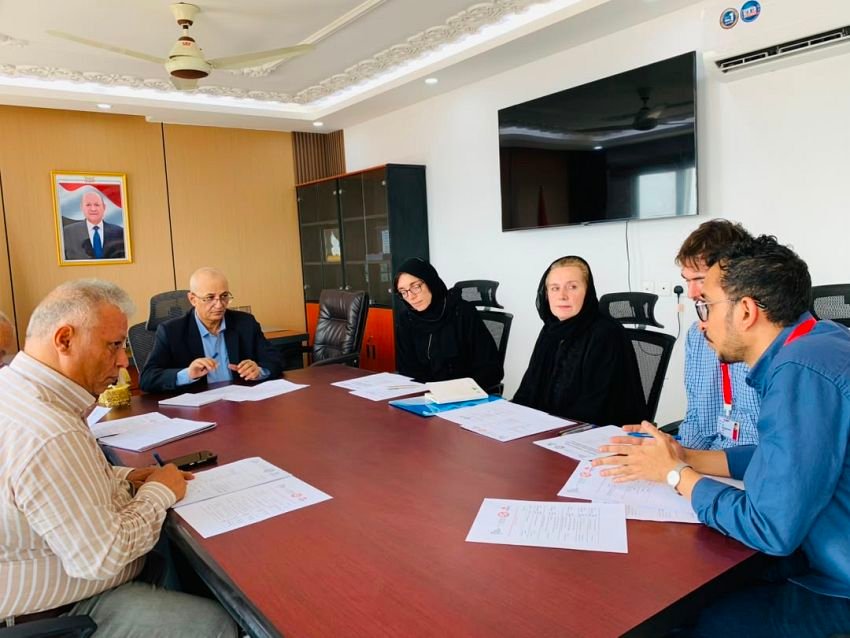
Yemen’s Minister of Water and Environment, Eng. Tawfiq Al-Sharjabi, has held talks with Damaris Bevindt, the Country Director of the French humanitarian organisation Solidarités International, over a new project designed to strengthen climate-resilient urban water supply and sanitation systems for the most vulnerable communities in Taiz. The initiative forms part of broader efforts to ease a humanitarian crisis that has deepened since Yemen’s conflict escalated in 2015.
The project is aligned with the objectives of Yemen’s National Water Strategy and the specific priorities of the water and sanitation sector. According to officials, the discussions focused on developing a coherent framework for the initiative so that it dovetails with existing government plans and the resources allocated for water management in the region, rather than duplicating other programmes already under way.
Key components include improvements to water production and supply, upgrades to ageing infrastructure and measures to increase communities’ resilience to climate-related pressures. Such steps are considered especially important in Taiz, where reliable access to water has been severely compromised by years of fighting and by longer-term environmental degradation that predates the current war.
The initiative also aims to strengthen governance within local water management by building the institutional capacity of the Taiz Local Water and Sanitation Corporation. Officials say this is essential for promoting sustainable practices and ensuring that local institutions can respond effectively to the needs of the communities they serve, even under difficult operating conditions.
During the meeting, Minister Al-Sharjabi stressed the importance of aligning development projects with overarching government strategies in order to make the best use of resources and attract further investment into the water sector. This approach, he argued, maximises the impact of existing initiatives and sets a precedent for future development efforts in a challenging environment.
He also highlighted the value of drawing on the technical studies and data that the Ministry of Water and Environment has already prepared. By grounding new initiatives in existing evidence, he said, partners can ensure that projects are guided by reliable information that reflects the actual needs of affected communities rather than untested assumptions.
Bevindt, for her part, reaffirmed Solidarités International’s commitment to strengthening its partnership with the Ministry and other national bodies. She stressed the importance of ensuring that the organisation’s work resonates with government priorities, a point of growing significance in a region that has seen a proliferation of humanitarian agencies responding to the conditions created by the conflict.
Founded in France, Solidarités International specialises in providing water, sanitation and food assistance in conflict-affected and disaster-hit areas. Its involvement in Taiz reflects a wider pattern of international engagement in Yemen, where numerous relief organisations work alongside government institutions to sustain basic services and to prevent the further collapse of essential infrastructure.
The discussions also underlined the need for effective coordination between the Minister’s office and Solidarités International, which officials said is vital to complementing the work of other development partners active in the water and sanitation sector. Such collaboration, they added, is essential to achieving durable results for the people of Taiz, among the areas hardest hit by the humanitarian crisis.
Taiz has been one of Yemen’s most contested cities, and prolonged fighting has damaged infrastructure and restricted the movement of goods and services. Water scarcity there has been a persistent concern, with many residents forced to rely on trucked or informal supplies. Projects that restore and safeguard the public water network are therefore seen as central to any lasting recovery.
The humanitarian toll of Yemen’s conflict remains vast. United Nations agencies estimate that many millions of people lack sufficient access to basic necessities, and recurrent outbreaks of waterborne diseases such as cholera have compounded the emergency. Interventions like the one discussed are viewed as important not only for immediate relief but also for building longer-term resilience.
Yemen is among the most water-scarce countries in the world, a challenge that predates the conflict but has been sharply worsened by it. Falling groundwater levels, damaged pumping stations and unreliable fuel and electricity supplies have all undermined the ability of utilities to deliver water to households. Aid officials say that rebuilding institutional capacity, as the Taiz project intends, is as important as physical repairs if services are to remain functional over the long term.
As climate change intensifies pressure on vulnerable urban populations worldwide, officials suggested that the Taiz initiative could serve as a model for similar projects elsewhere in Yemen. By prioritising infrastructure improvements alongside stronger governance, the partners hope to lay the groundwork for sustainable water management that supports healthier and more resilient communities.
The wider picture in Yemen underlines why such projects matter. The disruption of piped water networks during the war has forced households to spend a growing share of their income on water from private vendors, while damaged sanitation systems have heightened the risk of disease. Restoring reliable, affordable supply is therefore closely tied to public health and to the broader stability of urban communities.
The collaboration between Yemen’s Ministry of Water and Environment and Solidarités International marks a further step in efforts to address the challenges facing Taiz. With careful alignment of resources and a focus on long-term sustainability, officials expressed hope that the project could become a meaningful element of the country’s broader path toward recovery and stability amid continuing hardship.
About the Author