Aden Governor Advances Plans for New Al-Alam Industrial Zone
 Yemen Herald News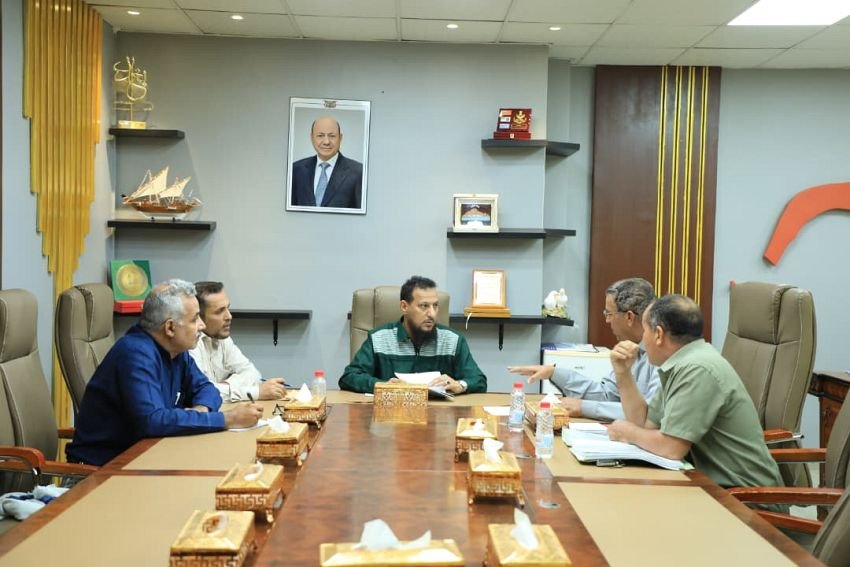
The Governor of Aden and Minister of State, Abdulrahman Sheikh, has reviewed plans for the establishment of a new industrial zone in the Al-Alam area, part of a broader push by the local authority to stimulate economic activity in Yemen’s interim capital. In a briefing on the project, the governor examined its implementation strategy and the procedures being coordinated with the Ministry of Industry and Trade and the entity tasked with carrying out the work.
During the session, Sheikh was given detailed information on the ongoing effort to finalise the technical and administrative steps required before the agreements that will formally launch the industrial zone can be signed. Officials outlined the sequence of measures still to be completed, presenting the project as one that has moved from concept toward the practical groundwork needed to break ground.
The governor used the occasion to emphasise the local authority’s commitment to fostering investment projects in Aden. Creating a welcoming environment for investors, he argued, is essential to stimulating development and strengthening a local economy that has been battered by years of conflict, currency depreciation and the disruption of trade and production across the country.
The proposed industrial zone is expected to play a significant role in boosting economic growth in the city. Beyond the direct construction and operation of facilities, planners anticipate that it could generate jobs, attract further investment and help diversify an economy that has struggled to recover amid the pressures of war and institutional fragmentation.
Aden holds particular importance in Yemen’s current political and economic landscape. Since the internationally recognised government relocated there following the loss of the capital, Sanaa, the city has served as the interim seat of state institutions and the primary hub for the government’s economic activity. Its port and its role as an administrative centre make its economic health a matter of national, not merely local, consequence.
Yet the challenges facing investment in the city are considerable. Chronic electricity shortages, damaged infrastructure, security concerns and a volatile currency have all weighed on business confidence and complicated efforts to attract capital. Initiatives such as the Al-Alam industrial zone are intended, in part, to signal that the local authority is serious about addressing these obstacles and building the conditions in which private enterprise can take root.
Industrial zones are a familiar tool in development strategies worldwide, offering firms shared infrastructure, streamlined administrative procedures and clustered facilities that can lower costs and encourage investment. By concentrating industrial activity in a designated area, authorities aim to make the most efficient use of limited resources, including power and water, while creating employment and supporting local supply chains.
For a city where unemployment remains high and economic opportunity scarce, the promise of new jobs carries obvious appeal. Youth unemployment in particular has been a persistent concern across Yemen, and projects capable of absorbing labour and offering training are widely seen as important not only for livelihoods but for social stability in communities strained by the hardships of the war.
The coordination with the Ministry of Industry and Trade reflects the interplay between local and national authorities in advancing such projects. While the governorate provides the immediate impetus and local knowledge, the involvement of central institutions is often necessary to align the initiative with wider policy, secure the requisite approvals and lend the project the legal and administrative backing it needs to proceed.
The emphasis on completing technical and administrative steps before signing agreements points to an awareness that ambitious plans must rest on sound preparation. Projects of this kind can founder when launched prematurely, before land, permits, financing and management arrangements are properly settled. The methodical approach described in the briefing suggested an effort to build the zone on firmer foundations.
Reviving Aden’s economy is also bound up with the broader question of Yemen’s recovery. Functioning industry, reliable employment and a more predictable business climate are among the building blocks of stability, helping to reduce the desperation that fuels displacement and unrest. Local officials have repeatedly framed economic initiatives as complementary to, rather than separate from, the wider effort to restore order and rebuild the state.
Much will nonetheless depend on execution and on the durability of the commitments involved. Attracting investors will require not only physical infrastructure but confidence that the environment will remain stable enough for businesses to operate and grow. Sustained security, improvements in basic services and consistent administrative support will all shape whether the industrial zone fulfils its promise.
The initiative also draws on Aden’s long history as a centre of commerce. For generations the city was one of the busiest ports in the region, and in the modern era it developed free-zone and industrial facilities intended to capitalise on its strategic location near global shipping lanes. Reviving that legacy has been a recurring ambition for local authorities, who see in the city’s geography and commercial heritage an opportunity to rebuild Aden as an engine of trade and production once the conditions allow, with new industrial areas forming part of that longer-term vision.
For now, the review of the Al-Alam project marks a step forward in the local authority’s stated agenda of economic renewal. Whether it ultimately delivers the jobs and investment its backers envisage will become clear only over time, but the governor’s engagement signalled an intent to keep economic development near the top of Aden’s priorities even amid the many competing demands of a country still at war.
About the Author