Al-Khanbashi and French Ambassador Corm-Kammoun Discuss Wider Development Cooperation in Hadramout
 Yemen Herald News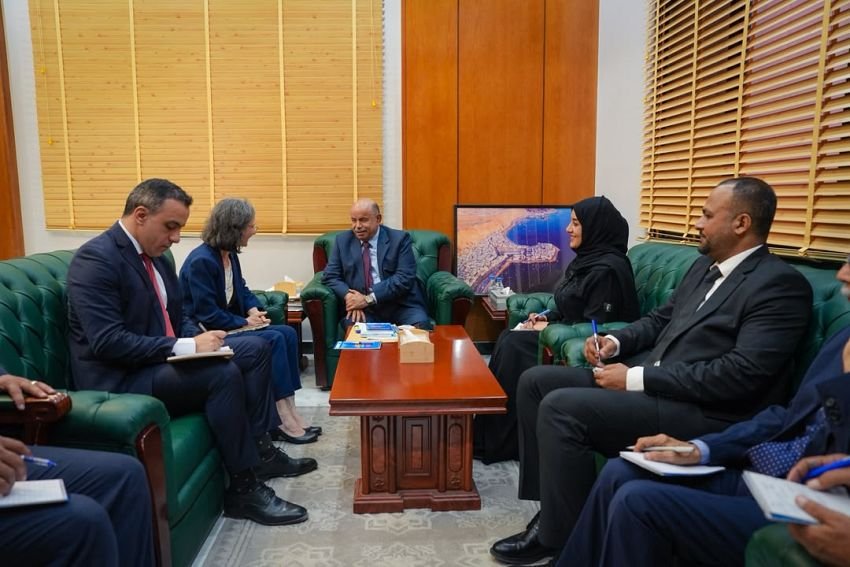
Salem Ahmed al-Khanbashi, a member of Yemen’s Presidential Leadership Council and Governor of Hadramout, met on Sunday with Catherine Corm-Kammoun, the French Ambassador to Yemen, for talks on expanding cooperation in development and public services. The French Embassy’s political counselor, Hussein Murshid, and a number of local officials also attended the meeting, which both sides described as part of a broader effort to strengthen the partnership between Yemen and France.
During the discussions, al-Khanbashi set out the governorate’s most pressing needs and presented a detailed overview of its priorities. He explained that French assistance could make a significant contribution to the goals of Hadramout’s strategic development plan for 2026 to 2030, which aims to improve the delivery of public services across the governorate. By aligning outside support with a locally drafted strategy, he argued, international partners can direct their resources to the sectors where they will matter most for recovery.
The ambassador arrived at the meeting with recent firsthand impressions. She has toured public service, health and development facilities in Mukalla, the governorate’s coastal capital, to see local conditions for herself, and she plans further visits to other parts of Hadramout. Diplomats and aid officials generally regard such field visits as an important step in designing support programs that respond to real conditions on the ground rather than to assumptions made from afar.
Corm-Kammoun, for her part, reaffirmed France’s determination to deepen its cooperation with local authorities, singling out food security, support for entrepreneurship and the economic empowerment of women and young people as priority areas. French engagement in the governorate is not starting from zero. Alongside other international partners, including the Netherlands, France has helped fund water security, agriculture and climate resilience projects in the Wadi Hajer watershed of southern Hadramout, an effort that the United Nations Food and Agriculture Organization says is designed to benefit more than 90,000 people in one of Yemen’s most important agricultural valleys.
The meeting took place against the backdrop of one of the world’s most severe humanitarian crises. Yemen’s conflict, which escalated sharply after the Houthi movement seized the capital Sanaa in late 2014 and a Saudi-led coalition intervened the following year, has devastated the country’s economy and public institutions. United Nations agencies estimate that more than 18 million Yemenis need humanitarian assistance this year, and millions remain displaced from their homes. Basic services such as water, electricity and health care have deteriorated sharply over more than a decade of fighting.
Hadramout occupies a distinctive place in that picture. Yemen’s largest governorate by area, stretching from the Arabian Sea coast deep into the desert interior, it has remained comparatively stable in recent years and has increasingly positioned itself as a hub for recovery and investment rather than solely a recipient of emergency relief. Its capital, Mukalla, hosts a major port and serves as the administrative and economic center of the region, which also holds a significant share of the country’s oil resources. Mukalla itself endured a year of occupation by al-Qaeda in the Arabian Peninsula before government forces, backed by the coalition, retook the city in April 2016, and its subsequent recovery has become a point of local pride. That relative stability helps explain why European partners see the governorate as a place where development programs can take root.
The emphasis on women and young people reflects a broader recognition among donors that sustainable recovery must reach groups that conflict has pushed to the margins. Investment in education, vocational training and small business support can equip a new generation to take part in rebuilding, strengthening communities against future shocks while addressing immediate economic hardship.
Sunday’s talks also fit into a wider pattern of French engagement with Yemen’s internationally recognized government. Corm-Kammoun has held a series of meetings with senior Yemeni officials in recent months, including discussions with members of the Presidential Leadership Council and cabinet ministers on development, economic cooperation and security, underlining Paris’s interest in maintaining an active role in the country’s stabilization.
Significant obstacles remain. The government and its partners continue to grapple with contested authority, as the Houthi movement controls much of northern Yemen, and with economic pressures that include a weakened currency and constrained public revenues. Humanitarian agencies have also warned repeatedly that funding for aid operations falls short of assessed needs. Officials in Aden and the governorates argue that channeling support through local development plans, as Hadramout is seeking to do, offers the best prospect of turning limited resources into lasting improvements.
Looking ahead, the scope for expanded cooperation between Yemen and France will depend on how effectively local officials, international partners and civil society can align their efforts. While challenges persist in security and governance, both sides signaled that practical, community-level projects in services, food security and livelihoods offer a workable path forward.
The meeting between al-Khanbashi and Corm-Kammoun thus marks another step in Hadramout’s effort to convert diplomatic goodwill into concrete projects. If the priorities discussed on Sunday translate into funded programs, residents of the governorate could see tangible gains in public services and economic opportunity, contributing to the foundations of a more stable Yemen in the years ahead.
About the Author